- Accessibility Services
- June 12, 2026
The Business Impact of Partnering with Manual Website Accessibility Audit Companies
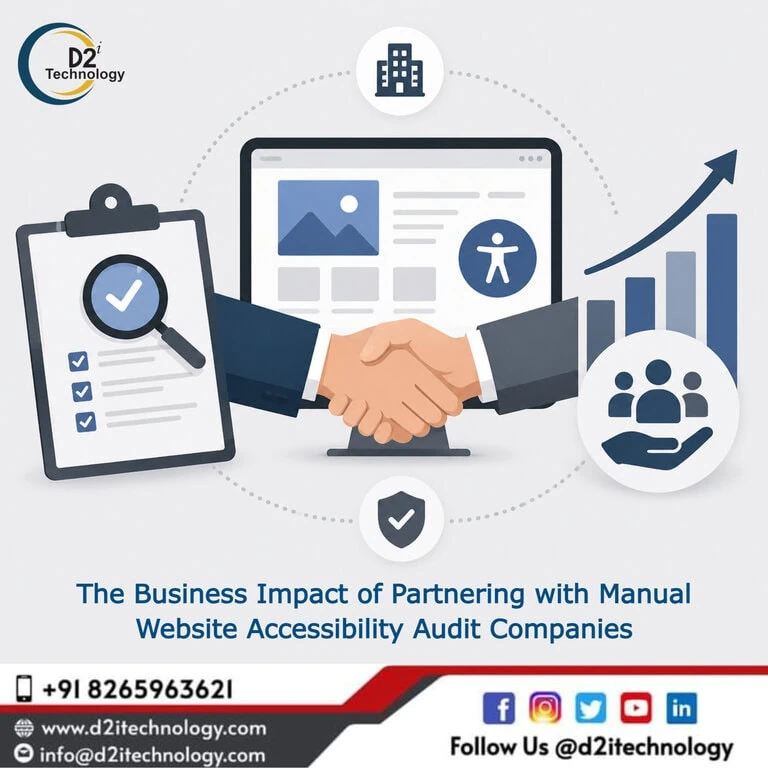
Choosing to work with Manual Website Accessibility Audit Companies represents one of the most strategic decisions your organization can make for digital excellence. While automated accessibility tools have their place, they can only detect approximately 30% of accessibility barriers that actually prevent people with disabilities from using your website. The remaining 70%—the critical issues that lead to lawsuits, frustrated users, and lost revenue—require the trained eye and expertise of human auditors who understand both technical standards and real-world user experience.
The business implications of this choice extend far beyond compliance checkboxes. Organizations that partner with professional Manual Website Accessibility Audit Companies experience measurable improvements in legal risk mitigation, market reach, brand reputation, search engine rankings, and customer satisfaction. This comprehensive guide explores exactly how manual accessibility auditing creates tangible business value, why the human element is irreplaceable in accessibility evaluation, and what distinguishes exceptional audit companies from those offering superficial automated scans dressed up as comprehensive evaluations.
The Critical Limitations of Automated Accessibility Testing
Before exploring the business impact of manual auditing, it’s essential to understand why automation alone fails:
What Automated Tools Miss
Automated scanners excel at detecting technical violations—missing alt attributes, insufficient color contrast, invalid HTML—but they cannot evaluate:
Context and Meaning: Whether alt text is actually descriptive or just present Logical Flow: If content reading order makes sense to screen reader users Keyboard Functionality: Whether all interactive elements are genuinely keyboard accessible User Experience Quality: If accessible alternatives provide equivalent experiences Cognitive Accessibility: Whether content is understandable and well-organized Complex Interactions: How dynamic content, modals, and custom widgets work with assistive technologies
Understanding manual, automated, and hybrid accessibility testing clarifies why comprehensive evaluation requires human expertise.
The False Confidence Problem
Organizations that rely solely on automated tools often develop false confidence. Their accessibility score shows “95% compliant,” yet users with disabilities find the site unusable. This disconnect occurs because automated tools measure only what they can detect, not what actually matters to users.
Worse, some companies discover their automated “compliance” when facing accessibility lawsuits. Courts don’t accept automated test results as evidence of accessibility—they require professional evaluation demonstrating genuine usability for people with disabilities.
Why Manual Auditing Matters: The Human Element
Expert Judgment and Context
Human auditors bring irreplaceable capabilities:
Real-World Experience: Understanding how people with various disabilities actually use websites Assistive Technology Proficiency: Expert-level skill with screen readers, speech recognition, switch controls, and other assistive technologies Contextual Understanding: Evaluating whether implementations make sense in specific contexts Pattern Recognition: Identifying systematic issues rather than just individual violations User Perspective: Testing whether disabled users can actually complete important tasks
Top accessibility testing companies in the USA distinguish themselves through human expertise, not just tool sophistication.
Assistive Technology Testing
Professional manual auditors test with the actual tools disabled users rely on:
Screen Readers: NVDA, JAWS, VoiceOver, TalkBack—testing if content is properly announced and navigable Keyboard-Only Navigation: Ensuring all functionality works without a mouse Voice Control: Testing speech recognition software compatibility Screen Magnification: Verifying usability at high zoom levels Alternative Input Devices: Checking compatibility with switch controls and other adaptive technologies
This testing reveals issues invisible to automated scanners. For example, a button might technically be keyboard-accessible but poorly announced by screen readers, or focus indicators might meet contrast ratios but be practically invisible to low-vision users.
User Journey Testing
Manual Website Accessibility Audit Companies don’t just test pages in isolation—they evaluate complete user workflows:
Registration and Login: Can disabled users create accounts and authenticate? Form Completion: Are forms truly usable with clear labels, instructions, and error handling? Content Consumption: Can users read articles, watch videos, and engage with media? E-commerce Transactions: For online stores, can users browse products and complete purchases? Interactive Features: Do complex components like calendars, maps, and configurators work accessibly?
This holistic evaluation reveals barriers that only emerge when attempting to accomplish actual tasks.
Business Impact #1: Legal Risk Mitigation and Compliance
The Litigation Landscape
Web accessibility lawsuits have become increasingly common:
Growing Case Numbers: Thousands of ADA website lawsuits filed annually in the U.S. Expanding Geographic Scope: Accessibility enforcement increasing globally Regulatory Requirements: SEBI in India, European Accessibility Act, Section 508 in the U.S. No Size Exemption: Both Fortune 500 companies and small businesses face legal action
Professional manual audits provide crucial protection:
Due Diligence Documentation: Evidence of good-faith accessibility efforts Risk Identification: Finding and addressing issues before they trigger complaints Defensible Testing: Court-recognized evaluation methodology Remediation Roadmap: Clear path to achieving compliance
Understanding accessibility compliance audits helps organizations understand legal protection benefits.
Cost Comparison: Prevention vs. Response
Proactive Manual Audit Investment:
- Comprehensive audit: $5,000-$30,000
- Remediation implementation: $20,000-$100,000
- Total: $25,000-$130,000
Reactive Lawsuit Response:
- Legal defense: $50,000-$200,000+
- Settlement costs: $10,000-$100,000+
- Emergency remediation: $50,000-$300,000+
- Brand reputation damage: Incalculable
- Total: $110,000-$600,000+ plus reputational harm
The financial case for proactive auditing is overwhelming.
Industry-Specific Compliance
Different sectors face unique requirements:
Financial Services: SEBI-mandated accessibility in India and SEC requirements
Education: Section 508 and state-specific mandates
Healthcare: HIPAA-compliant accessibility
Government: ADA Title II compliance
E-commerce: Equal access to goods and services
Manual audit companies with industry expertise ensure you meet sector-specific requirements.
Business Impact #2: Market Expansion and Revenue Growth
The Disability Market Opportunity
Accessibility isn’t just risk mitigation—it’s market expansion:
1.3 Billion People Globally: Approximately 16% of the world’s population has a disability $8 Trillion in Purchasing Power: The disability market represents massive economic potential Aging Population: By 2030, 1 in 6 people will be 60+, many experiencing age-related impairments Situational Disabilities: Everyone experiences temporary limitations (broken arm, bright sunlight, noisy environments)
Accessible websites capture this audience. Inaccessible ones lose them to competitors.
Documented Revenue Impact
Organizations measuring accessibility improvements report:
Increased Conversion Rates: 15-30% improvements after addressing major accessibility barriers Reduced Bounce Rates: Users stay longer when they can actually use your site Higher Customer Satisfaction: Accessible experiences create brand loyalty Expanded Customer Base: Previously excluded users become customers
Legal & General Group reported a £3.5 million increase in revenue after improving website accessibility. Click-Away Pound found that 69% of users with disabilities will leave websites with accessibility barriers, taking their business elsewhere.
Competitive Advantage
In most industries, truly accessible websites remain rare. Organizations that get accessibility right differentiate themselves:
Market Leadership: Positioning as an inclusive, forward-thinking brand B2B Advantages: Many procurement processes now require accessibility compliance RFP Requirements: Government and enterprise contracts increasingly mandate accessibility First-Mover Benefits: Capturing underserved market segments before competitors
Digital inclusion transformation demonstrates comprehensive business benefits.
Business Impact #3: Enhanced SEO and Digital Marketing Performance
Accessibility-SEO Synergy
Search engines and screen readers both consume website structure similarly. Accessibility improvements enhance search rankings because:
Semantic HTML: Proper heading structures help search engines understand content hierarchy Alternative Text: Descriptive alt text provides context for images Clear Link Text: Meaningful link descriptions improve crawlability Video Transcripts: Text alternatives for multimedia create additional indexable content Mobile Responsiveness: Accessible mobile experiences rank higher Fast Load Times: Performance optimization benefits both accessibility and SEO
Organizations implementing manual audit recommendations consistently see organic search traffic increases of 10-30%.
Content Discoverability
Manual auditors identify structural issues harming both accessibility and findability:
Poor Heading Hierarchy: Confuses both users and search algorithms Missing Page Titles: Reduces click-through rates and rankings Inaccessible Navigation: Makes content difficult for both bots and users to find Broken Link Structures: Impacts crawlability and user navigation
Fixing these issues creates compounding benefits across accessibility, SEO, and user experience.
Improved Analytics and Conversion Tracking
Accessible forms and interactive elements generate better data:
Higher Form Completion: Accessible forms see 20-40% improvement in completion rates Clearer User Journeys: Logical structure improves tracking and analysis Reduced Abandonment: Fewer frustrated users leaving without converting Better A/B Testing: More users completing actions provides statistically significant data faster
Business Impact #4: Brand Reputation and Corporate Social Responsibility
Public Perception and Values Alignment
Consumers increasingly choose brands aligned with their values:
Social Responsibility Expectations: 86% of consumers expect companies to take stands on social issues Inclusion as Brand Value: Accessibility demonstrates commitment to inclusion Positive Media Coverage: Accessibility leadership generates favorable press Award Recognition: Accessibility achievements earn industry accolades
Conversely, accessibility lawsuits generate negative publicity affecting brand perception across all customer segments, not just those with disabilities.
Employee Attraction and Retention
Accessibility impacts internal stakeholders too:
Talent Recruitment: Top candidates seek inclusive employers Employee Engagement: Teams take pride in accessible products Diverse Workforce: Accessible internal tools support employees with disabilities Innovation Culture: Accessibility challenges foster creative problem-solving
Customer Trust and Loyalty
Accessible experiences build customer relationships:
Reliability Perception: Attention to accessibility signals overall quality commitment Emotional Connection: Users appreciate companies that prioritize their needs Word-of-Mouth Marketing: Satisfied disabled users actively recommend accessible brands Reduced Churn: Inclusive experiences create lasting customer relationships
Business Impact #5: Improved Overall User Experience
Universal Design Principles
Accessibility improvements benefit all users, not just those with disabilities:
Clearer Navigation: Logical structure helps everyone find information faster Better Forms: Clear labels and error messages reduce completion errors Enhanced Mobile Experience: Touch target sizing and contrast improvements help everyone Captions and Transcripts: Benefit users in noisy environments or non-native speakers Keyboard Shortcuts: Power users appreciate efficient keyboard navigation
Common accessibility issues often represent broader usability problems affecting entire user bases.
Reduced Support Costs
Accessible websites generate fewer support requests:
Self-Service Success: Users can complete tasks without assistance Clearer Instructions: Reduced confusion about how features work Fewer Error Inquiries: Better error handling prevents support contacts Documentation Accessibility: Help content that everyone can actually use
Organizations report 20-40% reductions in accessibility-related support requests after implementing audit recommendations.
Technical Debt Reduction
Manual audits often reveal underlying technical quality issues:
Code Quality Problems: Accessibility issues frequently indicate poor development practices Architecture Weaknesses: Structural problems manifesting as accessibility barriers Maintenance Burden: Inaccessible code is typically harder to maintain and update Future-Proofing: Accessible code adapts better to new technologies and devices
Addressing these issues creates cleaner codebases that are easier and less expensive to maintain long-term.
What Distinguishes Exceptional Manual Audit Companies
Professional Certifications
Look for companies employing certified accessibility specialists:
IAAP Credentials: IAAP WAS (Web Accessibility Specialist) certification validates expertise Ongoing Education: Commitment to staying current with evolving standards Practical Experience: Years of hands-on accessibility work across industries Assistive Technology Proficiency: Expert-level skill with screen readers and other tools
Comprehensive Methodology
Manual Website Accessibility Audit Companies should employ rigorous approaches:
Multiple Testing Methods: Combining automated scanning, manual evaluation, and assistive technology testing Representative Sampling: Strategic page/screen selection for large sites User Flow Focus: Testing complete workflows, not just isolated pages Cross-Browser Testing: Evaluation across different browsers and platforms Mobile Accessibility: Native app and responsive web testing
How manual testing improves software quality applies equally to accessibility evaluation.
Actionable Deliverables
Quality audit companies provide more than problem lists:
Detailed Remediation Guidance: Step-by-step fix instructions with code examples Prioritization Framework: Issues ranked by severity, impact, and implementation effort WCAG Mapping: Clear connection between findings and specific success criteria Visual Documentation: Screenshots, videos, and annotations showing issues Executive Summaries: High-level overviews for non-technical stakeholders
Post-Audit Support
The best partners don’t disappear after delivering reports:
Implementation Consultation: Answering developer questions during remediation Code Review Services: Validating that fixes actually resolve issues Re-Testing: Confirming problems are truly resolved Training Programs: Building internal accessibility capability Ongoing Monitoring: Periodic audits maintaining compliance
Accessibility remediation services often include these comprehensive support components.
Measuring ROI: Metrics That Matter
Quantifiable Business Outcomes
Track these metrics to demonstrate audit value:
Legal Risk Reduction:
- Accessibility complaints received (before vs. after)
- Legal expenditures on accessibility issues
- Compliance audit costs vs. potential lawsuit costs
Revenue and Conversion:
- Overall conversion rate improvements
- Revenue from previously inaccessible user segments
- Customer acquisition costs for disability market
SEO and Traffic:
- Organic search traffic growth
- Keyword ranking improvements
- Bounce rate reductions
- Time on site increases
Operational Efficiency:
- Support ticket volume related to accessibility
- Development time for accessibility fixes
- QA time spent on accessibility testing
Brand and Reputation:
- Customer satisfaction scores
- Net Promoter Score (NPS) changes
- Social media sentiment analysis
- Media coverage (positive vs. negative)
Long-Term Value Creation
Beyond immediate metrics, manual auditing creates lasting value:
Organizational Capability: Teams learn to build accessibility into processes Cultural Shift: Accessibility becomes part of company values Competitive Positioning: Market leadership in inclusion Risk Management: Proactive rather than reactive compliance approach
Selecting the Right Manual Audit Partner: Key Considerations
Evaluation Criteria
When choosing among Manual Website Accessibility Audit Companies, assess:
Expertise and Credentials:
- Do auditors hold IAAP certifications?
- How many years of accessibility experience?
- What industries have they worked in?
- Can they provide client references?
Methodology Depth:
- What percentage of testing is manual vs. automated?
- Which assistive technologies do they test with?
- How do they handle complex interactions?
- Do they test complete user workflows?
Deliverable Quality:
- Can you see sample audit reports?
- How detailed is remediation guidance?
- What formats do reports come in?
- Are findings prioritized and organized effectively?
Business Alignment:
- Do they understand your industry’s specific requirements?
- Can they work within your timeline and budget?
- What post-audit support do they offer?
- Do they provide training and capability building?
Red Flags to Avoid
Be wary of companies that:
Over-Promise Automated Solutions: Claiming automation alone provides comprehensive audits Lack Credentials: No certified accessibility specialists on staff Provide Vague Deliverables: Reports without specific remediation guidance Offer Suspiciously Low Prices: Comprehensive manual auditing requires significant expertise and time Don’t Test with Assistive Technology: Real user experience evaluation is essential
Best manual software testing companies share characteristics applicable to accessibility audit selection.
D2i Technology’s Approach to Manual Accessibility Auditing
Certified Expertise and Proven Methodology
D2i Technology employs IAAP-certified Web Accessibility Specialists with extensive experience across industries. Our manual auditing methodology combines:
Comprehensive Testing: Automated scans identify technical violations while manual evaluation by certified experts using screen readers (NVDA, JAWS, VoiceOver), keyboard-only navigation, and real user workflows catches the critical 70% of issues automation misses.
Industry-Specific Knowledge: Having worked with financial services organizations navigating SEBI compliance, healthcare providers meeting HIPAA requirements, educational institutions achieving Section 508 conformance, and e-commerce companies optimizing conversion, we understand your sector’s unique challenges.
Actionable Deliverables: Our audit reports include specific remediation instructions with code examples, prioritized roadmaps organizing fixes by impact and effort, VPAT documentation for procurement requirements, and executive summaries for stakeholder communication.
Partnership Approach: We provide developer consultation during remediation, code review services ensuring fixes work correctly, re-testing to validate issue resolution, and team training building internal capabilities.
Real Business Results
Organizations partnering with D2i Technology experience measurable improvements:
- Legal risk reduction through proactive issue identification
- Revenue growth from expanded market access
- SEO improvements averaging 15-25% organic traffic increases
- Support cost reductions of 20-40% from better self-service
- Brand enhancement through demonstrated inclusion commitment
D2i Technology’s accessibility testing services combine technical excellence with business focus, ensuring accessibility investments deliver tangible returns.
Conclusion
Partnering with professional Manual Website Accessibility Audit Companies represents a strategic business decision with far-reaching implications. While automated tools play a supporting role, only expert human evaluation can identify the critical accessibility barriers that create legal risk, exclude customers, and damage brand reputation.
The business case is compelling: legal risk mitigation worth hundreds of thousands of dollars, market expansion accessing billions in disability purchasing power, SEO improvements driving organic growth, brand reputation enhancement, and overall user experience improvements benefiting all customers. Organizations viewing accessibility as mere compliance miss these transformative business opportunities.
Choosing the right audit partner—one with certified expertise, comprehensive methodology, actionable deliverables, and ongoing support—maximizes your accessibility investment. D2i Technology brings this combination to every engagement, partnering with organizations to create digital experiences that work beautifully for everyone while delivering measurable business results.
The question isn’t whether to prioritize accessibility, but whether you’ll lead your industry in inclusion or scramble to catch up when legal, market, or reputational pressures force action.
Frequently Asked Questions
Transform Your Business Through Expert Accessibility Auditing
Stop relying on automated tools that miss 70% of accessibility barriers. D2i Technology's IAAP-certified specialists provide thorough manual auditing that protects your business legally, expands your market reach, and enhances user experience for all customers.