- Accessibility Audits
- December 5, 2025
Understanding Accessibility Compliance Audits: A Guide for US Auditors
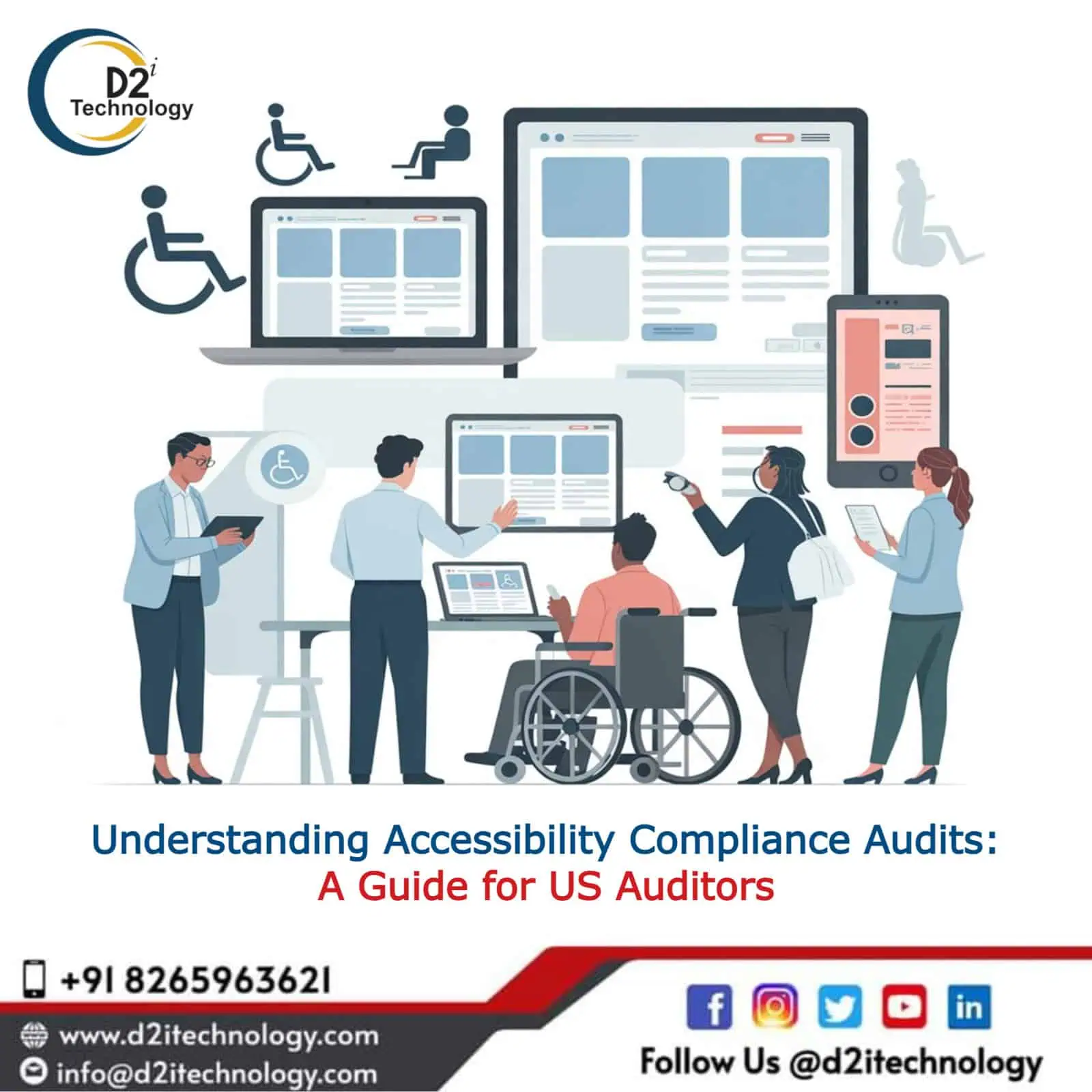
Digital accessibility is no longer optional—it is a core requirement for organizations that want to stay compliant, mitigate legal risk, and provide equitable access for all users, including people with disabilities. With lawsuits in the US under the ADA (Americans with Disabilities Act) rising each year, businesses—large and small—are seeking clarity on what an Accessibility Compliance Audit Auditor USA typically reviews, how the audit works, and what steps companies should take to ensure continuous accessibility.
This comprehensive guide breaks down everything US auditors and organizations need to know about accessibility compliance audits—from standards like WCAG and Section 508 to methodologies, reporting, remediation strategies, and the role that professional auditors play in ensuring long-term accessibility success.
Why Accessibility Audits Matter More Than Ever
Before exploring the audit process, it’s important to understand why accessibility matters so much in today’s digital ecosystem.
1. Rising ADA-related lawsuits in the US
Thousands of companies—across industries like e-commerce, education, SaaS, finance, healthcare, and public services—face ADA Title III lawsuits every year. Most lawsuits claim that individuals with disabilities could not access essential functionality such as navigation menus, forms, checkout flow, PDFs, multimedia, or customer support tools.
For US-based auditors and companies, an Accessibility Compliance Audit Auditor USA is the first line of defense to identify issues proactively before they reach litigation.
2. It’s a moral responsibility
People with disabilities represent over 20% of the US population. Making digital experiences accessible is not just about checking legal boxes—it ensures equal access, independent use, and dignity for all users.
Must Read: Top 10 Accessibility Testing Companies in USA
3. Better user experience and stronger SEO
Search engines reward clean structure, semantic HTML, alt text, proper headings, and keyboard-friendly navigation—all of which directly align with accessibility best practices.
4. Accessibility supports business growth
Accessible platforms reach more customers, reduce bounce rates, and increase conversions. Many US government institutions, universities, and Fortune companies require vendors to meet accessibility standards before awarding contracts.
What Is an Accessibility Compliance Audit?
An accessibility compliance audit is a structured evaluation of a website, web application, mobile app, or digital product against global accessibility standards, primarily:
- WCAG 2.1 / 2.2 (Web Content Accessibility Guidelines)
- ADA Title III requirements
- Section 508 (applies to federal agencies and their vendors in the USA)
An Accessibility Compliance Audit Auditor USA reviews the product to determine whether people with disabilities—including visual, auditory, cognitive, motor, and neurological impairments—can use it effectively.
The audit includes:
- Manual testing
- Automated testing
- Assistive technology testing
- Code-level inspection
- An accessibility report detailing issues, severity, screenshots, and remediation guidance
Key Accessibility Standards US Auditors Follow
1. WCAG 2.1 / 2.2 Guidelines
WCAG is built around four core principles: Perceivable, Operable, Understandable, Robust (POUR)
Auditors evaluate:
- Text alternatives for images
- Keyboard navigability
- Color contrasts
- Focus order and visibility
- Headings and semantic structure
- Screen reader compatibility
- Form labels and instructions
- Error identification and suggestions
WCAG has three levels: A, AA, AAA.
Most industries in the US aim for WCAG 2.1 AA compliance.
2. Section 508 (US Federal Requirement)
Any organization that sells software, services, or digital tools to US federal agencies must comply with Section 508.
Auditors ensure that:
- Documents are accessible
- Digital services work with screen readers
- Videos include captions
- Websites support keyboard-only users
3. ADA (Americans with Disabilities Act)
While ADA does not specify WCAG explicitly, US courts continue to use WCAG 2.1 AA as the expected accessibility benchmark.
This is why companies often rely on an Accessibility Compliance Audit Auditor USA to ensure ADA alignment before facing potential legal claims.
The Complete Accessibility Audit Process
Step 1: Requirements Gathering
The audit begins by understanding:
- Scope (website, app, PDF, LMS, dashboard, etc.)
- Technology stack
- User journeys
- Business goals
- Compliance requirements (ADA, WCAG, Section 508)
Step 2: Automated Testing (30–40% Coverage)
Auditors use tools like:
- axe DevTools
- Lighthouse
- WAVE
- ARC Toolkit
These tools detect issues such as missing alt text, color contrast failures, ARIA misuse, and structural problems.
However, automated tools alone catch only 40% of accessibility issues, which is why companies must engage a professional Accessibility Compliance Audit Auditor USA for manual validation.
Step 3: Manual Audit (Core Component)
Manual testing includes:
- Keyboard-only navigation
- Logical focus movement
- Form validation and error messages
- Navigation menus
- Modal dialogs
- Dynamic content
- Interactive controls like carousels, tabs, and accordions
Step 4: Assistive Technology Testing
To evaluate real accessibility, auditors test with:
- Screen readers: NVDA, JAWS, VoiceOver
- Screen magnifiers
- Speech recognition tools
- High-contrast modes
- Mobile accessibility features
This ensures users with disabilities can genuinely operate the interface.
Step 5: Code Review
Auditors analyze HTML, CSS, ARIA, JavaScript, and component libraries to ensure:
- Semantic markup
- Proper roles
- Accessible names
- Valid ARIA usage
- Logical DOM structure
Step 6: Reporting & Remediation Guidance
The accessibility audit report typically includes:
- Issue list with severity (Critical, High, Medium, Low)
- WCAG success criteria mapping
- Screenshots and recordings
- Code snippets
- Fix recommendations
- Suggested testing tools
This report helps developers fix issues efficiently and correctly.
Step 7: Retesting
After the team resolves issues, auditors verify whether all fixes meet WCAG and ADA requirements. Many audit contracts include one round of retesting.
Why US Companies Need Accessibility Audits Now
1. ADA Lawsuit Risks
Thousands of ADA lawsuits target inaccessible websites and apps every year. Industries most impacted include:
- Retail/eCommerce
- Restaurants
- Real estate
- Hospitality
- Education
- Financial services
- Healthcare
An Accessibility Compliance Audit Auditor USA helps companies detect risks early and avoid expensive legal outcomes.
2. Vendor & Government Requirements
Businesses bidding for contracts with universities, hospitals, and government agencies must show:
- VPAT (Voluntary Product Accessibility Template)
- Accessibility Audit Report
- Accessibility Remediation Plan
Failing to provide these can eliminate companies from multi-million-dollar opportunities.
3. Accessibility Improves Business Metrics
Accessible digital experiences help:
- Increase conversions
- Reduce bounce rates
- Improve user satisfaction
- Build brand trust
- Strengthen SEO rankings
4. Accessibility Is Cheaper When Done Early
Fixing accessibility during development costs significantly less than retrofitting an entire website later. Accessibility should be integrated in:
- Design
- Development
- QA testing
- Content creation
This reduces long-term costs and ensures ongoing compliance.
Role of an Accessibility Compliance Auditor in the USA
An Accessibility Compliance Audit Auditor USA helps companies:
- Interpret WCAG guidelines
- Conduct in-depth audits
- Verify ADA and Section 508 compliance
- Assist with remediation
- Provide accessibility certification
- Train development and QA teams
- Support inclusive product strategy
Their expertise ensures that accessibility is not treated as a checklist item but as a core product foundation.
Common Accessibility Issues Found in US Audits
Here are some of the most frequent WCAG failures:
Critical Failures
- Missing alt text on meaningful images
- Inaccessible forms without labels or error messages
- Keyboard traps
- Non-functional screen reader navigation
- Improper use of aria-hidden
Moderate Failures
- Low color contrast
- Improper heading hierarchy
- Missing focus indicators
- Incorrect ARIA roles
- Inaccessible PDFs
Low-Severity Issues
- Redundant links
- Missing skip navigation
- Missing captions on video subtitles
Any Accessibility Compliance Audit Auditor USA will highlight these issues and provide actionable fixes.
How Frequently Should US Companies Perform Audits?
Most organizations follow one of these models:
- Full audit every year
- Quarterly accessibility checks
- Continuous accessibility testing in all sprints
- Review after any major redesign or feature release
Companies facing higher compliance pressure—like banking, insurance, healthcare, and education—run audits more frequently.
Choosing the Right Accessibility Auditor in the USA
- Look for auditors who offer:
- WCAG 2.1 / 2.2 expertise
- ADA Title III experience
- Section 508 compliance knowledge
- IAAP certifications (CPACC, WAS, CPWA)
- Both testing + remediation assistance
- Real device and assistive tech testing
- Well-structured accessibility reports
Many companies mistakenly hire teams that rely solely on automated tools. But automation alone cannot replace a trained Accessibility Compliance Audit Auditor USA.
How D2i Technology Can Help (Accessibility + Development Support)
If you’re looking for a reliable partner with deep accessibility expertise, D2i Technology offers comprehensive accessibility services—including full audits, manual testing, IAAP-certified auditor support, and complete remediation services.
Our team includes IAAP-certified accessibility testers and developers who:
- Conduct full WCAG/ADA/Section 508 audits
- Test with screen readers like NVDA, JAWS, and VoiceOver
- Provide a structured audit report with code-level fixes
- Guide your developers step-by-step
- Fix accessibility issues for you if needed
- Support VPAT documentation
Whether you’re looking to reduce legal risk or build inclusive digital products from the ground up, D2i Technology ensures end-to-end accessibility—from testing to remediation.
Final Thoughts
Accessibility is not just a legal obligation—it’s a strategic investment in usability, customer satisfaction, and digital inclusion. As ADA lawsuits and compliance demands increase, working with a qualified Accessibility Compliance Audit Auditor USA ensures your product meets WCAG standards, remains legally protected, and serves all users effectively.
A well-executed audit is the foundation of long-term accessibility maturity, and organizations that take action early always benefit the most.
If you need expert support, accessibility audits, or hands-on remediation, D2i Technology is here to help you build fully accessible, compliant, and user-friendly digital experiences.