- Accessibility Testing
- March 25, 2026
How to Conduct a WCAG Compliance Audit for SEBI Entities
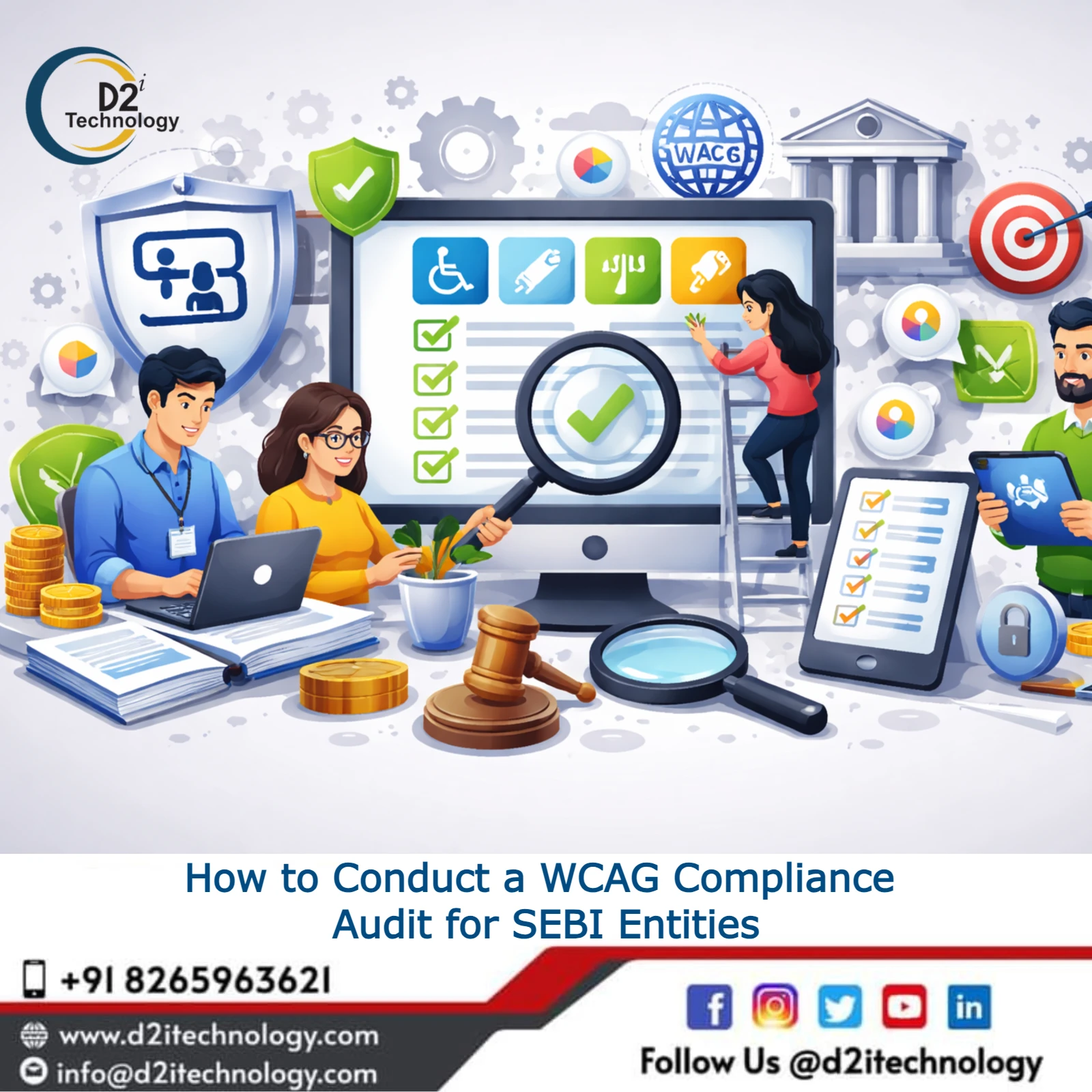
When the Securities and Exchange Board of India (SEBI) mandates digital accessibility, financial institutions can’t afford to take shortcuts. A comprehensive WCAG Compliance Audit For SEBI Regulated Entities India isn’t just about checking boxes—it’s about creating financial platforms that serve every investor, regardless of their abilities. With penalties for non-compliance and the deadline approaching, understanding how to conduct a thorough audit has become critical for brokerages, mutual fund houses, portfolio management services, and every entity under SEBI’s regulatory umbrella.
The mandate is clear: SEBI-regulated entities must ensure their digital platforms meet Web Content Accessibility Guidelines (WCAG) 2.0 Level A standards. But knowing you need to comply and understanding how to achieve compliance are two very different challenges. This guide walks you through the entire audit process, from preparation to remediation, helping you build truly accessible financial platforms.
Understanding SEBI’s Accessibility Mandate
SEBI’s circular on digital accessibility marks a watershed moment for financial inclusion in India. The regulatory requirement stems from recognizing that millions of Indians with disabilities have been effectively locked out of digital financial services.
What the Mandate Covers
SEBI’s accessibility requirements apply to:
- Stock broking platforms and trading applications
- Mutual fund distributor websites and portals
- Portfolio management service platforms
- Investment advisory digital interfaces
- Depositories and clearing corporation systems
- Research analyst websites
- Credit rating agency platforms
The mandate requires compliance with WCAG 2.0 Level A standards, though entities are encouraged to aim for Level AA for better accessibility. SEBI just made digital accessibility mandatory and the impact reaches every corner of India’s financial ecosystem.
Why This Matters
India has over 26 million persons with disabilities, representing a significant portion of potential investors. Beyond the moral imperative, accessible platforms:
- Expand your addressable market
- Improve user experience for everyone
- Reduce legal and compliance risks
- Demonstrate corporate social responsibility
- Enhance brand reputation
Understanding how SEBI-regulated entities in India can achieve WCAG compliance through effective audits is the first step toward meeting these objectives.
Preparing for Your WCAG Compliance Audit
Successful audits don’t start with testing—they begin with thorough preparation. Rushing into an audit without proper groundwork wastes time and misses critical issues.
Assembling Your Audit Team
A WCAG Compliance Audit For SEBI Regulated Entities India requires diverse expertise:
Internal Stakeholders:
- Compliance officers who understand SEBI requirements
- IT teams familiar with your technical architecture
- UX designers who know your interface decisions
- Content managers responsible for digital content
- Legal counsel to assess compliance risks
External Specialists: Consider engaging IAAP-certified accessibility auditors who bring:
- Specialized WCAG expertise
- Experience with financial platforms
- Objective assessment capabilities
- Knowledge of assistive technologies
- Understanding of SEBI-specific requirements
D2i Technology’s team combines SEBI compliance consulting expertise with technical accessibility knowledge, bridging regulatory and technical requirements seamlessly.
Documenting Your Digital Ecosystem
Before auditing, catalog everything:
- Public-facing websites and portals
- Mobile applications (iOS and Android)
- Trading platforms and dashboards
- Client login areas and account management systems
- Document repositories and disclosure sections
- Communication channels and support interfaces
Each platform may require separate evaluation, as accessibility issues can vary significantly across different interfaces and technologies.
Setting Audit Scope and Priorities
Not all pages carry equal weight. Prioritize based on:
User Impact:
- Login and authentication pages
- Trading and transaction interfaces
- Account dashboard and portfolio views
- Fund selection and investment pages
- Customer support and help sections
Regulatory Risk:
- Mandatory disclosure pages
- Terms and conditions
- Privacy policies
- Complaint registration mechanisms
Traffic Volume:
- High-traffic landing pages
- Frequently accessed features
- Critical user pathways
The WCAG Compliance Audit Process
A thorough audit combines automated testing, manual evaluation, and assistive technology verification. Each layer catches different types of issues.
Phase 1: Automated Accessibility Testing
Automated tools quickly identify technical compliance issues, though they can’t catch everything. Use multiple tools for comprehensive coverage:
Recommended Tools:
- WAVE (Web Accessibility Evaluation Tool)
- axe DevTools for browser-based testing
- Lighthouse in Chrome DevTools
- Pa11y for automated testing
- Accessibility Insights for detailed analysis
Learn more about the best accessibility testing toolkit for comprehensive evaluation.
What Automated Tools Find:
- Missing alternative text for images
- Insufficient color contrast ratios
- Empty form labels
- Improper heading hierarchies
- ARIA attribute errors
- Keyboard navigation issues
Limitations of Automation: Automated tools typically catch only 20-30% of accessibility issues. They can’t evaluate:
- Quality of alternative text
- Logical content flow
- Context-appropriate ARIA usage
- Real-world usability
- Screen reader experience quality
Phase 2: Manual Accessibility Testing
Human evaluation remains essential for comprehensive audits. Manual testing includes:
Visual Inspection:
- Review page structure and semantic HTML
- Evaluate focus indicators visibility
- Check form design and error messaging
- Assess content organization and readability
- Verify responsive design accessibility
Keyboard Navigation Testing: Test complete keyboard operability:
- Can users access all interactive elements?
- Is focus order logical and predictable?
- Are keyboard shortcuts documented?
- Can users complete all tasks without a mouse?
- Do focus indicators clearly show current position?
Code Review: Examine the underlying HTML, CSS, and JavaScript:
- Proper use of semantic HTML elements
- ARIA attributes implementation
- Focus management in dynamic content
- Accessibility of custom components
- JavaScript event handler accessibility
Content Evaluation:
- Language clarity and simplicity
- Link text meaningfulness
- Error message clarity
- Instruction completeness
- Document accessibility (PDFs, forms)
Phase 3: Assistive Technology Testing
Test with the same technologies your users employ:
Screen Readers:
- JAWS (most popular commercial option)
- NVDA (widely-used free alternative)
- VoiceOver (for iOS and macOS)
- TalkBack (for Android)
Screen Magnification:
- ZoomText
- Windows Magnifier
- Browser zoom functionality
Speech Recognition:
- Dragon NaturallySpeaking
- Windows Speech Recognition
- Voice Control (macOS/iOS)
Test critical user journeys completely using assistive technologies. Don’t just spot-check—walk through entire workflows from login to transaction completion.
Phase 4: WCAG Guideline Mapping
Systematically verify compliance against WCAG 2.0 Level A requirements:
Perceivable:
- Text alternatives for non-text content
- Captions and alternatives for multimedia
- Adaptable content presentation
- Distinguishable visual and audio content
Operable:
- Keyboard accessibility throughout
- Sufficient time for reading and interaction
- Seizure-safe content (no flashing elements)
- Navigable content structure
Understandable:
- Readable and comprehensible content
- Predictable page behavior
- Input assistance and error prevention
Robust:
- Compatible with current and future technologies
- Proper parsing of markup
- Name, role, value for all components
Common Accessibility Issues in Financial Platforms
WCAG Compliance Audit For SEBI Regulated Entities India consistently reveals several recurring problems:
Trading Interface Challenges
Real-Time Data Display: Stock tickers and price updates often fail to notify screen reader users of changes. Implement ARIA live regions appropriately to announce critical updates without overwhelming users.
Complex Charts and Graphs: Visual representations of market data must include:
- Descriptive alternative text
- Data tables as alternatives
- Trend descriptions in text format
- Accessible interactive elements
Order Placement Forms: Multi-step trading forms frequently have:
- Missing or inadequate form labels
- Unclear error messages
- Time limits without extension options
- Complex validation without guidance
Authentication and Security Issues
CAPTCHA Problems: Visual-only CAPTCHA systems exclude blind users entirely. Provide:
- Alternative verification methods
- Audio CAPTCHA options
- Text-based alternatives
- Accessible multi-factor authentication
Session Timeouts: Automatic logouts for security often don’t provide:
- Adequate warning before timeout
- Extension options
- Accessible timeout notices
- Data preservation mechanisms
Documentation Accessibility
PDF Documents: Financial disclosures, prospectuses, and reports often come as inaccessible PDFs:
- Missing tags and structure
- Improperly ordered content
- Inaccessible forms
- Images without alternative text
Convert critical documents to HTML or ensure PDFs meet accessibility standards.
Downloadable Forms: Application forms must be:
- Fillable with assistive technologies
- Properly labeled
- Logically ordered
- Accessible when completed electronically
Discover common accessibility issues that plague financial platforms and how to address them.
Creating Your WCAG Compliance Report
Document findings comprehensively for remediation and compliance demonstration:
Executive Summary
Provide leadership with:
- Overall compliance status
- Critical issues requiring immediate attention
- Compliance percentage by guideline
- Timeline for achieving full compliance
- Resource requirements and budget estimates
Detailed Findings
For each issue, document:
- WCAG guideline violated
- Severity level (Critical, High, Medium, Low)
- Location (URL, page, component)
- Description of the problem
- Impact on users with disabilities
- Screenshot or code example
- Recommended remediation
- Estimated effort for fix
Prioritization Framework
Categorize issues by:
Priority 1 (Immediate):
- Critical functionality barriers
- Legal compliance requirements
- High-traffic page issues
- Complete blocks to task completion
Priority 2 (Near-term):
- Significant usability problems
- Moderate barriers to functionality
- Issues affecting multiple pages
- Problems with workarounds available
Priority 3 (Planned):
- Minor usability improvements
- Enhancement opportunities
- Isolated issues
- Nice-to-have improvements
Remediation Roadmap
Create an actionable timeline:
- Quick wins (1-2 weeks)
- Short-term fixes (1-3 months)
- Medium-term improvements (3-6 months)
- Long-term enhancements (6-12 months)
Implementing Remediation
Finding issues is half the battle—fixing them properly completes the journey.
Development Best Practices
Establish Accessibility Standards:
- Create coding guidelines incorporating WCAG requirements
- Build accessible component libraries
- Implement design systems with accessibility built-in
- Document patterns and practices
Integrate into Development Workflow:
- Include accessibility acceptance criteria in user stories
- Conduct accessibility reviews during development
- Test with keyboard and screen readers before deployment
- Automate accessibility checks in CI/CD pipelines
Training and Education: Invest in building internal expertise:
- Train developers on accessible coding
- Educate designers on inclusive design principles
- Teach content creators about accessible content
- Provide assistive technology training for QA teams
Explore comprehensive accessibility development and remediation services that support your entire team.
Ongoing Monitoring
Accessibility isn’t a one-time achievement:
Regular Audits:
- Quarterly automated scans
- Semi-annual manual audits
- Annual comprehensive evaluations
- Post-deployment checks for new features
User Feedback:
- Establish accessibility feedback channels
- Act on user-reported issues promptly
- Engage users with disabilities in testing
- Monitor support tickets for accessibility themes
Continuous Improvement:
- Track compliance metrics over time
- Review emerging best practices
- Update standards as WCAG evolves
- Share learnings across teams
Working with Accessibility Audit Professionals
While some organizations conduct internal audits, partnering with specialists often yields better results, especially for SEBI compliance.
Benefits of Professional Auditors
Expertise and Experience: Professional auditors bring:
- Deep WCAG knowledge
- Experience with financial platforms
- Understanding of SEBI requirements
- Expertise with assistive technologies
- Industry best practices awareness
Objectivity: External auditors provide unbiased assessment without organizational politics or blind spots affecting judgment.
Efficiency: Experienced auditors complete evaluations faster and more comprehensively than internal teams learning as they go.
Credibility: Third-party IAAP-certified audits carry weight with regulators and demonstrate serious commitment to compliance.
Learn about why your business needs IAAP certified accessibility audit services for compliance and inclusivity.
Selecting the Right Partner
Evaluate potential audit partners on:
- IAAP certification credentials
- Financial platform experience
- Understanding of Indian regulations
- Comprehensive testing methodologies
- Clear reporting and documentation
- Remediation support capabilities
- Training and consultation services
D2i Technology offers end-to-end SEBI WCAG compliance audit services specifically designed for Indian financial entities, combining regulatory knowledge with technical expertise.
Beyond Compliance: Building Truly Accessible Experiences
Meeting WCAG 2.0 Level A standards fulfills SEBI’s minimum requirements, but exceptional organizations aim higher.
Targeting WCAG 2.1 Level AA
While not currently mandated, WCAG 2.1 Level AA provides better accessibility:
- Improved mobile accessibility
- Better support for cognitive disabilities
- Enhanced contrast requirements
- More robust keyboard support
Consider implementing Level AA standards to:
- Future-proof your platforms
- Serve users more effectively
- Differentiate your brand
- Reduce future remediation costs
User-Centered Design
Technical compliance matters, but user experience matters more:
- Conduct usability testing with disabled users
- Incorporate accessibility early in design
- Simplify complex financial concepts
- Provide multiple ways to complete tasks
- Design for diverse abilities and contexts
Understanding how SEBI’s accessibility mandate is reshaping India’s financial technology landscape provides perspective on the broader transformation underway.
Creating an Accessibility Culture
Sustainable accessibility requires organizational commitment:
- Leadership support and resources
- Accessibility champions in each team
- Regular training and awareness programs
- Inclusive hiring practices
- Metrics and accountability
Legal and Regulatory Considerations
WCAG Compliance Audit For SEBI Regulated Entities India carries significant legal implications.
Documentation Requirements
Maintain comprehensive records:
- Audit reports and findings
- Remediation plans and progress
- Testing results and evidence
- Training records and certifications
- User feedback and responses
- Compliance status updates
Demonstrating Compliance
Be prepared to show SEBI:
- Initial audit results
- Remediation implementation
- Current compliance status
- Ongoing monitoring processes
- Accessibility policy and standards
- Staff training initiatives
Managing Non-Compliance Risks
If full compliance isn’t immediately achievable:
- Document your remediation plan
- Show measurable progress
- Prioritize critical issues
- Communicate transparently
- Seek expert guidance
Understand the importance of hiring a SEBI-mandated web accessibility auditor to navigate these requirements effectively.
Technology-Specific Considerations
Different technologies present unique accessibility challenges:
Mobile Applications
Mobile apps require specialized testing:
- Native platform accessibility APIs
- Touch gesture alternatives
- Screen orientation flexibility
- Dynamic text sizing support
- Platform-specific screen reader compatibility
Single Page Applications (SPAs)
Dynamic web applications need:
- Proper ARIA live regions
- Focus management during navigation
- Accessible loading states
- Route change announcements
- Keyboard trap prevention
Trading Platforms
Real-time trading requires:
- Accessible data visualization
- Keyboard-accessible controls
- Clear status updates
- Time-critical transaction accessibility
- Alternative formats for complex information
Measuring Success
Track these metrics to evaluate your accessibility program:
Compliance Metrics:
- WCAG guideline conformance percentage
- Critical issues resolved
- Average time to resolve issues
- Accessibility debt reduction
User Experience Metrics:
- Accessibility-related support tickets
- User feedback and satisfaction
- Task completion rates (all users)
- Time-on-task for key activities
Business Metrics:
- User base expansion
- Complaint reduction
- Brand sentiment improvement
- Risk mitigation value
Conclusion
Conducting a thorough WCAG Compliance Audit For SEBI Regulated Entities India isn’t optional—it’s a regulatory requirement and business imperative. The process demands technical expertise, regulatory knowledge, and genuine commitment to accessibility.
Whether you conduct audits internally or partner with specialists, the goal remains the same: creating financial platforms that serve all Indians equally, regardless of ability. SEBI’s mandate presents an opportunity to demonstrate leadership in financial inclusion while meeting compliance obligations.
The journey from audit to full compliance requires resources, expertise, and persistence. But the result—accessible platforms that welcome millions of previously excluded investors—makes the effort worthwhile.
Your audit starts with a single step. Make it count.
Frequently Asked Questions
Get Expert SEBI WCAG Compliance Audit Support
Don't navigate SEBI's accessibility mandate alone. D2i Technology's IAAP-certified experts provide comprehensive WCAG compliance audits specifically designed for Indian financial institutions. We understand both technical accessibility and regulatory requirements