- Accessibility Services
- January 15, 2026
SEBI Mandated Web Accessibility: When & Why to Hire an Accessibility Auditor in India
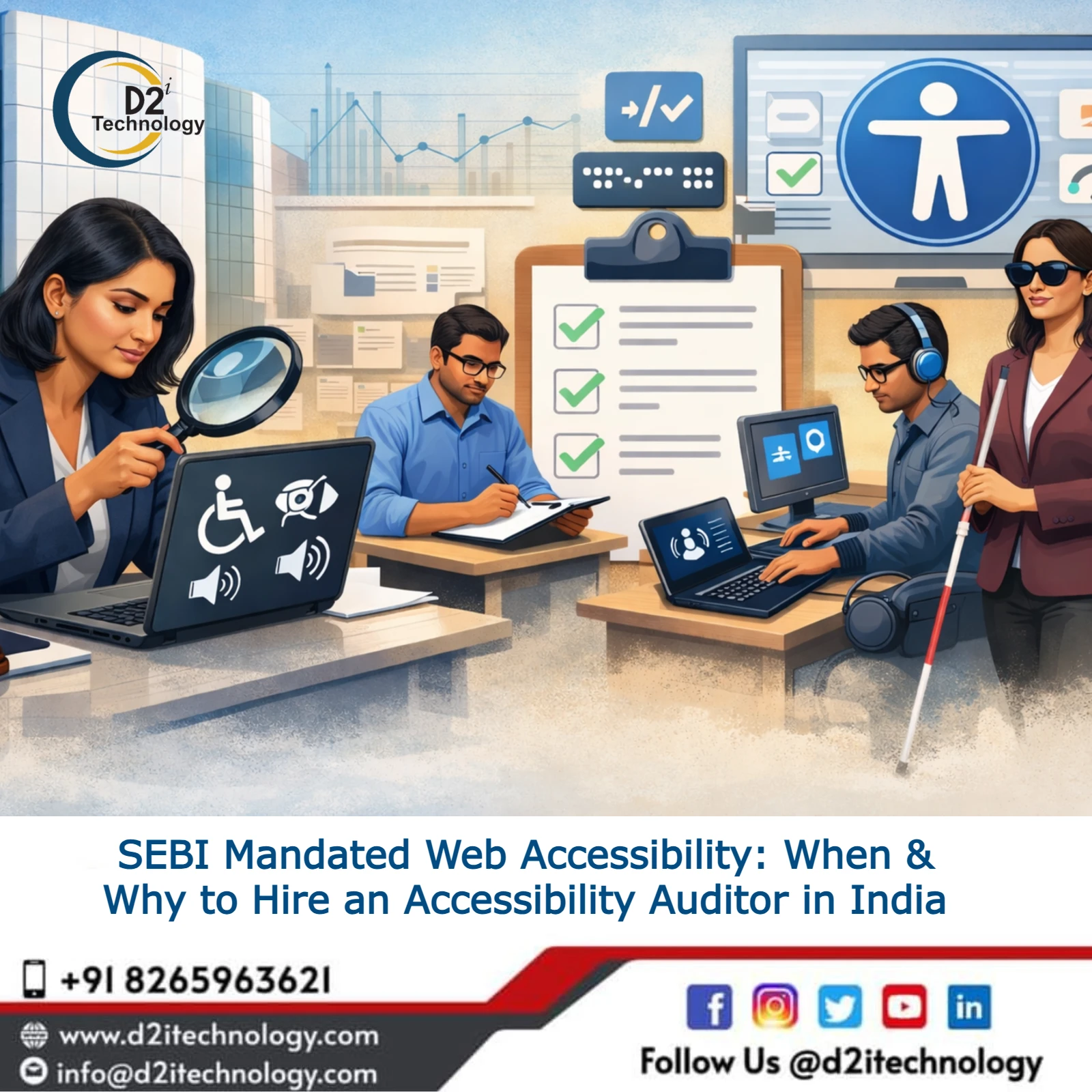
The regulatory landscape for India’s securities market is evolving, and accessibility compliance is no longer a choice—it’s a mandate. If you’re a SEBI-regulated entity wondering whether you need to Hire Accessibility Auditor For SEBI Compliance India, the answer is clear: yes, and the time is now. With enforcement tightening and the 2026 compliance deadline approaching, stock brokers, mutual funds, depositories, and other market intermediaries must ensure their digital platforms meet Web Content Accessibility Guidelines (WCAG) standards. But navigating this complex requirement requires specialized expertise that most in-house teams simply don’t possess.
The question isn’t whether to achieve accessibility compliance—that’s mandatory. The real question is how to do it efficiently, thoroughly, and in a way that satisfies regulatory scrutiny while actually serving your customers better. This is where professional accessibility auditors become invaluable partners rather than optional consultants.
Understanding SEBI’s Accessibility Mandate
SEBI’s accessibility requirements stem from India’s Rights of Persons with Disabilities (RPwD) Act, 2016, which mandates equal access to information and services for persons with disabilities. For financial market participants, this translates into making websites, trading platforms, mobile applications, and all digital touchpoints accessible.
The Legal Framework
The mandate operates on multiple levels:
RPwD Act, 2016: Establishes the fundamental right to accessibility and penalizes discrimination based on disability.
SEBI Circulars and Guidelines: Specify that all registered intermediaries must ensure their digital platforms comply with accessibility standards.
WCAG 2.1 Level AA: The technical standard that SEBI expects entities to meet, covering everything from color contrast to keyboard navigation.
Department of Empowerment of Persons with Disabilities (DEPwD) Guidelines: Provide additional context for implementing accessibility in India.
Who Needs to Comply?
Every SEBI-registered entity with a digital presence:
- Stock brokers and sub-brokers
- Depository participants
- Mutual fund houses and asset management companies
- Portfolio management services
- Investment advisors and research analysts
- Stock exchanges and clearing corporations
- Credit rating agencies
- KYC Registration Agencies (KRAs)
If you collect investor applications online, provide market data, facilitate trading, or offer any customer-facing digital service, compliance is mandatory.
When to Hire an Accessibility Auditor
Timing matters when it comes to accessibility compliance. Here are the critical moments when professional expertise becomes essential:
1. Before Major Platform Launches
Planning a new trading platform, investor portal, or mobile app? Accessibility should be built in from the design phase, not retrofitted later. Hiring an auditor during the planning stage saves massive remediation costs down the line.
Why it matters: Fixing accessibility issues in production costs 10-100 times more than addressing them during development.
2. After Receiving SEBI Inspection Notices
If SEBI has flagged accessibility during an inspection, you need immediate expert intervention. An auditor provides the comprehensive assessment and remediation roadmap regulators expect to see.
Why it matters: Demonstrating prompt, professional response to regulatory concerns shows good faith and reduces potential penalties.
3. During Website Redesigns or Technology Migrations
Migrating to a new CMS, rebuilding your website, or updating your technology stack? These transitions are perfect opportunities to ensure accessibility compliance from the ground up.
Why it matters: Major changes often introduce new accessibility barriers. Professional auditing catches these before they become compliance issues.
4. Before Annual Compliance Reporting
Many SEBI entities must report on their compliance status annually. A professional accessibility audit provides documentation that satisfies regulatory requirements.
Why it matters: Self-assessment often misses critical issues. Third-party professional audits carry more weight with regulators.
5. After Customer Complaints About Access Barriers
If customers with disabilities report difficulty accessing your platform, it’s a red flag that requires immediate professional assessment.
Why it matters: Customer complaints can escalate to legal action or regulatory scrutiny. Quick, professional response demonstrates commitment to resolution.
6. When Expanding Digital Services
Adding new features like robo-advisory, systematic investment plans, or research tools? Each new digital service must meet accessibility standards.
Why it matters: Accessibility isn’t a one-time checkbox. Every new feature requires accessibility consideration.
Why In-House Teams Can’t Do This Alone
Many organizations assume their existing development teams can handle accessibility compliance. This rarely works out well. Here’s why:
Specialized Knowledge Gap
Accessibility requires expertise beyond standard web development:
- Understanding assistive technologies like screen readers
- Knowledge of ARIA (Accessible Rich Internet Applications) standards
- Experience with disability-specific user experience patterns
- Familiarity with regulatory compliance frameworks
Your developers might be brilliant at building features, but accessibility is a distinct discipline requiring specialized training.
Testing Methodology Complexity
Proper accessibility testing involves:
- Manual navigation with screen readers (NVDA, JAWS, TalkBack, VoiceOver)
- Keyboard-only navigation testing across all workflows
- Color contrast analysis and visual testing
- Code-level semantic HTML review
- Assistive technology compatibility verification
This goes far beyond running automated tools and checking boxes.
Must Read: Boosting Your Website’s Accessibility: The Importance of SEBI Compliance Consulting in India
Objectivity and Regulatory Credibility
Internal audits lack the objectivity that regulators and stakeholders expect. Professional auditors provide:
- Independent third-party assessment
- Documented expertise through certifications
- Defensible audit methodology
- Reports that satisfy regulatory scrutiny
When SEBI asks for evidence of compliance, a professional audit report carries weight that internal assessments don’t.
Time and Resource Constraints
Accessibility auditing is time-intensive. Your development team has feature deadlines, bug fixes, and operational priorities. Accessibility compliance becomes the task that’s always deprioritized.
Professional auditors focus exclusively on accessibility, delivering thorough assessments without competing with your team’s other priorities.
What Professional Accessibility Auditors Bring to the Table
Working with a Digital Accessibility and Sebi-Compliance Consultancy like D2i Technology provides advantages that go beyond simple testing:
IAAP Certifications and Expertise
Look for auditors with International Association of Accessibility Professionals (IAAP) credentials:
- WAS (Web Accessibility Specialist): Demonstrates technical proficiency in WCAG implementation
- CPACC (Certified Professional in Accessibility Core Competencies): Shows broad accessibility knowledge including legal frameworks
- CPWA (Certified Professional in Web Accessibility): Advanced technical expertise
These certifications require rigorous examination and ongoing professional development, ensuring your auditor stays current with evolving standards.
Financial Platform Experience
Generic accessibility knowledge isn’t enough. You need auditors who understand:
- Securities trading workflows and real-time data displays
- KYC and investor onboarding processes
- Payment gateway integrations
- Multi-factor authentication accessibility
- Document accessibility for prospectuses and statements
D2i Technology brings 8+ years of experience specifically in financial sector accessibility, understanding both WCAG requirements and SEBI regulatory expectations.
Comprehensive Testing Across Devices
Professional audits cover:
- Desktop browsers (Chrome, Firefox, Safari, Edge)
- Mobile platforms (iOS and Android)
- Assistive technologies (multiple screen readers, voice control, magnification)
- Various input methods (mouse, keyboard, touch, voice)
This comprehensive approach ensures no accessibility barriers slip through.
Actionable Remediation Guidance
The best audits don’t just identify problems—they provide solutions:
- Specific code examples for fixes
- Component-level remediation recommendations
- Prioritized roadmaps based on severity and impact
- Effort estimates for budgeting and planning
Ongoing Partnership and Training
Professional auditors offer more than one-time assessments:
- Developer training on accessible coding practices
- Design team workshops on accessible UX patterns
- Code review during remediation
- Follow-up testing and validation
- Ongoing consultation as your platform evolves
The D2i Technology Difference
When you Hire Accessibility Auditor For SEBI Compliance India through D2i Technology, you get a partner who understands both accessibility and the Indian financial regulatory landscape.
Our SEBI-Specific Approach
Regulatory Mapping: We align our audit criteria specifically with SEBI’s expectations and RPwD Act requirements, ensuring your compliance documentation satisfies regulatory review.
Financial Platform Expertise: Our auditors have deep experience with trading platforms, investor portals, and financial services applications—we understand your unique accessibility challenges.
IAAP WAS Certification: Our team includes certified Web Accessibility Specialists who stay current with WCAG updates and industry best practices.
India-Focused Knowledge: We understand the Indian regulatory environment, local assistive technology usage patterns, and language-specific accessibility considerations.
Our Proven Process
Discovery Phase: We learn your platform, identify all digital properties requiring audit, and establish compliance goals aligned with SEBI requirements.
Comprehensive Testing: Combining automated tools with extensive manual testing using assistive technologies, we evaluate every critical user journey.
Detailed Reporting: You receive prioritized findings with severity ratings, code-level remediation guidance, and effort estimates for planning.
Remediation Support: We don’t disappear after delivering a report. Our team guides your developers through implementation, reviewing fixes and validating corrections.
Documentation for Compliance: We provide audit documentation suitable for SEBI inspections, demonstrating your commitment to accessibility compliance.
Beyond Compliance: Building Accessible Culture
Our partnership extends beyond checking regulatory boxes:
- Training programs that build internal accessibility capability
- Design system documentation with accessible patterns
- Accessibility governance frameworks
- Long-term roadmaps for maintaining compliance
Red Flags That You Need an Auditor Now
Certain situations demand immediate professional intervention:
Automated Tool Contradictions: Different automated scanners giving conflicting results? You need expert interpretation.
Customer Access Complaints: Users reporting difficulty navigating your platform or completing transactions? Don’t wait—investigate immediately.
Failed Internal Audits: Your team tried self-assessment but lacks confidence in the results? Get professional validation.
Upcoming SEBI Inspection: Regulatory review on the horizon? Professional audit documentation demonstrates due diligence.
Legal Notice or Demand Letter: Received accessibility-related legal threats? Immediate expert assessment is critical.
New Third-Party Integrations: Added payment gateways, chat widgets, or other third-party components? These often introduce accessibility barriers.
Platform Performance Issues: High bounce rates, abandoned transactions, or unusual user behavior patterns? Accessibility barriers might be driving customers away.
Cost vs. Risk: The Business Case
Some organizations hesitate to hire professional auditors due to cost concerns. This is short-sighted thinking. Consider:
The True Cost of Non-Compliance
SEBI Penalties: Regulatory action can include fines, operational restrictions, or adverse inspection remarks affecting your business.
Legal Liability: Discrimination lawsuits under RPwD Act can be expensive and damage your reputation.
Lost Business: Inaccessible platforms exclude potential customers—India has 2.68 crore persons with disabilities representing significant market potential.
Remediation Multiplier: Fixing accessibility issues in production costs 10-100x more than preventing them through early auditing.
The Investment in Quality
Professional accessibility auditing is an investment, not an expense:
- One-time comprehensive audit: ₹2-5 lakhs (depending on platform complexity)
- Ongoing consultation and training: ₹50,000-2 lakhs annually
- Remediation development: Variable based on findings
Compare this to:
- Potential SEBI penalties: Unquantified but potentially substantial
- Legal settlement costs: ₹10+ lakhs plus legal fees
- Rushed last-minute compliance: 2-3x normal remediation costs
- Reputational damage: Immeasurable long-term impact
The ROI becomes clear when you factor in risk mitigation, expanded market reach, and improved user experience for all customers.
How to Evaluate Accessibility Auditors
Not all accessibility consultancies are created equal. Here’s what to verify:
Essential Qualifications
IAAP Certification: Don’t settle for self-proclaimed experts. Verify actual WAS, CPACC, or CPWA credentials.
Financial Sector Experience: Ask for case studies or references from SEBI-regulated entities they’ve served.
Testing Methodology: Ensure they perform manual testing with assistive technologies, not just automated scans.
India-Specific Knowledge: Verify understanding of RPwD Act, SEBI regulations, and Indian accessibility landscape.
Questions to Ask
- What certifications do your auditors hold?
- How much manual testing versus automated testing do you conduct?
- What assistive technologies do you test with?
- Can you provide references from other SEBI entities?
- What remediation support do you offer post-audit?
- How do you stay current with WCAG updates?
- What documentation do you provide for regulatory compliance?
Warning Signs
Guaranteed Pass Rates: Legitimate auditors can’t guarantee you’ll pass without seeing your platform.
Automated-Only Testing: Accessibility requires human judgment and assistive technology testing.
Vague Methodologies: Professional auditors clearly explain their testing approach.
No Post-Audit Support: Quality partners guide you through remediation, not just deliver a report.
Building Long-Term Accessibility Success
A single audit achieves initial compliance, but accessibility requires ongoing commitment:
Establish Governance
Create accessibility ownership within your organization:
- Designate an accessibility champion or committee
- Integrate accessibility into design and development workflows
- Set quality gates that include accessibility checks
- Regular training and awareness programs
Continuous Testing
Implement ongoing validation:
- Automated testing in CI/CD pipelines
- Manual testing for new features before release
- Annual comprehensive audits
- User testing with persons with disabilities
Stay Updated
Accessibility standards evolve:
- WCAG 2.2 and upcoming 3.0 introduce new requirements
- SEBI may update specific expectations
- Assistive technology capabilities change
- New devices and platforms emerge
Partnership with an experienced Digital Accessibility & Sebi-Compliance Consultancy ensures you stay ahead of these changes rather than reacting after non-compliance.
Conclusion
The question isn’t whether to Hire Accessibility Auditor For SEBI Compliance India—it’s when and who. With regulatory enforcement increasing and the 2026 compliance timeline advancing, professional expertise has become essential for SEBI-regulated entities navigating accessibility requirements.
Attempting DIY accessibility compliance exposes your organization to regulatory risk, legal liability, and the reputational damage of excluding customers with disabilities. Professional auditors bring specialized knowledge, objective assessment, regulatory credibility, and remediation support that in-house teams simply cannot match.
D2i Technology offers the unique combination of IAAP-certified accessibility expertise, financial platform experience, and India-specific regulatory knowledge that SEBI entities need. We don’t just audit your platform—we partner with you to build sustainable accessibility practices that serve all your customers while satisfying regulatory requirements.
The time to act is now. Don’t wait for SEBI inspection notices or customer complaints to address accessibility. Proactive compliance demonstrates good corporate citizenship, expands your market reach, and protects your organization from avoidable risks.
About D2i Technology
D2i Technology is India’s trusted Digital Accessibility& SEBI-Compliance Consultancy, specializing in WCAG audits for SEBI-regulated entities. Our IAAP WAS-certified team brings 8+ years of experience in financial platform accessibility, combining deep technical expertise with thorough understanding of India’s regulatory environment. We partner with stock brokers, mutual funds, depositories, and investment advisors to achieve and maintain accessibility compliance while building truly inclusive digital experiences. Our services include comprehensive WCAG audits, remediation support, developer training, accessible design systems, and ongoing consultancy for sustained compliance.
Frequently Asked Questions
Get SEBI-Ready with Expert Accessibility Audits
Partner with D2i Technology's IAAP-certified auditors for comprehensive WCAG compliance. Professional assessment, actionable remediation, and ongoing support for India's financial platforms.