- Accessibility Testing
- May 29, 2026
What to Expect When Working with Professional Accessibility Audit Companies
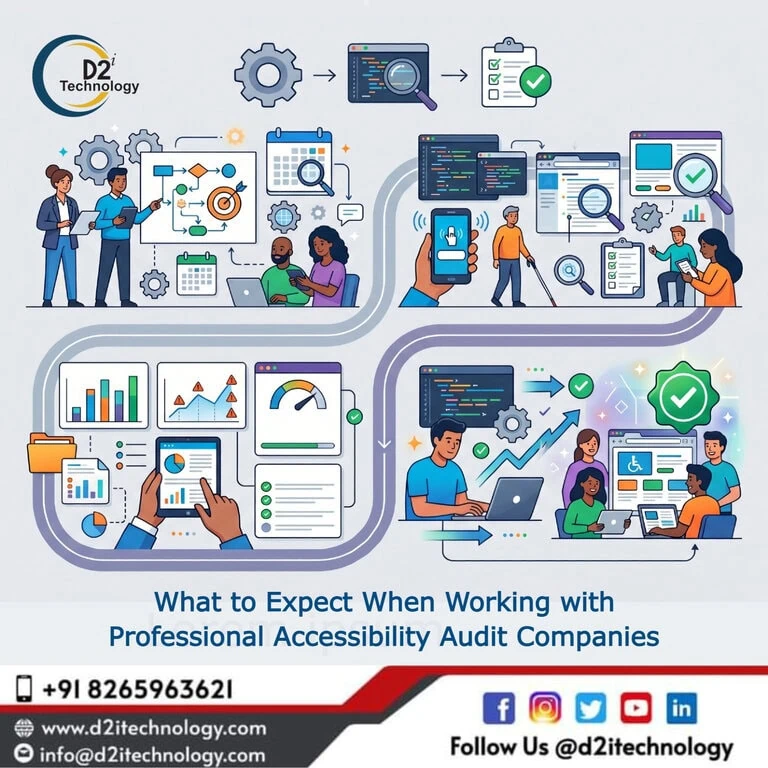
Choosing to work with professional Accessibility Audit Companies represents a critical decision for organizations committed to digital inclusion, legal compliance, and exceptional user experiences. These specialized firms bring expertise, objectivity, and proven methodologies that internal teams—particularly those new to accessibility—struggle to match. From initial assessment through remediation support and verification testing, professional auditors provide the comprehensive evaluation, actionable guidance, and documentation necessary for WCAG compliance and genuine accessibility. Understanding what professional accessibility audits involve, how the process unfolds, and what differentiates exceptional audit firms from mediocre ones empowers better partner selection and more successful engagements.
This comprehensive guide walks through everything you should expect when engaging professional accessibility audit companies, from initial consultation through final certification, helping you maximize value from your accessibility investment.
Understanding Professional Accessibility Audit Companies
Professional accessibility audit firms specialize in evaluating digital platforms for compliance and usability.
What Professional Auditors Provide
Accessibility Audit Companies deliver comprehensive services beyond simple testing:
Expert Evaluation: IAAP-certified professionals with deep WCAG knowledge, assistive technology expertise, and cross-industry experience conduct thorough assessments.
Objective Assessment: External auditors provide unbiased evaluation free from organizational politics, internal assumptions, or development team blind spots.
Comprehensive Testing: Professional firms combine automated scanning, manual testing, assistive technology verification, and when appropriate, user testing with disabled individuals.
Actionable Reporting: Detailed findings with severity classifications, remediation guidance, code examples, and prioritization recommendations.
Compliance Documentation: Third-party audit reports providing legal protection, regulatory submission support, and stakeholder confidence.
Learn why your business needs IAAP certified accessibility audit services for compliance and inclusivity.
Types of Accessibility Audits
Different audit types serve specific needs:
Initial Accessibility Audit: Comprehensive baseline assessment evaluating current compliance status, identifying all accessibility barriers, and creating remediation roadmaps.
Pre-Launch Audit: Testing new features, redesigns, or products before public release, catching issues while fixes remain inexpensive.
Compliance Verification Audit: Confirming WCAG conformance for legal, regulatory, or procurement requirements, providing necessary documentation.
Follow-Up Audit: Re-testing after remediation implementation, verifying fixes and confirming compliance achievement.
Ongoing Monitoring: Regular audits maintaining accessibility over time, catching regressions and reviewing new features.
Explore comprehensive accessibility testing services available.
What Distinguishes Professional Firms
Quality accessibility audit companies share key characteristics:
IAAP Certification: Certified professionals (WAS, CPACC) demonstrate proven expertise and ongoing education commitment.
Proven Methodology: Established testing processes balancing automation, manual evaluation, and assistive technology verification.
Industry Experience: Track record across sectors understanding diverse compliance requirements and use cases.
Clear Communication: Transparent reporting, accessible language, and collaborative partnership approach.
Remediation Support: Guidance extending beyond identifying issues to supporting implementation and verification.
The Professional Audit Process: What to Expect
Understanding the audit journey helps you prepare effectively and maximize engagement value.
Phase 1: Discovery and Planning
Professional engagements begin with comprehensive planning:
Initial Consultation: Auditors discuss your objectives, compliance requirements, timeline constraints, and specific concerns. This conversation establishes engagement scope and expectations.
Platform Inventory: Cataloging all digital properties requiring evaluation: websites, mobile apps, PDFs, multimedia content, and third-party integrations.
Technology Stack Assessment: Understanding your platforms, frameworks, CMS, and custom functionality informs testing approaches and potential challenges.
User Journey Mapping: Identifying critical user flows, priority features, and business-critical functionality requiring focused attention.
Timeline and Milestone Planning: Establishing realistic schedules for audit completion, remediation phases, and verification testing.
Phase 2: Automated Assessment
Professional audits typically begin with comprehensive automated scanning:
What Automated Tools Detect:
- Missing alternative text
- Insufficient color contrast
- Form label issues
- Heading hierarchy problems
- ARIA attribute errors
- Structural HTML problems
Tools Professional Auditors Use:
- axe DevTools for detailed technical analysis
- WAVE for visual feedback
- Lighthouse for comprehensive metrics
- Pa11y for automated monitoring
- Custom scripts for specific patterns
Automated Scanning Benefits: Quick baseline assessment, comprehensive coverage across large sites, consistent standard application, and issue deduplication and aggregation.
Limitations Professionals Address: Automated tools catch approximately 30% of accessibility issues. Professional auditors supplement automation with manual testing finding the remaining 70%.
Understand the best accessibility testing toolkit professionals employ.
Phase 3: Manual Accessibility Testing
Human expertise finds what automation misses:
Manual Testing Activities:
- Content structure and semantic HTML review
- Keyboard navigation comprehensive testing
- Focus management evaluation
- Form interaction and error handling
- Dynamic content update verification
- Complex widget functionality testing
- Visual design and layout assessment
What Manual Testing Discovers:
- Alternative text quality and appropriateness
- Logical reading order and content flow
- Context-dependent accessibility issues
- Meaningful link text evaluation
- Error message clarity and helpfulness
- Visual design consistency
- User experience quality
Manual Testing Value: Professional testers bring experience recognizing patterns, identifying edge cases, evaluating context-appropriate solutions, and assessing real-world usability.
Phase 4: Assistive Technology Evaluation
Professional auditors test with tools disabled users actually employ:
Screen Readers:
- JAWS (most popular commercial option)
- NVDA (widely-used free alternative)
- VoiceOver (Apple ecosystem)
- TalkBack (Android devices)
Other Assistive Technologies:
- Screen magnification software
- Speech recognition systems
- Alternative input devices
- Browser-based accessibility tools
Testing Scope: Professional auditors navigate complete user journeys using assistive technologies, identifying barriers preventing task completion and evaluating overall user experience quality.
Real-World Validation: This phase reveals whether platforms technically pass WCAG criteria while remaining practically unusable—a critical distinction automation cannot make.
Learn about user experience with web accessibility testing integration.
Phase 5: Comprehensive Reporting
Professional audit reports provide actionable intelligence:
Executive Summary:
- Overall compliance status (Level A/AA/AAA)
- Critical findings requiring immediate attention
- High-level recommendations
- Timeline for achieving compliance
- Risk assessment
Detailed Findings: For each identified issue:
- WCAG success criterion violated
- Severity and user impact classification
- Location (page, component, element)
- Detailed description and screenshots
- Code examples demonstrating the problem
- Recommended remediation approach
- Estimated fix effort
Prioritization Framework:
- Critical (P1): Complete blockers preventing task completion
- High (P2): Significant barriers with difficult workarounds
- Medium (P3): Moderate usability issues
- Low (P4): Minor improvements
Remediation Roadmap:
- Quick wins (1-2 weeks)
- Short-term priorities (1-3 months)
- Medium-term improvements (3-6 months)
- Long-term enhancements (6-12 months)
Explore understanding accessibility compliance audits for detailed guidance.
Phase 6: Remediation Guidance
Professional firms extend support beyond issue identification:
Implementation Support:
- Clarification of findings and recommendations
- Code examples and implementation patterns
- Best practice guidance
- Developer questions and consultation
- Architecture and design discussions
Knowledge Transfer:
- Team training on accessible development
- Documentation and style guides
- Internal capability building
- Ongoing consultation availability
Verification Testing:
- Post-remediation re-testing
- Regression testing after fixes
- Compliance confirmation
- Final certification
What Makes Professional Audits Valuable
Beyond basic compliance checking, professional audits deliver strategic advantages.
Expertise and Experience
Deep WCAG Knowledge: Professional auditors understand success criteria nuances, interpretation challenges, and practical application across diverse contexts.
Assistive Technology Proficiency: Regular use of screen readers, magnification, and alternative input provides authentic user perspective automated tools cannot replicate.
Cross-Industry Insights: Experience across sectors reveals patterns, common pitfalls, and industry-specific best practices informing better recommendations.
Pattern Recognition: Experienced auditors quickly identify systematic issues enabling efficient, scalable fixes rather than whack-a-mole approaches.
Objectivity and Fresh Perspective
Unbiased Assessment: External auditors evaluate platforms without organizational pressures, internal assumptions, or team loyalties affecting judgment.
User Perspective: Professional testers approach platforms as users would, recognizing barriers internal teams miss through familiarity.
Benchmark Comparisons: Experience with similar platforms provides context for assessing your accessibility maturity and competitive positioning.
Efficiency and Thoroughness
Established Methodologies: Proven testing processes ensure comprehensive coverage without redundant effort or wasted time.
Specialized Tooling: Professional-grade testing tools, scripts, and frameworks enable efficient, thorough evaluation.
Parallel Testing: Larger firms deploy multiple testers simultaneously, completing comprehensive audits faster than sequential internal testing.
Credible Documentation
Legal Protection: Third-party audit reports provide defensible documentation for lawsuits, regulatory inquiries, and procurement requirements.
Regulatory Submission: Professional certifications satisfy government requirements, SEBI mandates, and international standards.
Stakeholder Confidence: External validation provides executives, boards, and customers with independent verification of accessibility commitment.
Discover the importance of hiring US accessibility auditors for web compliance.
Selecting the Right Accessibility Audit Company
Not all audit firms deliver equal value. Evaluate carefully.
Essential Qualifications
IAAP Certification: Verify auditors hold Web Accessibility Specialist (WAS) or Certified Professional in Accessibility Core Competencies (CPACC) credentials.
WCAG Expertise: Confirm deep understanding of WCAG 2.0/2.1/2.2 standards, success criteria interpretation, and conformance evaluation methodology.
Industry Experience: Seek firms with relevant sector experience understanding your specific compliance requirements and use cases.
Assistive Technology Proficiency: Ensure regular testing with actual screen readers, magnification, and alternative input devices.
Testing Methodology: Verify balanced approaches combining automation, manual testing, and assistive technology verification.
Questions to Ask Potential Partners
Experience Questions:
- How many accessibility audits have you conducted?
- Do you have experience in our industry?
- Can you provide relevant client references?
- What certifications do your auditors hold?
- Have you worked with our technology stack?
Methodology Questions:
- What’s your testing approach and process?
- How do you balance automated and manual testing?
- Which assistive technologies do you test with?
- How do you prioritize identified issues?
- What deliverables do you provide?
Support Questions:
- Do you provide remediation guidance?
- Can you support our development team?
- Do you offer verification testing after fixes?
- What training or knowledge transfer do you provide?
- Do you provide ongoing consultation?
Compliance Questions:
- Which WCAG conformance levels do you test?
- What documentation do you provide?
- Can you support regulatory submissions?
- How do you handle evolving standards?
- What’s your approach to edge cases?
Red Flags to Avoid
Warning Signs:
- Automated-only testing without manual verification
- Promises of 100% WCAG compliance (unrealistic)
- Generic reports without specific guidance
- No IAAP certifications or credentials
- Lack of assistive technology testing
- Unwillingness to provide references
- Unclear methodologies or processes
Industry-Specific Audit Considerations
Different sectors face unique accessibility requirements.
Financial Services
Special Considerations:
- SEBI compliance for Indian institutions
- Accessible authentication and security
- Transaction accessibility
- Document and disclosure accessibility
- Account management features
Learn about digital accessibility audit for financial websites requirements.
Healthcare
Special Considerations:
- HIPAA compliance alongside accessibility
- Patient portal usability
- Telehealth platform accessibility
- Medical record access
- Appointment scheduling
E-Commerce
Special Considerations:
- Shopping cart accessibility
- Product browsing and filtering
- Checkout process usability
- Payment method accessibility
- Order tracking and management
Government
Special Considerations:
- Section 508 compliance
- Public information access
- Citizen service portals
- Form accessibility
- Emergency services
Education
Special Considerations:
- Learning management systems
- Course content accessibility
- Assessment and testing tools
- Communication platforms
- Student information systems
Working Effectively with Audit Companies
Maximize audit value through active engagement and preparation.
Pre-Audit Preparation
Documentation Gathering:
- Site maps and page inventories
- User journey documentation
- Technology stack information
- Known accessibility limitations
- Previous audit reports (if any)
Stakeholder Alignment:
- Executive buy-in and support
- Development team awareness
- Timeline expectations
- Budget approval
- Success criteria definition
Access Provisioning:
- Test accounts with appropriate permissions
- Staging environment access
- Source code access (if needed)
- Contact list for questions
- Communication channel setup
During the Audit
Responsiveness: Answer auditor questions promptly, provide requested information quickly, and clarify functionality or design decisions.
Open Communication: Schedule regular check-ins, address concerns immediately, and maintain transparency about challenges or constraints.
Collaborative Approach: Treat auditors as partners, share organizational context, and involve them in strategic discussions.
Post-Audit Actions
Report Review:
- Study findings thoroughly
- Prioritize issues strategically
- Ask clarifying questions
- Discuss remediation approaches
- Plan implementation timeline
Remediation Planning:
- Allocate development resources
- Establish milestones and deadlines
- Budget for fixes and retesting
- Communicate progress to stakeholders
- Track completion and verification
Explore comprehensive accessibility remediation support.
The D2i Technology Approach
As a leading Accessibility Audit Companies, D2i Technology delivers comprehensive, professional audits ensuring genuine accessibility.
IAAP Certified Professionals
Our team holds:
- Web Accessibility Specialist (WAS) certifications
- Certified Professional in Accessibility Core Competencies (CPACC)
- Continuous professional development
- Industry-leading expertise
- Cross-sector experience
Comprehensive Methodology
We combine:
- Automated scanning for baseline assessment
- Thorough manual testing
- Extensive assistive technology verification
- User testing when appropriate
- Industry-specific expertise
End-to-End Support
Beyond auditing, we provide:
- Detailed remediation guidance
- Developer training and support
- Verification testing after fixes
- Ongoing monitoring and consultation
- Compliance documentation
Learn about our complete accessibility services portfolio.
Industry-Specific Expertise
Experience across:
- Financial services and SEBI compliance
- Healthcare and medical platforms
- E-commerce and retail
- Government and public sector
- Education and learning platforms
Understand SEBI compliance consulting in India requirements.
Cost Considerations
Understanding audit investment helps budget planning.
Pricing Factors
Platform Complexity:
- Page count and unique templates
- Custom functionality scope
- Platform diversity (web, mobile, PDF)
- Third-party integrations
- Technical architecture
Audit Depth:
- Conformance level targeting (A/AA/AAA)
- Assistive technology testing scope
- User testing inclusion
- Documentation detail
- Follow-up support
Timeline Requirements:
- Urgent vs. standard timelines
- Resource allocation
- Rush fees
- Deliverable schedules
Typical Investment Ranges
Small Website Audits: $3,000 – $8,000 Medium Platform Audits: $8,000 – $25,000
Enterprise Comprehensive Audits: $25,000 – $100,000+ Ongoing Monitoring: $1,000 – $5,000/month
Return on Investment
Cost Avoidance:
- Lawsuit prevention ($50,000-$300,000 average settlements)
- Regulatory penalty avoidance
- Brand damage prevention
- Emergency fix cost reduction
Revenue Generation:
- Market expansion to disabled users
- Customer loyalty improvement
- Competitive differentiation
- Procurement qualification
Conclusion
Engaging professional Accessibility Audit Companies represents strategic investment in quality, compliance, and inclusion. The right partner brings expertise, objectivity, comprehensive testing, actionable guidance, and credible documentation transforming accessibility from compliance burden into competitive advantage.
Understanding what to expect—from discovery through verification—enables better partner selection, more effective collaboration, and maximum value realization. Look for IAAP certification, proven methodologies, industry experience, and genuine partnership orientation. Prepare thoroughly, communicate openly, and act decisively on findings.
Professional accessibility audits don’t just identify problems—they provide roadmaps for creating digital experiences welcoming everyone. Your commitment to working with qualified professionals demonstrates genuine dedication to inclusion.
Frequently Asked Questions
Partner with Accessibility Audit Experts
Ready to work with trusted accessibility audit professionals delivering comprehensive evaluation, actionable guidance, and genuine partnership? D2i Technology's IAAP-certified experts provide thorough audits combining automated scanning, manual testing, and assistive technology verification. From initial assessment through remediation support and verification, we ensure your platforms meet WCAG standards and provide excellent experiences for all users.