- Web Development
- March 6, 2026
What Makes a US Web Development Company Stand Out?
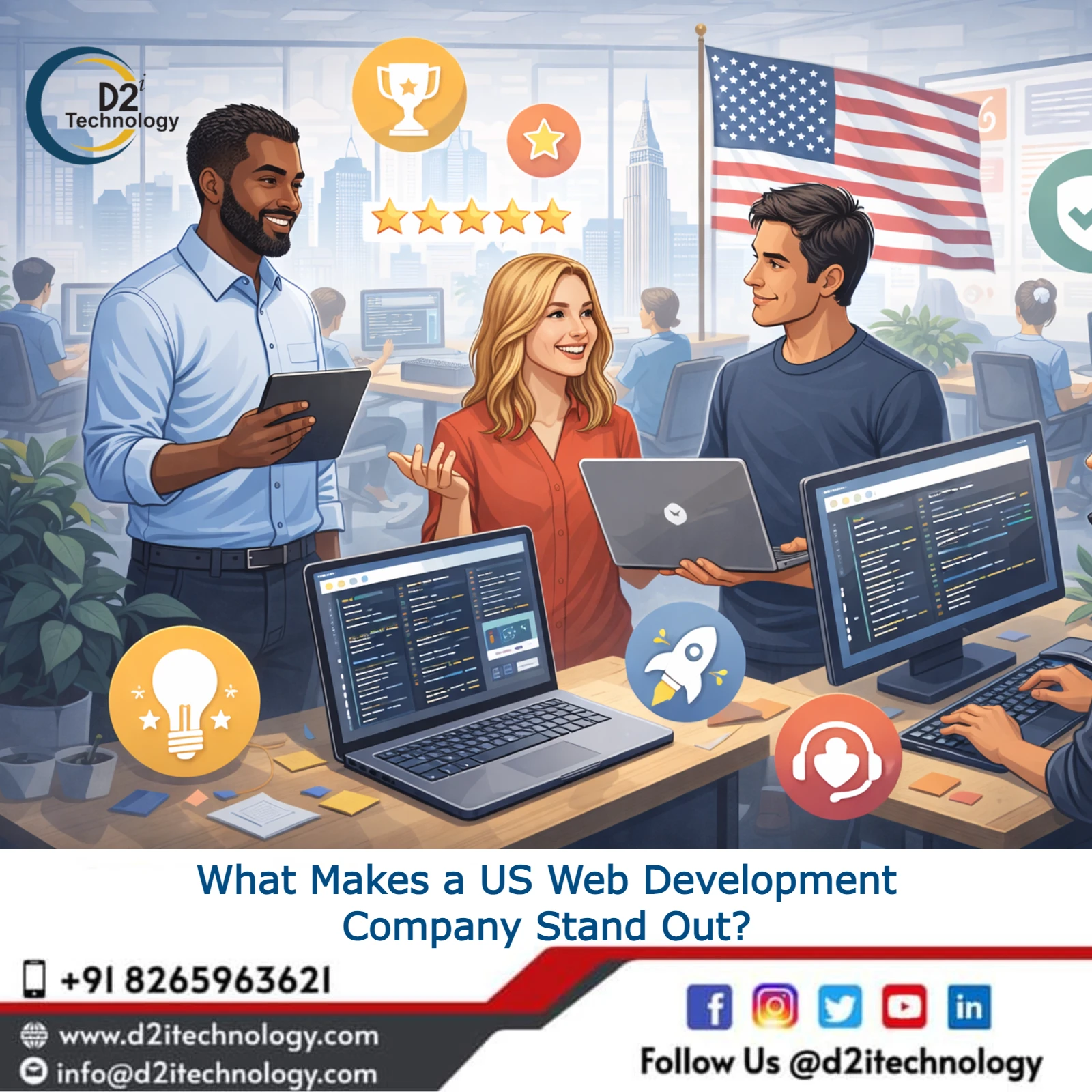
The competitive landscape of web development demands more than technical proficiency—it requires strategic vision, cultural alignment, and proven execution that transforms business requirements into digital success. When organizations evaluate a US Web Development Company, they’re not just selecting coders; they’re choosing partners who will shape their digital presence, influence customer experiences, and directly impact business outcomes. The distinction between average development firms and exceptional ones lies in their approach to communication, commitment to quality, depth of expertise, and ability to deliver solutions that remain scalable, secure, and relevant years after initial deployment.
American businesses face unique challenges when selecting development partners. Geographic proximity matters for real-time collaboration, time zone alignment eliminates communication friction, cultural understanding ensures requirements translate accurately, and domestic legal frameworks provide recourse and intellectual property protection. Yet not all US-based development companies deliver equal value. The best distinguish themselves through specific capabilities, methodologies, and commitments that separate exceptional results from mediocre implementations.
Technical Excellence Across Modern Technologies
Top Web Development Companies demonstrate mastery across the full technology stack, not just familiarity with popular frameworks:
Frontend Innovation
- Modern Framework Expertise: Leading companies excel with React, Angular, Vue.js, Next.js, and emerging technologies, choosing the right tool for each project rather than defaulting to familiar options.
- Progressive Web Apps: Building web applications that function offline, send push notifications, and install to home screens—delivering app-like experiences without app store distribution challenges.
- Performance Optimization: Implementing code splitting, lazy loading, image optimization, and caching strategies that deliver sub-second load times even on mobile networks.
- Responsive Design: Creating experiences that adapt seamlessly across desktop, tablet, and mobile devices with touch-optimized interactions and appropriate information density.
Backend Architecture
- Scalability by Design: Architecting systems that handle ten users today and ten million tomorrow without complete rebuilds through microservices, proper database design, and cloud-native patterns.
- API Excellence: Building robust, well-documented APIs enabling future expansion—mobile apps, third-party integrations, IoT devices—without architectural rework.
- Database Expertise: Working with relational databases (PostgreSQL, MySQL), NoSQL solutions (MongoDB, DynamoDB), and specialized databases, selecting data storage based on access patterns and scalability needs.
- Security Foundation: Integrating authentication, authorization, data encryption, security headers, and defense against common vulnerabilities from day one rather than retrofitting later.
Understanding the future of web development helps businesses appreciate how forward-thinking companies stay ahead of technological evolution.
Communication and Cultural Alignment
Geographic and cultural proximity distinguishes US web development companies:
Real-Time Collaboration
- Time Zone Compatibility: Working during your business hours enables spontaneous calls, immediate question resolution, and collaborative problem-solving that asynchronous communication cannot replicate.
- Direct Communication: Speaking with actual developers—not just project managers serving as intermediaries—accelerates understanding, reduces misinterpretation, and builds stronger partnerships.
- Video Conferencing Ease: Regular face-to-face virtual meetings fostering relationships, demonstrating progress, and enabling rapid alignment on changing requirements.
- Emergency Response: When critical issues arise, same-timezone availability means faster problem resolution rather than waiting overnight for responses.
Cultural Understanding
- Business Context Grasp: US companies inherently understand American business practices, market expectations, regulatory environments, and customer behaviors.
- Requirements Translation: Cultural alignment ensures feature requests, user stories, and design preferences translate accurately without getting lost in cultural interpretation gaps.
- Quality Standards: Shared expectations about what constitutes “done,” acceptable quality levels, and professional standards.
- Legal Framework: Operating under US jurisdiction provides clear intellectual property protection, contract enforcement, and legal recourse if disputes arise.
Exploring advantages of hiring a website development company in the USA demonstrates these benefits in detail.
Innovation and Cutting-Edge Technology
Leading US development companies don’t just follow trends—they pioneer approaches:
Emerging Technology Integration
- AI and Machine Learning: Implementing chatbots, recommendation engines, predictive analytics, natural language processing, and intelligent automation that deliver business value.
- Cloud-Native Architecture: Leveraging AWS, Azure, or Google Cloud managed services, serverless functions, and cloud-specific features that reduce operational overhead while improving reliability.
- Headless CMS: Decoupling content management from presentation enabling flexible multi-channel content delivery through modern, API-driven architectures.
- Jamstack Development: Building sites with static generation, API integration, and edge deployment for exceptional performance, security, and developer experience.
Development Methodology
- Agile Practices: Iterative development with regular sprints, continuous feedback, and flexibility to adapt as requirements evolve based on user feedback and market conditions.
- DevOps Integration: CI/CD pipelines, automated testing, infrastructure as code, and monitoring enabling rapid, reliable deployments with minimal downtime.
- Test-Driven Development: Writing tests before implementation, ensuring code quality, reducing bugs, and creating maintainable, reliable applications.
- Design Thinking: User-centered design processes incorporating research, prototyping, testing, and iteration ensuring solutions actually solve user problems.
Understanding custom website vs WordPress helps businesses choose appropriate technology approaches for their specific needs.
Client-Centric Approach
Exceptional US web development companies prioritize client success over billable hours:
Transparent Communication
- Regular Progress Updates: Weekly or bi-weekly demos showcasing working software, progress against milestones, and upcoming priorities.
- Honest Timeline Assessments: Realistic schedule estimates with contingency planning rather than optimistic promises that lead to disappointment.
- Budget Transparency: Clear pricing structures, detailed estimates, and upfront communication about potential cost impacts of scope changes.
- Risk Identification: Proactively flagging technical challenges, integration complexities, or requirement ambiguities before they become project-delaying problems.
Strategic Partnership
- Business Goal Alignment: Understanding your business objectives and recommending technical solutions that support those goals rather than implementing what you ask without questioning.
- Challenge Constructively: Questioning assumptions, suggesting better approaches, and providing strategic guidance beyond just taking orders.
- Long-Term Thinking: Designing solutions considering future growth, feature expansion, and maintenance rather than just delivering immediate requirements.
- Knowledge Transfer: Training your team, documenting systems comprehensively, and enabling internal ownership rather than creating dependency.
Quality Assurance and Best Practices
Top Web Development Companies maintain rigorous quality standards:
Comprehensive Testing
- Automated Testing: Unit tests, integration tests, and end-to-end tests running automatically with every code change catching regressions before they reach users.
- Manual QA: Experienced testers performing exploratory testing, usability evaluation, and edge case validation that automation cannot replicate.
- Performance Testing: Load testing and optimization ensuring applications perform under production conditions, not just on developer laptops.
- Security Testing: Vulnerability scanning, penetration testing, and security code reviews identifying and addressing security issues before deployment.
Code Quality Standards
- Code Reviews: Peer review processes ensuring all code meets quality standards, follows best practices, and maintains consistency.
- Documentation: Clear code comments, API documentation, architecture diagrams, and deployment guides enabling future maintenance.
- Version Control: Git-based workflows with proper branching strategies, commit messages, and collaboration processes.
- Technical Debt Management: Balancing feature delivery with refactoring, maintaining code quality rather than accumulating shortcuts that become expensive later.
Exploring how manual testing improves software quality demonstrates the importance of comprehensive quality assurance.
Scalability and Long-Term Support
Building for today while planning for tomorrow distinguishes exceptional companies:
Scalable Architecture
- Horizontal Scaling: Designing systems that scale by adding instances rather than requiring increasingly powerful single servers.
- Caching Strategies: Implementing Redis, CDN, and application-level caching reducing database load and improving response times.
- Database Optimization: Query optimization, proper indexing, and database architecture supporting growth without performance degradation.
- Load Balancing: Distributing traffic across multiple servers ensuring high availability and efficient resource utilization.
Ongoing Partnership
- Maintenance and Support: Continuing relationship beyond launch providing bug fixes, security updates, performance optimization, and minor enhancements.
- Monitoring and Alerts: Proactive monitoring identifying issues before they impact users, with rapid response protocols for critical problems.
- Technology Updates: Keeping frameworks, libraries, and dependencies current addressing security vulnerabilities and leveraging improvements.
- Feature Evolution: Supporting your platform as business needs grow, market conditions change, and user expectations evolve.
Industry-Specific Expertise
Leading US development companies bring sector-specific knowledge:
Financial Services
Understanding regulatory requirements (SOC 2, PCI-DSS), security best practices, real-time transaction processing, and complex financial calculations that fintech applications require.
Healthcare
Knowledge of HIPAA compliance, electronic health records integration, telemedicine platforms, patient engagement, and the unique workflows of healthcare providers.
E-Commerce
Experience with product catalogs, inventory management, payment gateway integration, order fulfillment, and performance optimization required for high-traffic retail sites.
Enterprise SaaS
Understanding multi-tenancy, subscription management, usage-based billing, API-first design, and scalability requirements of software serving thousands of customers.
Learning about the best web application development company provides insight into industry-specific expertise and proven capabilities.
The D2i Technology Advantage
D2i Technology stands among leading US Web Development Company providers through proven capabilities:
Comprehensive Technical Expertise
- Full-Stack Proficiency: Mastering frontend frameworks (React, Angular, Vue.js), backend technologies (Node.js, Python, .NET, PHP), modern databases, and cloud platforms.
- Modern Architecture: Cloud-native design, microservices, serverless computing, API-first development, and progressive web applications.
- AI Integration: Practical implementation of machine learning, natural language processing, recommendation engines, and intelligent automation.
- Security Focus: DevSecOps practices, security audits, penetration testing, and compliance expertise (HIPAA, PCI-DSS, SOC 2, GDPR).
Proven Methodology
- Agile Development: Iterative sprints, regular demonstrations, continuous feedback, and flexibility adapting to evolving requirements.
- Quality Assurance: Comprehensive testing including automated unit and integration tests, manual exploratory testing, performance validation, and security assessment.
- DevOps Excellence: CI/CD pipelines, infrastructure as code, automated deployment, monitoring, and rapid release capabilities.
- Transparent Communication: Regular updates, accessible project tracking, honest risk communication, and collaborative problem-solving.
Industry Experience
Our portfolio spans financial platforms, healthcare applications, e-commerce sites, enterprise tools, and innovative startups—demonstrating versatility while bringing relevant experience to each engagement.
Our comprehensive website development services combine technical excellence with business focus, delivering solutions that drive measurable results.
Evaluating US Web Development Companies
When selecting development partners, assess these critical factors:
Portfolio and Case Studies
- Relevant Experience: Have they built similar applications in your industry? Can they demonstrate understanding of your specific challenges?
- Technical Complexity: Do their projects showcase appropriate sophistication—not just simple websites but complex applications requiring architectural expertise?
- Business Outcomes: Do case studies demonstrate measurable results—increased conversions, reduced costs, improved user satisfaction—beyond just technical delivery?
- Visual Quality: Does their design work reflect modern aesthetics and user experience best practices?
Team Expertise
- Team Structure: Who will actually work on your project? Will you have access to senior developers or just junior resources?
- Certifications and Training: Do team members pursue professional development, certifications, and ongoing education?
- Retention: Does the company retain talent, or is there high turnover creating continuity risks?
- Technical Leadership: Do they have experienced architects, senior developers, and technical leads guiding projects?
Process and Methodology
- Development Approach: What methodology do they follow? Is it flexible or rigid? How do they handle changing requirements?
- Communication Cadence: How often will you receive updates? Who will be your primary contact? How accessible is the team?
- Quality Assurance: What testing practices do they follow? How do they ensure code quality and prevent regressions?
- Project Management: What tools do they use? How do they track progress and manage risks?
References and Reputation
- Client References: Will they provide contacts for previous clients? What do those clients say about their experience?
- Online Reviews: What’s their reputation on platforms like Clutch, GoodFirms, or Google Business?
- Portfolio Verification: Can they demonstrate actual involvement in projects they claim, not just show work they admire?
Understanding hiring web application development company vs in-house development helps organizations make informed decisions about development approaches.
Investment Considerations
Understanding development costs ensures realistic budgeting:
Pricing Models
- Fixed Price: Defined scope, set cost—works well for clearly defined projects with stable requirements.
- Time and Materials: Hourly or monthly rates—provides flexibility for evolving requirements and discovery-driven projects.
- Dedicated Team: Reserved development capacity—optimal for ongoing development needs and long-term partnerships.
- Value-Based Pricing: Cost tied to business outcomes—aligns incentives but requires clear success metrics.
Typical Cost Ranges
- Simple Business Websites: $10,000-$30,000 for custom design, CMS integration, and basic functionality.
- Complex Web Applications: $50,000-$200,000 for custom features, integrations, user accounts, and sophisticated functionality.
- Enterprise Platforms: $200,000-$1,000,000+ for comprehensive systems with complex workflows, extensive integrations, and scalability requirements.
- Ongoing Development: $10,000-$50,000 monthly for dedicated development teams supporting continuous feature development.
ROI Considerations
Compare development investment against:
- Revenue growth from new capabilities
- Operational efficiency and cost reduction
- Improved customer experience and retention
- Market differentiation and competitive advantage
- Avoided costs of wrong technology choices or poor implementations
Conclusion
Selecting a US Web Development Company profoundly impacts your digital success. The distinction between average and exceptional partners isn’t just technical skill—it’s understanding your business context, communicating effectively, following proven methodologies, and remaining committed to your success beyond initial project delivery.
Geographic and cultural proximity of US-based companies enables real-time collaboration, accurate requirement translation, shared quality standards, and legal protections that offshore alternatives cannot match. Combined with technical excellence across modern technologies, these advantages deliver better outcomes and lower total cost of ownership despite potentially higher hourly rates.
Top Web Development Companies distinguish themselves through proven expertise, transparent communication, quality-first approaches, and long-term partnership thinking. They challenge assumptions, recommend optimal solutions, and build platforms that scale as your business grows—not just deliver what you request.
D2i Technology exemplifies these qualities, combining technical mastery with business focus, delivering web solutions that drive measurable results. Whether you’re building new platforms, modernizing legacy systems, or expanding digital capabilities, choosing the right development partner determines success.
Don’t compromise on your digital foundation. Select US-based partners who bring relevant expertise, proven processes, and genuine commitment to your success. Your digital presence deserves nothing less.
About D2i Technology
D2i Technology is a premier US Web Development Company delivering custom web solutions for businesses seeking competitive advantage through technology. Our experienced team combines technical excellence with business focus, creating applications that solve real problems and drive measurable results. We specialize in modern web development using React, Angular, Vue.js, and full-stack JavaScript; responsive and progressive web applications; e-commerce platforms and custom marketplaces; enterprise web applications and SaaS platforms; API development and system integration; and cloud-native architecture on AWS, Azure, and Google Cloud. Our expertise spans financial services, healthcare, e-commerce, SaaS, and enterprise sectors, delivering projects through agile methodology with transparent communication and quality focus. We’re not just developers—we’re strategic partners understanding your business objectives and recommending technology solutions that support those goals. Our commitment extends beyond project delivery to ongoing support, maintenance, optimization, and strategic technology guidance. As a Top Web Development Companies provider, we partner with organizations from startups to enterprises, building lasting relationships and scalable platforms that grow alongside businesses. Our comprehensive services include custom software development, website development, and strategic technology consulting helping you navigate complex decisions and build digital foundations for sustained growth.
Frequently Asked Questions
Build Your Digital Success with Expert Partners
Partner with D2i Technology—a leading US web development company delivering custom solutions that drive business growth. Proven expertise, transparent communication, and commitment to your success.