- Web Development
- May 18, 2026
How to Hire a Dedicated Web Developers from India
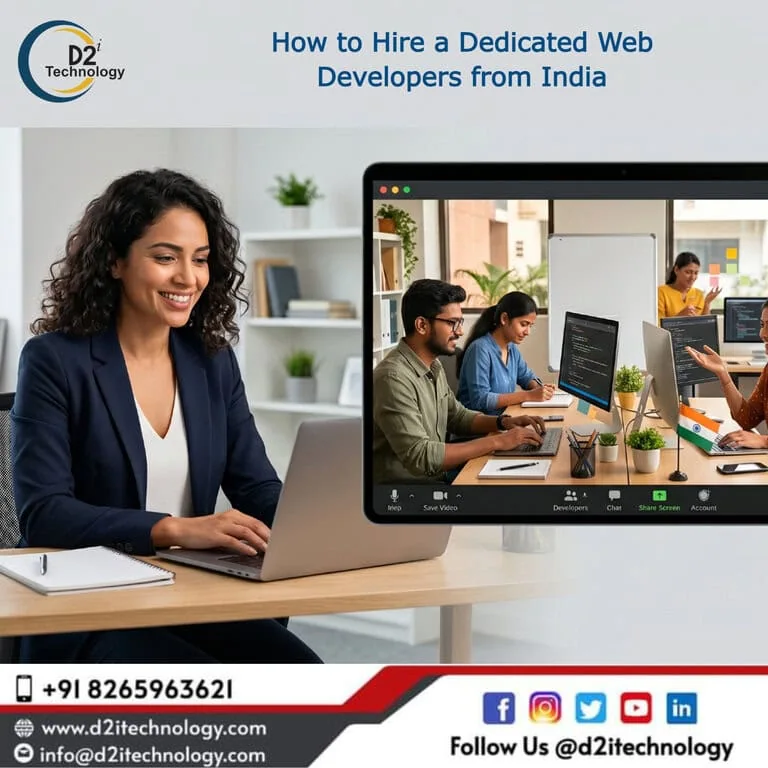
For businesses across the US, UK, UAE, and beyond, the decision to hire dedicated web developers from India has become a strategic move — not just a cost-cutting exercise. India has firmly established itself as a global IT powerhouse, offering a vast talent pool of skilled developers, strong English communication, and time-zone flexibility that supports round-the-clock productivity. But like any hiring decision, doing it right requires more than a quick search and a shortlisted resume.
This guide walks you through everything — from why India makes sense, to how to evaluate candidates, choose the right engagement model, and avoid common mistakes.
Why Businesses Choose to Hire Web Developers from India
India produces over 1.5 million engineering graduates every year. This pipeline consistently feeds a developer workforce that is experienced in modern web technologies — React, Angular, Vue.js, Node.js, Laravel, WordPress, Python Django, and more. Beyond technical depth, Indian developers bring a work culture built around deadlines, documentation, and client communication.
Here’s why global businesses continue to rely on Indian development teams:
- Cost efficiency: Development rates in India are significantly lower compared to US or UK markets, without compromising code quality.
- Large talent pool: Whether you need a full-stack developer, a WordPress specialist, or an AI-integrated web app builder, you’ll find skilled professionals.
- Mature outsourcing ecosystem: India has decades of experience supporting global IT projects — processes, communication standards, and delivery frameworks are well-established.
- Timezone advantage: Indian Standard Time (IST) overlaps with US afternoons and UK mornings, enabling real-time collaboration during critical project phases.
If you’re evaluating this option seriously, it also helps to understand the broader landscape. Check out our post on the Top Web Application Development Companies in India for 2026 for a better picture of who’s doing strong work in this space.
Step 1 — Define Your Project Requirements Clearly
Before reaching out to any developer or agency, you need absolute clarity on your project. Vague briefs lead to mismatched hires and budget overruns.
Ask yourself:
- What type of website or web application are you building? (eCommerce, SaaS, corporate portal, marketplace)
- What is your preferred tech stack?
- Do you need a single developer, a small team, or a full project delivery setup?
- What are your timeline expectations?
- Do you require post-launch maintenance and support?
Also consider accessibility and compliance needs upfront. If your product serves users in the US or UK, WCAG compliance may be a legal requirement, not just a nice-to-have. You can explore our Web Accessibility Remediation Services if this applies to your project.
Step 2 — Choose the Right Engagement Model
When you hire dedicated web developers from India, you typically have three engagement models to choose from:
- Fixed Price Model: Best for well-defined projects with clear deliverables and a fixed budget. Milestones are agreed upfront.
- Time and Material Model: Ideal for evolving projects where requirements may shift. You pay for hours and resources consumed.
- Dedicated Team Model: You hire a developer or team that works exclusively on your project, often managed like an in-house extension. This is the most popular model for long-term or scaling projects.
For a deeper comparison of outsourcing vs. building in-house, our blog on Hiring a Web Application Development Company vs. In-House Development lays out the tradeoffs clearly.
Step 3 — Know Where to Look for the Right Developers
Finding qualified web developers from India isn’t limited to one channel. Here are the most reliable sources:
- IT Companies and Development Agencies: Companies like D2i Technology offer structured teams with defined processes, dedicated project managers, and accountability. This is the most reliable route for businesses that can’t afford trial-and-error.
- Freelance Platforms: Upwork, Toptal, and Freelancer have a large base of Indian developers. Works well for short-term tasks or tightly scoped work.
- LinkedIn: Good for direct outreach, especially when hiring senior developers or tech leads.
- Referrals: If your network has worked with Indian developers or agencies before, referrals remain the highest-trust channel.
For larger projects, agencies tend to outperform solo freelancers because they offer backup developers, QA processes, and project management layers that freelancers typically cannot provide. Our guide on the Top 10 Software Development Companies in India for 2026 can help you benchmark your shortlist.
Step 4 — Evaluate Technical Skills Properly
Don’t rely solely on a portfolio. Run a structured evaluation:
Review Their Portfolio Critically: Look for projects similar to yours. Check if they’ve worked with your preferred tech stack, handled projects of your scale, and delivered production-ready applications.
Technical Interview: Ask problem-solving questions relevant to your stack. Include live coding rounds or take-home assignments. Assess how they explain their thought process, not just whether they get the answer right.
Check References: Ask for previous client references, specifically ones in your geography or industry. A 10-minute reference call can save months of headaches.
Assess Communication Skills: For a remote engagement, communication matters as much as code. Evaluate written clarity, response time in initial exchanges, and comfort with tools like Slack, Jira, or Asana.
For context on what strong web development work looks like, see our post on Web Applications Built to Scale Globally — Not Rebuilt Later.
Step 5 — Set Up a Governance and Collaboration Framework
Once you’ve made your hire, the setup phase is critical. A lot of remote engagements fail not because of skill gaps, but because of poor coordination.
Establish:
- A clear communication rhythm (daily standups or async updates via tools like Slack)
- A project management tool (Jira, Trello, Linear, or ClickUp)
- A version control protocol (Git workflows, branching conventions)
- A sprint-based delivery framework with demo checkpoints
- A defined escalation path for blockers
Also ensure legal and IP protection: have a solid NDA and work-for-hire agreement in place before the engagement begins.
Step 6 — Watch Out for Red Flags
Knowing what to avoid is just as important as knowing what to look for:
- Developers who overpromise timelines without asking clarifying questions
- Agencies that assign their best resources for demos and switch to junior developers post-onboarding
- Lack of documented processes or version control practices
- Poor availability during agreed working hours
- Resistance to video calls or any preference for opacity in communication
If you’re working with an IT outsourcing partner for the first time, our blog on IT Outsourcing Challenges and Solutions covers the common pitfalls and how to navigate them.
Custom Web Development Trends Worth Knowing in 2026
If you’re hiring for a new project, it’s worth understanding where web development is heading. AI-integrated web apps, headless CMS architecture, performance-first development, and accessibility-native builds are no longer optional extras — they’re becoming baseline expectations. Read our post on Custom Web App Development in India: Trends for 2026 to align your project brief with current standards.
Also, if your project involves scaling across markets, see how Strategic IT Outsourcing can be structured to support long-term growth rather than just plugging a short-term gap.
Why D2i Technology Is a Trusted Choice
D2i Technology is an India-based technology company offering dedicated web development teams, custom web application development, and full-cycle digital services to clients across the US, UK, UAE, Australia, and beyond.
Our development team works across:
- WordPress and WooCommerce development
- Custom web application development (React, Node.js, Laravel, Python)
- Mobile application development
- AI-powered web solutions
- Web accessibility-compliant builds
We also hold IAAP WAS certification, meaning every digital product we build or audit is evaluated against international accessibility standards from day one.
Explore our Website Development Services or check out our Mobile Development capabilities to see what a structured, accountable team looks like in practice.
Frequently Asked Questions
Not sure where to start with building or scaling your web project?
Our team at D2i Technology has helped businesses across the US, UK, and UAE hire structured, accountable development teams — with transparency baked in from day one.