- DevOps
- March 10, 2026
Unlock Success with Leading DevOps Consulting Firms in the USA
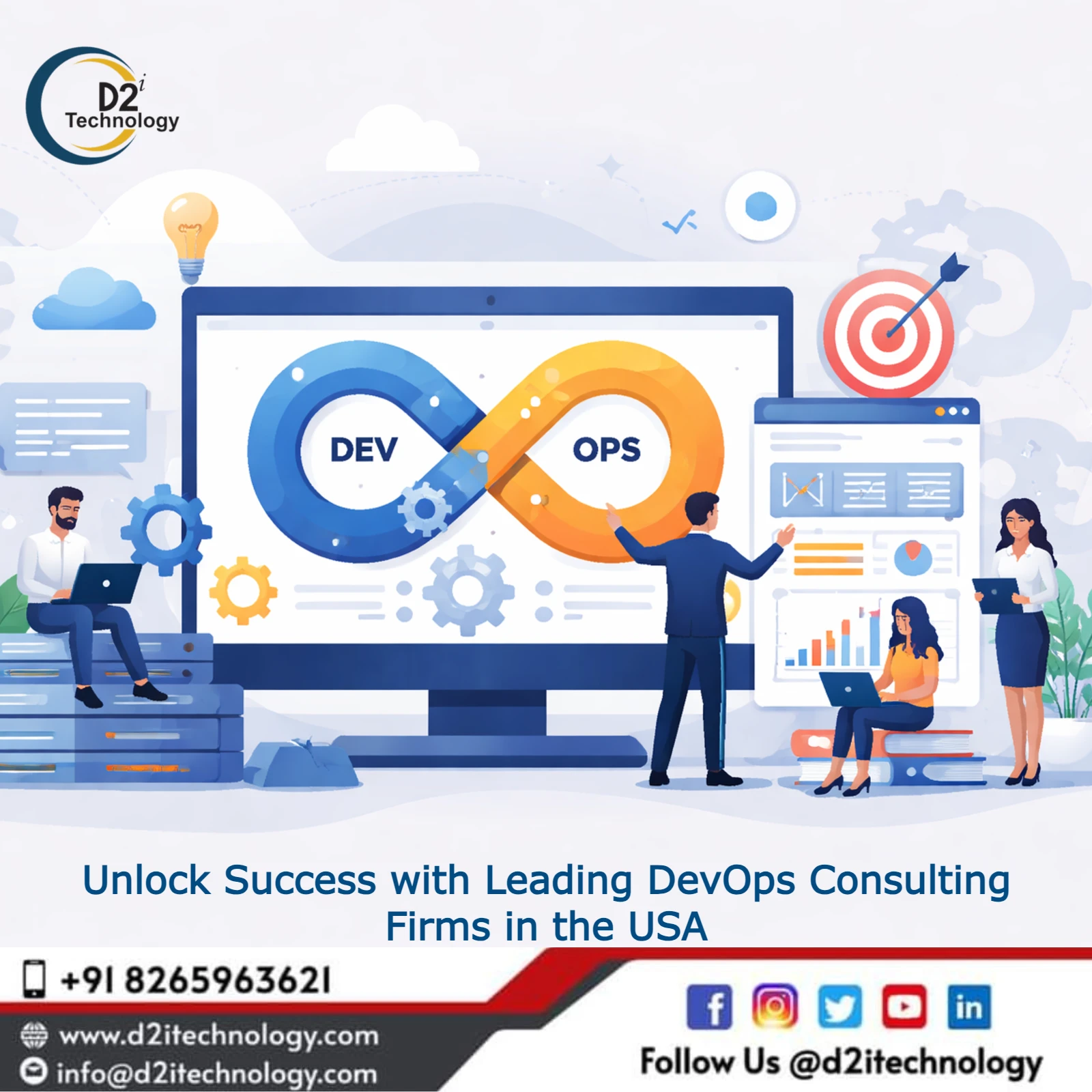
The competitive landscape demands software delivery that’s both rapid and reliable, making partnerships with professional Devops Consulting Companies In USA essential for organizations seeking digital transformation success. Whether you’re struggling with deployment bottlenecks, infrastructure scalability challenges, or quality concerns from rushed releases, expert DevOps consulting transforms how you develop, deploy, and deliver software—reducing time-to-market while improving reliability, security, and cost efficiency. The right consulting partner doesn’t just implement tools; they fundamentally reshape your development culture, streamline workflows, and build sustainable practices that deliver lasting competitive advantage.
American businesses face unique pressures: market demands for continuous innovation, customer expectations for always-available services, talent competition for DevOps expertise, and regulatory requirements for security and compliance. Devops Consulting Companies In USA understand these challenges firsthand, bringing not just technical expertise but cultural awareness, business context, and proven methodologies that align with American operational realities. The difference between superficial DevOps adoption and transformative implementation often comes down to choosing partners who combine deep technical knowledge with strategic business perspective.
Understanding DevOps Consulting Value
Before exploring what distinguishes leading consultancies, understanding core value propositions ensures alignment:
What DevOps Consulting Delivers
- Cultural Transformation: Breaking down silos between development and operations teams, creating shared ownership where both groups collaborate on software delivery success.
- Process Optimization: Streamlining workflows from code commit to production deployment, eliminating bottlenecks, and automating repetitive tasks.
- Infrastructure Modernization: Migrating to cloud platforms, implementing infrastructure as code, and building scalable, reliable architectures.
- CI/CD Pipeline Implementation: Establishing automated testing, build, and deployment pipelines that enable frequent, reliable releases.
- Monitoring and Observability: Implementing comprehensive logging, metrics, and alerting that provide visibility into system behavior and enable rapid troubleshooting.
Understanding when to consider DevOps services helps organizations recognize optimal engagement timing.
Why External Consulting Matters
- Expertise Gap: DevOps requires specialized knowledge spanning development, operations, security, and cloud platforms—expertise difficult to build internally.
- Accelerated Transformation: Consultants bring proven methodologies, avoiding trial-and-error approaches that waste time and resources.
- Objective Perspective: External partners identify organizational dysfunctions and process inefficiencies that internal teams overlook or tolerate.
- Tool Selection Guidance: Navigating the overwhelming DevOps tool landscape requires experience understanding which technologies fit specific situations.
- Change Management: Cultural transformation is challenging—consultants bring experience guiding organizations through resistance and adoption hurdles.
Key Capabilities of Leading DevOps Consulting Firms
Top-tier Devops Consulting Companies In USA distinguish themselves through specific capabilities:
Comprehensive Technical Expertise
- Cloud Platform Mastery: Deep expertise across AWS, Microsoft Azure, and Google Cloud Platform, understanding service offerings, pricing models, and best practices for each.
- Container Orchestration: Kubernetes expertise including cluster design, deployment strategies, security implementation, and operational best practices.
- Infrastructure as Code: Proficiency with Terraform, CloudFormation, ARM templates, and Ansible for reproducible, version-controlled infrastructure.
- CI/CD Tools: Experience with Jenkins, GitLab CI/CD, GitHub Actions, CircleCI, and other pipeline tools, selecting and implementing optimal solutions.
- Monitoring Solutions: Implementing Prometheus, Grafana, ELK Stack, Datadog, New Relic, or cloud-native monitoring with appropriate alerting and dashboards.
Exploring DevOps tools provides insight into the technology ecosystem leading consultancies navigate.
Strategic Business Alignment
- ROI Focus: Connecting DevOps investments to business outcomes—faster time-to-market, reduced operational costs, improved reliability, and competitive advantage.
- Risk Management: Balancing innovation speed with stability, security, and compliance requirements appropriate for your industry and risk tolerance.
- Scalability Planning: Designing systems supporting current needs while accommodating future growth without architectural rewrites.
- Cost Optimization: Implementing right-sizing, reserved instances, spot instances, and auto-scaling that maximize cloud ROI.
Industry-Specific Knowledge
Different sectors have unique DevOps requirements:
- Financial Services: Understanding regulatory compliance (SOC 2, PCI-DSS), security requirements, disaster recovery mandates, and audit trails.
- Healthcare: Knowledge of HIPAA compliance, protected health information handling, clinical system integrations, and uptime requirements.
- E-Commerce: Experience with traffic spikes, payment processing, inventory synchronization, and the performance demands of retail platforms.
- SaaS: Understanding multi-tenancy, subscription models, API-first architectures, and the scalability requirements of software serving thousands of customers.
Understanding Azure DevOps growth benefits demonstrates sector-specific DevOps applications.
The DevOps Consulting Engagement Process
Quality consulting follows structured approaches ensuring successful outcomes:
Phase 1: Assessment and Strategy
- Current State Analysis: Evaluating existing development processes, deployment practices, infrastructure, tooling, and team capabilities.
- Pain Point Identification: Understanding specific challenges—slow deployments, frequent production issues, scaling problems, or high operational costs.
- Maturity Assessment: Determining your organization’s DevOps maturity across culture, processes, tools, and metrics.
- Goal Definition: Establishing clear, measurable objectives—deployment frequency targets, mean time to recovery goals, or cost reduction targets.
- Roadmap Development: Creating phased implementation plans balancing quick wins with long-term transformation.
Phase 2: Architecture and Design
- Infrastructure Design: Planning cloud architecture, networking, security groups, database strategies, and disaster recovery approaches.
- Pipeline Architecture: Designing CI/CD workflows including branching strategies, automated testing approaches, deployment patterns, and rollback procedures.
- Tool Selection: Choosing appropriate technologies based on requirements, team skills, budget constraints, and integration needs.
- Security Integration: Embedding security throughout pipelines—vulnerability scanning, secrets management, compliance checking, and access controls.
Phase 3: Implementation
- Infrastructure Provisioning: Implementing infrastructure as code, setting up cloud resources, configuring networks, and establishing security controls.
- Pipeline Development: Building automated build, test, and deployment pipelines with appropriate quality gates and approval workflows.
- Migration Execution: Moving applications to new infrastructure, containerizing workloads, or implementing new deployment patterns with minimal disruption.
- Integration: Connecting systems—version control, issue tracking, monitoring, logging, and notification tools—into cohesive workflows.
Exploring step-by-step DevOps implementation provides detailed process insights.
Phase 4: Training and Knowledge Transfer
- Technical Training: Teaching teams to use new tools, write infrastructure as code, troubleshoot pipelines, and operate monitoring systems.
- Process Training: Educating teams on new workflows, collaboration patterns, incident response procedures, and continuous improvement practices.
- Documentation: Creating runbooks, architecture diagrams, troubleshooting guides, and operational procedures enabling independent team operation.
- Mentorship: Pairing consultants with internal team members, providing hands-on guidance during initial months of operation.
Phase 5: Optimization and Continuous Improvement
- Performance Tuning: Optimizing deployment speeds, infrastructure costs, application performance, and monitoring effectiveness.
- Metrics Implementation: Establishing DORA metrics (deployment frequency, lead time, MTTR, change failure rate) tracking DevOps effectiveness.
- Feedback Loops: Creating mechanisms capturing lessons learned, identifying improvement opportunities, and evolving practices.
- Ongoing Support: Providing continued consultation as needs evolve, technologies advance, or new challenges emerge.
Measuring DevOps Success
Professional consulting delivers measurable improvements across critical metrics:
Deployment Metrics
- Deployment Frequency: Moving from monthly deployments to weekly, daily, or multiple times per day, enabling faster feature delivery and bug fixes.
- Lead Time for Changes: Reducing time from code commit to production deployment from weeks to hours, accelerating responsiveness to market needs.
- Deployment Success Rate: Increasing successful deployments while reducing rollbacks, emergency fixes, and deployment-related incidents.
Reliability Metrics
- Mean Time to Recovery (MTTR): Decreasing time to restore service after incidents from hours to minutes through better monitoring, automation, and processes.
- Change Failure Rate: Reducing percentage of deployments causing production incidents through better testing, gradual rollouts, and quality gates.
- Uptime/Availability: Improving service availability through redundancy, auto-scaling, and better incident response.
Operational Efficiency
- Infrastructure Costs: Reducing cloud spending through right-sizing, reserved instances, auto-scaling, and eliminating waste.
- Manual Effort Reduction: Automating repetitive tasks freeing teams for innovation rather than maintenance.
- Team Productivity: Enabling developers to focus on features rather than deployment struggles, operations teams to prevent fires rather than fight them.
Business Impact
- Time-to-Market: Accelerating feature delivery, enabling faster response to competitive threats and market opportunities.
- Customer Satisfaction: Improving reliability and reducing incidents directly impacts user experience and satisfaction scores.
- Innovation Capacity: Freeing resources from maintenance and firefighting enables investment in new capabilities and improvements.
Exploring business benefits of DevOps demonstrates comprehensive value delivery.
Selecting the Right DevOps Consulting Partner
Not all consulting firms deliver equal value. Key selection criteria include:
Technical Credentials
- Certifications: Look for AWS, Azure, or Google Cloud certifications (Solutions Architect, DevOps Engineer), Kubernetes certifications (CKA, CKAD), and tool-specific credentials.
- Technology Breadth: Ensure expertise across cloud platforms, containerization, CI/CD tools, monitoring solutions, and infrastructure as code technologies.
- Architecture Experience: Verify capability designing scalable, resilient, secure systems—not just implementing tools.
Proven Experience
- Industry Relevance: Have they worked with organizations in your sector understanding specific requirements and constraints?
- Scale Experience: Can they handle your complexity—enterprise-scale implementations versus small business deployments?
- Case Studies: Ask for detailed examples of similar transformations including challenges faced, approaches taken, and results achieved.
- Client References: Speak with previous clients about their experience, results achieved, and whether they’d engage again.
Methodology and Approach
- Assessment Process: Do they start with thorough discovery understanding your needs before prescribing solutions?
- Phased Implementation: Do they break work into manageable phases with clear milestones rather than big-bang approaches?
- Knowledge Transfer: Is training and enablement integrated throughout rather than afterthoughts?
- Post-Engagement Support: Do they provide ongoing assistance or disappear after initial implementation?
Cultural Fit
- Communication Style: Are they educators explaining concepts clearly, or jargon-heavy technologists creating confusion?
- Collaboration Approach: Do they work with your teams building internal capability, or operate in isolation creating dependency?
- Problem-Solving Philosophy: Do they provide prescriptive solutions or collaborate discovering approaches that work for your organization?
Understanding USA-based DevOps services solutions helps evaluate domestic versus offshore alternatives.
The D2i Technology DevOps Consulting Advantage
D2i Technology stands among leading Devops Consulting Companies In USA through proven capabilities:
Comprehensive Technical Expertise
- Multi-Cloud Proficiency: Deep experience with AWS, Microsoft Azure, and Google Cloud Platform including advanced services and cost optimization strategies.
- Container Orchestration: Kubernetes expertise from cluster design through production operations including security, monitoring, and scaling.
- CI/CD Excellence: Implementing automated pipelines using Jenkins, GitLab CI/CD, GitHub Actions, and other tools with comprehensive testing and security integration.
- Infrastructure as Code: Terraform and CloudFormation expertise enabling reproducible, version-controlled infrastructure provisioning.
- Monitoring and Observability: Implementing comprehensive solutions using Prometheus, Grafana, ELK Stack, or cloud-native monitoring with intelligent alerting.
Our comprehensive DevOps services combine technical depth with strategic business focus.
Proven Methodology
- Assessment-First Approach: Beginning every engagement with thorough discovery understanding your challenges, goals, and constraints before recommending solutions.
- Phased Implementation: Breaking transformations into manageable phases delivering value incrementally while minimizing disruption.
- Training Integration: Building team capability throughout engagements rather than just implementing solutions and leaving.
- Continuous Improvement: Establishing metrics, feedback loops, and optimization cycles ensuring sustained benefits beyond initial implementation.
Industry Experience
- Cross-Sector Expertise: Financial services, healthcare, e-commerce, SaaS, and enterprise platforms—understanding sector-specific requirements and constraints.
- Scalability Focus: Designing systems that grow with your business from startup to enterprise scale without architectural rewrites.
- Security Integration: Embedding DevSecOps practices throughout pipelines with vulnerability scanning, compliance checking, and security best practices.
Understanding DevOps CI/CD benefits demonstrates practical value delivery from our implementations.
Common DevOps Challenges and Solutions
Professional consulting addresses prevalent obstacles:
Legacy System Integration
Challenge: Modernizing infrastructure while maintaining legacy applications that can’t easily containerize or cloud-migrate.
Solution: Hybrid approaches containerizing new services while creating integration layers for legacy systems, enabling gradual modernization.
Security and Compliance
Challenge: Maintaining security and regulatory compliance while accelerating deployment frequency.
Solution: DevSecOps practices automating security scanning, compliance checking, and vulnerability management throughout pipelines.
Organizational Resistance
Challenge: Cultural resistance from teams comfortable with existing processes or skeptical of DevOps value.
Solution: Executive sponsorship, clear communication of benefits, quick wins demonstrating value, and involving resistant team members in planning.
Tool Sprawl
Challenge: DevOps ecosystems becoming overwhelmingly complex with dozens of tools requiring integration and maintenance.
Solution: Thoughtful tool selection focusing on interoperability, standardizing on platforms consolidating capabilities, and periodic tool rationalization.
Skill Gaps
Challenge: Teams lacking DevOps expertise and steep learning curves for new technologies and practices.
Solution: Comprehensive training, documentation, mentorship, and gradual capability building rather than expecting overnight expertise.
Exploring the future scope of DevOps helps organizations understand evolving requirements and prepare accordingly.
Investment Considerations
Understanding consulting costs enables realistic budgeting:
Engagement Models
- Project-Based: Fixed-scope engagements with defined deliverables—works well for specific implementations like CI/CD pipeline development or cloud migration.
- Retainer-Based: Monthly fees for ongoing advisory, support, and optimization—optimal for continuous improvement and long-term partnership.
- Staff Augmentation: Embedded consultants supplementing internal teams with specialized expertise for defined periods.
Typical Investment Ranges
- Assessment and Strategy: $15,000-$50,000 for comprehensive current state analysis, roadmap development, and strategic planning.
- Initial Implementation: $50,000-$200,000 for infrastructure setup, pipeline development, migration execution, and initial training.
- Ongoing Optimization: $10,000-$30,000 monthly for continuous improvement, monitoring, support, and incremental enhancements.
- Comprehensive Transformation: $150,000-$500,000+ for end-to-end DevOps transformation including infrastructure, processes, tools, and cultural change.
ROI Considerations
Compare consulting investment against:
- Infrastructure cost reductions (typically 30-50% through optimization)
- Productivity improvements (developers spending less time on deployment issues)
- Faster time-to-market (accelerated feature delivery capturing market opportunities)
- Reduced incident costs (fewer outages, faster recovery)
- Avoided costs of wrong tool choices or ineffective implementations
Understanding reasons to hire DevOps consulting demonstrates comprehensive value beyond initial costs.
Conclusion
The competitive digital landscape demands software delivery that’s both rapid and reliable—precisely what professional Devops Consulting Companies In USA enable. The distinction between organizations struggling with deployment bottlenecks, quality issues, and scaling challenges versus those delivering features confidently and frequently often traces to DevOps maturity and the expertise of their transformation partners.
Selecting the right DevOps consulting firm requires evaluating technical capabilities, proven experience, methodology quality, and cultural alignment. The best consultants don’t just implement tools—they transform culture, optimize processes, build sustainable practices, and enable teams to operate independently.
D2i Technology delivers comprehensive DevOps consulting combining deep technical expertise with strategic business focus. Our proven methodology, multi-cloud proficiency, and commitment to knowledge transfer ensure your organization achieves lasting DevOps transformation, not temporary improvements that fade after consultants depart.
Don’t let deployment struggles, infrastructure challenges, or cultural silos limit your competitive potential. Partner with experienced DevOps consultants who bring proven expertise, practical methodologies, and genuine commitment to your transformation success.
About D2i Technology
D2i Technology is a premier Devops Consulting Companies In USA delivering comprehensive transformation services for organizations seeking competitive advantage through improved software delivery. Our experienced team combines DevOps expertise with cloud architecture, security integration, and business strategy, creating solutions that deliver measurable results. We specialize in multi-cloud environments (AWS, Azure, Google Cloud), container orchestration with Kubernetes, CI/CD pipeline implementation, infrastructure as code using Terraform and CloudFormation, monitoring and observability solutions, and DevSecOps security integration. Our methodology emphasizes assessment-first understanding, phased implementation delivering incremental value, comprehensive training building internal capability, and continuous improvement establishing sustainable practices. We serve clients across financial services, healthcare, e-commerce, SaaS, and enterprise sectors, understanding industry-specific requirements and constraints. Our engagements range from focused implementations like CI/CD pipeline development to comprehensive DevOps transformations including infrastructure, processes, culture, and tooling. We provide not just technical implementation but strategic partnership, helping organizations navigate the complex DevOps landscape, make informed technology decisions, and build competitive advantage through software delivery excellence. Our commitment extends beyond initial engagement to long-term success—providing ongoing advisory, optimization services, and strategic guidance as your needs evolve. With proven track record across organizations from startups to enterprises, we bring both technical depth and practical business focus to every engagement. Explore our comprehensive DevOps services and discover how we help organizations unlock the full potential of DevOps practices.
Frequently Asked Questions
Transform Your Software Delivery with Expert DevOps Consulting
Partner with D2i Technology—a leading DevOps consulting company in USA delivering cloud migration, CI/CD implementation, and cultural transformation. Proven expertise, practical methodology, and sustainable results.