- AI Development
- September 7, 2026
ASDLC vs Traditional SDLC: What’s Changed?
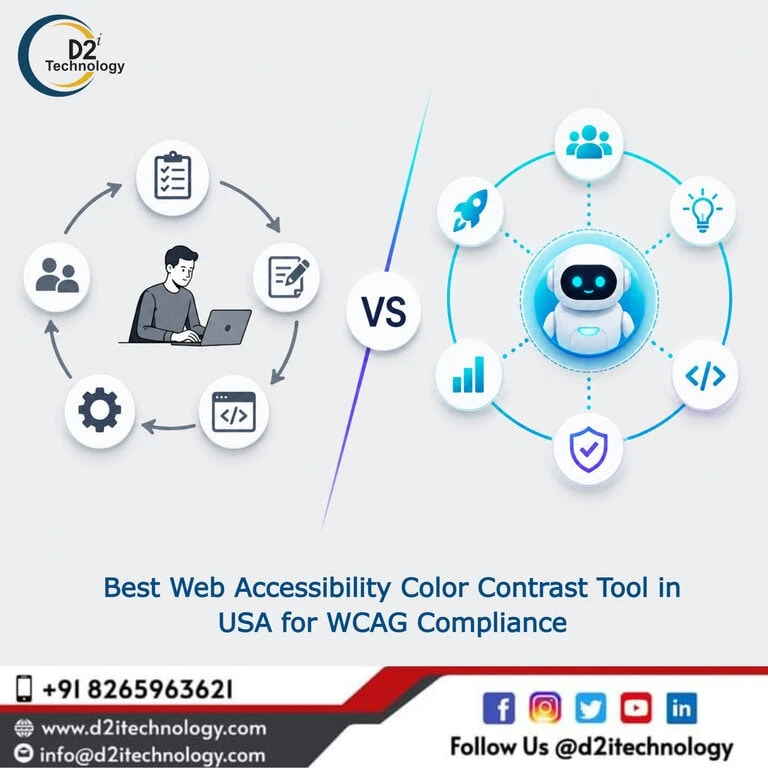
Comparing Agentic SDLC vs Traditional SDLC is a bit like comparing a car with GPS navigation to a car without it — the fundamental vehicle is the same, but the driving experience, the decisions the driver makes, and the likelihood of reaching the destination efficiently are all meaningfully different. Both follow the same road. The traditional driver handles all navigation manually; the agentic driver delegates route calculation and real-time adjustment to a system that’s continuously processing information. The driver still decides where to go and remains responsible for actually driving — but a significant portion of the cognitive work has been redistributed.
This post maps that redistribution phase by phase: what traditional SDLC looks like at each stage, what changes in the agentic version, and what remains unchanged regardless of how the work is performed.
Planning and Requirements
In Traditional SDLC
Requirements gathering is a manual, conversation-intensive process. Business analysts interview stakeholders, document what they hear, and translate business language into technical specifications. The process is as fast as the slowest conversation and as accurate as the quality of the translation. Requirement gaps surface during implementation when they’re expensive — a developer is midway through building a feature before realizing the specification didn’t account for an important edge case. Stakeholder input from multiple sources frequently contains conflicts that nobody noticed because no one was systematically cross-referencing the documents.
In Agentic SDLC
AI agents accelerate the synthesis work while humans retain the judgment calls. Research agents parse large volumes of stakeholder input — meeting transcripts, existing tickets, past specifications, email threads — and produce structured summaries that human analysts then refine rather than produce from scratch. Agents cross-reference input sources to surface conflicts and gaps automatically, which means ambiguities surface earlier and more completely than manual review tends to catch. First-draft user stories and acceptance criteria can be generated for human review, compressing the time from “raw stakeholder input” to “engineering-ready specification.”
What Stays the Same
The judgment calls — what to build, how to prioritize competing requirements, what trade-offs reflect genuine business value — remain human responsibilities. Agents surface ambiguities; humans resolve them. The stakeholder relationships and domain understanding that make requirements useful don’t transfer to AI systems.
Architecture and Design
In Traditional SDLC
Architecture decisions are made by a small number of experienced engineers drawing on pattern libraries that exist primarily in their accumulated experience. Junior engineers have limited architectural input because they haven’t yet built the pattern recognition that comes from making (and living with) architectural decisions over years. Documentation of architectural reasoning is typically thin — decisions get made in meetings and captured incompletely in confluence pages that go stale.
In Agentic SDLC
Design-stage agents can surface relevant architectural patterns, compare proposed approaches against documented anti-patterns, and generate candidate architecture options with explicitly stated trade-offs. This makes architectural knowledge more accessible to the full team rather than concentrated in a few senior engineers. Agents also produce documentation as a byproduct of their analysis — the reasoning behind a design recommendation is available in the agent’s output rather than requiring a separate documentation effort.
What Stays the Same
Organizational context, team capability, strategic direction, and the long-term consequences of architectural decisions require human judgment that agents can inform but not make. What enterprise-scale application development actually involves and why architectural decisions carry consequences beyond the initial build is the relevant framing — the factors that determine whether an architecture is right for a specific organization are deeply contextual in ways agents can’t fully evaluate.
Implementation (Coding)
In Traditional SDLC
Every line of code is written by a developer. The quality and speed of implementation vary directly with developer skill and availability. A senior engineer writing a well-understood feature type produces it quickly and well; a less experienced engineer working on unfamiliar patterns takes longer and produces work that requires more review. Boilerplate, test fixtures, documentation updates, and other mechanical implementation tasks consume the same developer time as the more intellectually demanding work.
In Agentic SDLC
Code generation agents, given well-formed specifications and codebase context, can draft implementations across multiple files, write corresponding tests, and open pull requests for human review. For bounded, well-specified tasks, this dramatically compresses implementation time. The developer’s role shifts from writing code to directing the agent, reviewing its output, and addressing the cases where the implementation doesn’t match intent.
Style consistency improves — agents follow specified conventions precisely rather than drifting with developer preference. Documentation coverage improves because agents update documentation as a standard output alongside code changes.
What Stays the Same
The quality of agent implementation is bounded by specification quality. Ambiguous requirements produce ambiguous code regardless of who writes it. Complex, judgment-intensive implementation — novel algorithms, intricate business logic, performance-critical paths — still benefit from experienced human authorship. How code review in AI-assisted development works and what makes it effective is essential reading alongside this — agent-generated code requires substantive human review, not just automated gate-passing.
Testing and Quality Assurance
In Traditional SDLC
Test coverage competes directly with implementation time. When deadlines approach, testing gets trimmed. Test suites grow stale because updating them as code changes takes engineering time. The gap between what the code does and what the test suite verifies widens gradually, and defect rates correlate with delivery pressure in predictable and unfortunate ways. Manual testing adds value through exploratory investigation but is labor-intensive and doesn’t scale easily.
In Agentic SDLC
Test generation agents produce unit tests, integration tests, and test data alongside implementation code rather than in a separate, competing phase. Test suites regenerate when implementation changes — agents identify which tests need updating when code changes and produce updated versions. Coverage baselines rise without proportional engineering cost.
How automated testing and AI-assisted test generation work together in modern frameworks covers the practical implementation of this in browser testing contexts. D2i Technology’s automation testing services and manual testing services complement agent-generated test suites with the human evaluation layer that catches what automated generation misses.
What Stays the Same
Exploratory testing — finding the bugs the specification didn’t anticipate — remains a human discipline. AI-generated tests verify that the code does what the specification says; they don’t discover the ways the specification was wrong. Why experienced manual test engineers remain essential in AI-assisted development environments articulates why this human testing layer isn’t an optional extra.
Security Review
In Traditional SDLC
Security review is inconsistent — thorough when the right reviewer is available, rushed when deadlines loom, and essentially absent in codebases that have outgrown manual review capacity. Dependency vulnerabilities are caught when someone updates the dependency manifest and happens to check against known CVEs. Security misconfigurations in infrastructure vary across environments because they’re applied manually and nobody’s tracking them systematically.
In Agentic SDLC
Security analysis agents provide continuous, consistent scanning against known vulnerability patterns and CVE databases, integrated directly into the CI/CD pipeline. Every pull request receives security analysis before it merges, regardless of deadline pressure or reviewer availability. Coverage doesn’t fluctuate with staffing.
Security risks specific to agentic AI systems themselves in web application environments adds the critical agentic-specific dimension: the agent infrastructure introduces its own attack surface that requires dedicated security evaluation. D2i Technology’s security testing and penetration testing services address both the application-level security and the agent infrastructure security that traditional security scanning doesn’t evaluate.
What Stays the Same
Novel vulnerabilities, business logic exploits, and context-dependent attack vectors that don’t match documented patterns still require expert human security analysis. Agent scanning is a floor for security coverage, not a ceiling.
Deployment and Operations
In Traditional SDLC
Deployment coordination involves human triggers at multiple points — someone initiates the build, someone monitors the pipeline, someone approves production promotion, someone responds if something goes wrong. This coordination creates calendar delays that accumulate over release cycles. Release frequency is constrained by the bandwidth available for coordination work alongside the development work itself.
In Agentic SDLC
Deployment orchestration agents manage the mechanical coordination of build pipelines, environment provisioning, test execution, and conditional deployment progression automatically. Quality gates trigger agent actions rather than human decisions for most pipeline states. Release frequency can increase because the bottleneck of human coordination is removed from the standard path.
Why well-structured CI/CD pipelines are the foundation that makes agentic deployment reliable and safe is the critical dependency — agents in deployment amplify the quality of the pipeline they operate within. D2i Technology’s DevOps services cover the pipeline design that makes this amplification safe rather than risky.
What Stays the Same
High-stakes deployment decisions — major releases, database migrations, changes to regulated systems — warrant human authorization regardless of how automated the rest of the pipeline is. The human checkpoint for consequential deployments is a governance design choice, not a process failure.
The Governance Difference
This is the dimension that traditional SDLC comparisons often underweight. Traditional SDLC has governance challenges — ticket discipline, code review standards, deployment approval workflows — but they’re human-native challenges that emerge organically and are managed through people-oriented processes.
Agentic SDLC has additional governance requirements that are system-native: access controls that limit what agents can do, audit logging that captures what agents did, monitoring that detects when agent behavior deviates from expectations, and review workflows designed for agent-generated output volumes rather than human-generated output volumes.
How AI agent governance and monitoring need to be structured as agent capabilities scale covers these requirements in depth. The governance infrastructure isn’t optional overhead — it’s what makes the agentic SDLC safe to operate rather than fast and unpredictable.
Summary: What ASDLC Changes and What It Doesn’t
What changes in ASDLC:
- Volume of mechanical implementation, test generation, and documentation work handled by agents vs. engineers
- Speed of well-defined development tasks
- Consistency of style, convention adherence, and coverage baselines
- Breadth of security scanning coverage
- Release frequency capability
What stays the same in ASDLC:
- The judgment calls: architecture, prioritization, security depth, accountability
- The requirement for well-specified requirements — neither humans nor agents work well from ambiguous specifications
- The need for human code review at substantive quality
- Accountability for production outcomes
- The governance discipline required for reliable software delivery
D2i Technology’s approach to building AI that solves real engineering problems rather than creating impressive demonstrations reflects the philosophy that makes ASDLC work in practice: keeping human judgment at the center of the decisions that matter while letting agents handle the volume that doesn’t require that judgment.
Conclusion
Agentic SDLC vs Traditional SDLC isn’t a contest between approaches where one wins and the other loses. It’s a progression — the same development lifecycle with AI agents redistributing work within each phase, compressing timelines for well-defined tasks, raising coverage baselines, and allowing engineering teams to concentrate more of their attention on the decisions that most benefit from human judgment. The organizations that navigate this progression most effectively are those that understand both what changes and what doesn’t — and invest in the governance infrastructure that makes the agentic version of the process reliable, not just fast.
Frequently Asked Questions
Ready to Move From Traditional to Agentic SDLC?
D2i Technology helps engineering teams implement agentic development workflows with the governance, security, quality assurance, and DevOps infrastructure that makes ASDLC reliable in production. Let's talk about where your organization is starting from and where you need to get to.