- Web Accessibility
- July 13, 2026
What does an accessibility consultant do?
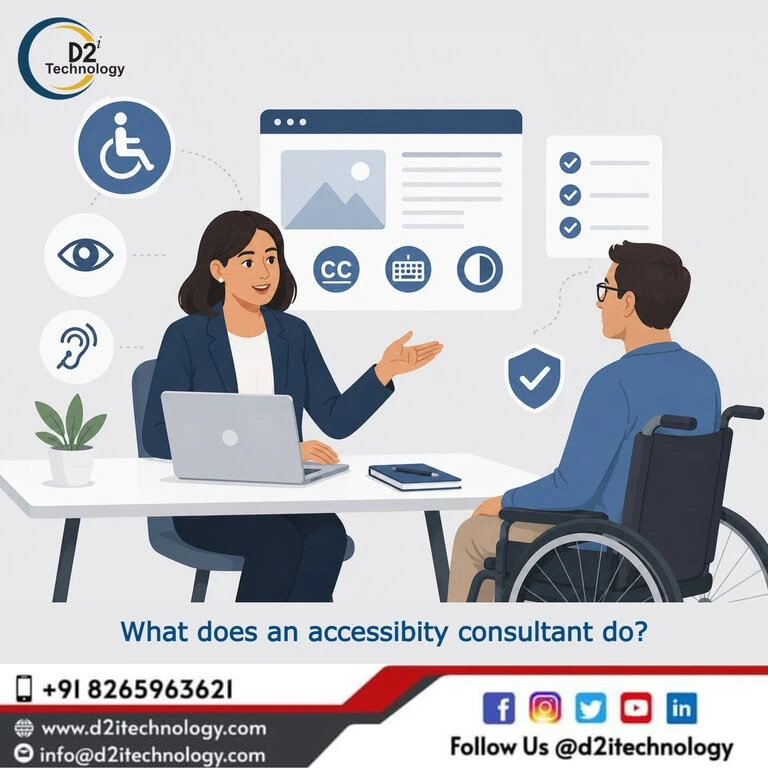
When organizations first start taking digital accessibility seriously, one of the earliest questions they ask is: who exactly do we need to help us? A developer? A tester? A lawyer? Often the answer is an accessibility consultant — a professional who brings together technical knowledge, compliance expertise, and strategic thinking to help organizations make their digital products work for everyone. And as demand for Accessibility Testing Service in USA continues to grow — driven by regulatory deadlines, litigation risk, and genuine commitment to inclusion — the role of the accessibility consultant has become more central than ever to how organizations approach this work.
But the title covers a wide range of activities, and it’s worth unpacking what that actually looks like in practice.
The Core Responsibilities of an Accessibility Consultant
An accessibility consultant’s work is harder to slot into a single job description than most roles in technology. The scope of any given engagement depends heavily on where an organization is in its accessibility journey — whether they’re starting from scratch, recovering after a complaint or lawsuit, trying to operationalize compliance at scale, or somewhere in between. That said, most consultants spend their time across a handful of consistent core activities.
Conducting Accessibility Audits
The audit is usually where things start. Before recommending fixes or building a strategy, a consultant needs a clear picture of where the problems are — which barriers exist, how severe they are, which users they affect, and which WCAG success criteria they violate.
A professional accessibility audit isn’t just running a scanner. It combines automated scanning (using tools like axe-core or WAVE) with structured manual testing and hands-on evaluation using assistive technologies like NVDA, JAWS, and VoiceOver. The best practices for web accessibility audits involve testing keyboard navigation, screen reader behavior, color contrast, focus management, form usability, error handling, and semantic structure — across desktop and mobile, across browsers, across different assistive technology combinations.
The output is a detailed report that maps every issue to a WCAG criterion, describes who it affects and how, rates its severity, and gives developers clear, actionable guidance on how to fix it. That last point — practical remediation guidance — is something that separates a useful audit report from a list of compliance checkboxes.
Advising on Remediation
Identifying barriers is only half the job. An accessibility consultant also needs to translate findings into practical fixes — and often, to help development teams understand why a fix works, not just what to change.
This advisory role matters because accessibility remediation isn’t always straightforward. A custom JavaScript component with broken keyboard behavior might require architectural changes. A PDF form that fails accessibility checks might need to be rebuilt entirely, not just patched. A component library used across dozens of pages might need to be updated at the source. A consultant helps teams prioritize this work, sequence it logically, and avoid solutions that fix one issue while creating another.
D2i Technology’s accessibility remediation services take this a step further — working alongside development teams to see fixes through to completion and verify them with assistive technologies, rather than handing off a report and stepping away.
Developing an Accessibility Strategy
Organizations with more than a handful of pages, or with ongoing development cycles, need more than a one-time audit. They need a strategy — a structured approach to building and maintaining accessibility across their digital estate over time.
An accessibility consultant helps define that strategy, which typically includes establishing a target conformance level (usually WCAG 2.1 or 2.2 Level AA), identifying which properties and content types need to be prioritized, integrating accessibility testing into the development lifecycle, defining ownership and accountability within the team, and setting up monitoring for ongoing compliance.
Why proactive accessibility matters more than reactive compliance is a theme that comes up in every serious strategy conversation. Organizations that treat accessibility as an ongoing design and engineering practice rather than a compliance exercise to be completed once end up with far better outcomes — for users and for the organization.
Providing Training and Education
A consultant who comes in, runs an audit, and leaves hasn’t really solved the problem. Sustainable accessibility requires teams who understand it — developers who know how to write accessible code, designers who understand inclusive design principles, content editors who know how to write meaningful alt text and clear headings, QA testers who can evaluate accessibility as part of their normal workflow.
Training is therefore a significant part of what many accessibility consultants do. It’s tailored to the audience: a developer training session looks very different from a content editor workshop or an executive briefing on compliance risk. The goal is to build internal capability so that accessibility becomes embedded in how the team works, rather than something that only happens when a consultant is in the room.
Supporting Legal and Regulatory Compliance
For many clients, the accessibility consultant’s work has direct legal implications. ADA compliance in the US context is the most frequently cited driver — whether it’s government entities navigating ADA Title II digital accessibility requirements, private organizations managing litigation risk, or federal contractors meeting Section 508 obligations.
A consultant who understands the regulatory landscape can help organizations build a compliance posture that holds up — not just technically, but documentarily. That means maintaining accessibility statements, producing conformance reports (VPATs), and structuring audit and remediation records in a way that supports legal defense if needed.
For organizations in India, the landscape includes SEBI’s accessibility mandates for financial institutions — and consultants working in that space need to understand how SEBI-regulated entities can achieve WCAG compliance through effective audits.
What Skills and Knowledge Does a Good Accessibility Consultant Have?
Not everyone who calls themselves an accessibility consultant has the same depth of expertise. The best ones combine several distinct areas of knowledge.
Deep WCAG Knowledge
The Web Content Accessibility Guidelines are the technical backbone of virtually every digital accessibility standard in use globally. A consultant needs to understand not just what the success criteria say, but how they apply in practice — and how to evaluate compliance in edge cases where the guideline is ambiguous. WCAG 2.2 compliance introduced new criteria around focus visibility, dragging movements, and target size, and a current consultant needs to understand these additions thoroughly.
Hands-on Assistive Technology Proficiency
Reading about screen readers isn’t the same as using them. Consultants who test with NVDA, JAWS, and VoiceOver regularly develop an intuitive sense for how these tools behave — where they struggle, how they announce dynamic content, what patterns cause problems across different platforms. This practical experience is what hidden accessibility issues that break products even when they look perfect teaches you to look for.
Professional Certification
The IAAP WAS (Web Accessibility Specialist) credential is the industry standard for accessibility professionals. Consultants holding this certification have demonstrated knowledge across WCAG, assistive technologies, testing methodology, and inclusive design — and have typically accumulated significant hands-on experience to qualify. Many clients specifically seek out IAAP-certified auditors for their website accessibility audits, as the credential signals credibility and depth that self-taught knowledge alone can’t guarantee.
Communication and Reporting Ability
An accessibility consultant’s findings are only as valuable as they are understandable. Translating technical failures into clear, prioritized reports that resonate with developers, designers, product owners, and executives is a genuine skill — and one that experienced consultants spend years developing.
When Should You Bring in an Accessibility Consultant?
The honest answer is: sooner than most organizations do.
The most expensive time to fix accessibility problems is after a product is built and deployed. Retrofitting accessibility into an existing codebase is far more labor-intensive than building it in correctly from the start. An accessibility consultant engaged during the design and build phase can prevent a large proportion of issues from ever being introduced.
That said, there are several situations where bringing in a consultant is particularly urgent:
After receiving an accessibility complaint or demand letter. This is the most common catalyst. An experienced consultant can assess the complaint, scope the actual issues, and help build a remediation roadmap that demonstrates good-faith effort — which matters legally.
Before a major product launch or redesign. A pre-launch audit gives teams the opportunity to fix issues before they reach users, rather than scrambling after the fact.
When preparing a VPAT or accessibility conformance report. Clients and government procurement processes increasingly require VPATs. A consultant can assess conformance accurately and help structure the report in a way that’s honest, defensible, and complete.
When accessibility testing hasn’t been part of the development process. If your team has been relying solely on automated scanning — or not testing at all — a professional consultant can identify the gap between where you are and where you need to be.
For a fuller picture of what accessibility compliance audits involve and what to look for in a US-based auditor, that guide is worth reading before you start evaluating providers.
How D2i Technology’s Accessibility Consultants Work
At D2i Technology, our accessibility consultants bring IAAP WAS certification, years of hands-on testing experience, and deep familiarity with both US and international compliance frameworks. We work with clients across sectors — government, financial services, healthcare, education, enterprise software, and e-learning — providing accessibility testing and full-spectrum accessibility services that cover the entire lifecycle from audit to remediation to ongoing monitoring.
Our consultants don’t just identify what’s broken — they help clients understand why it matters, how to fix it sustainably, and how to prevent recurrence. For organizations that need help embedding accessibility into their design and development process long-term, we offer structured advisory support that goes well beyond a single audit engagement.
We’ve helped organizations transform their sites with professional accessibility testing, navigate ADA Title II compliance deadlines, and build accessibility programs that hold up to regulatory scrutiny. Whether you’re looking for a one-time audit, ongoing consulting support, or hands-on remediation, we’re ready to help.
Explore the top accessibility testing companies in the USA to understand what the landscape looks like — and then come back and speak to our team about what the right engagement looks like for your organization.
Frequently Asked Questions
Ready to Work with an Experienced Accessibility Consultant?
Whether you need a comprehensive audit, a remediation roadmap, accessibility training for your team, or ongoing compliance support — D2i Technology's certified consultants are here to help. We deliver expert Accessibility Testing Service in USA that goes beyond checkbox compliance, helping your organization build digital experiences that genuinely work for everyone.