- Accessibility Services
- February 5, 2026
Unlock Website Accessibility: The IAAP Certified Auditor Advantage
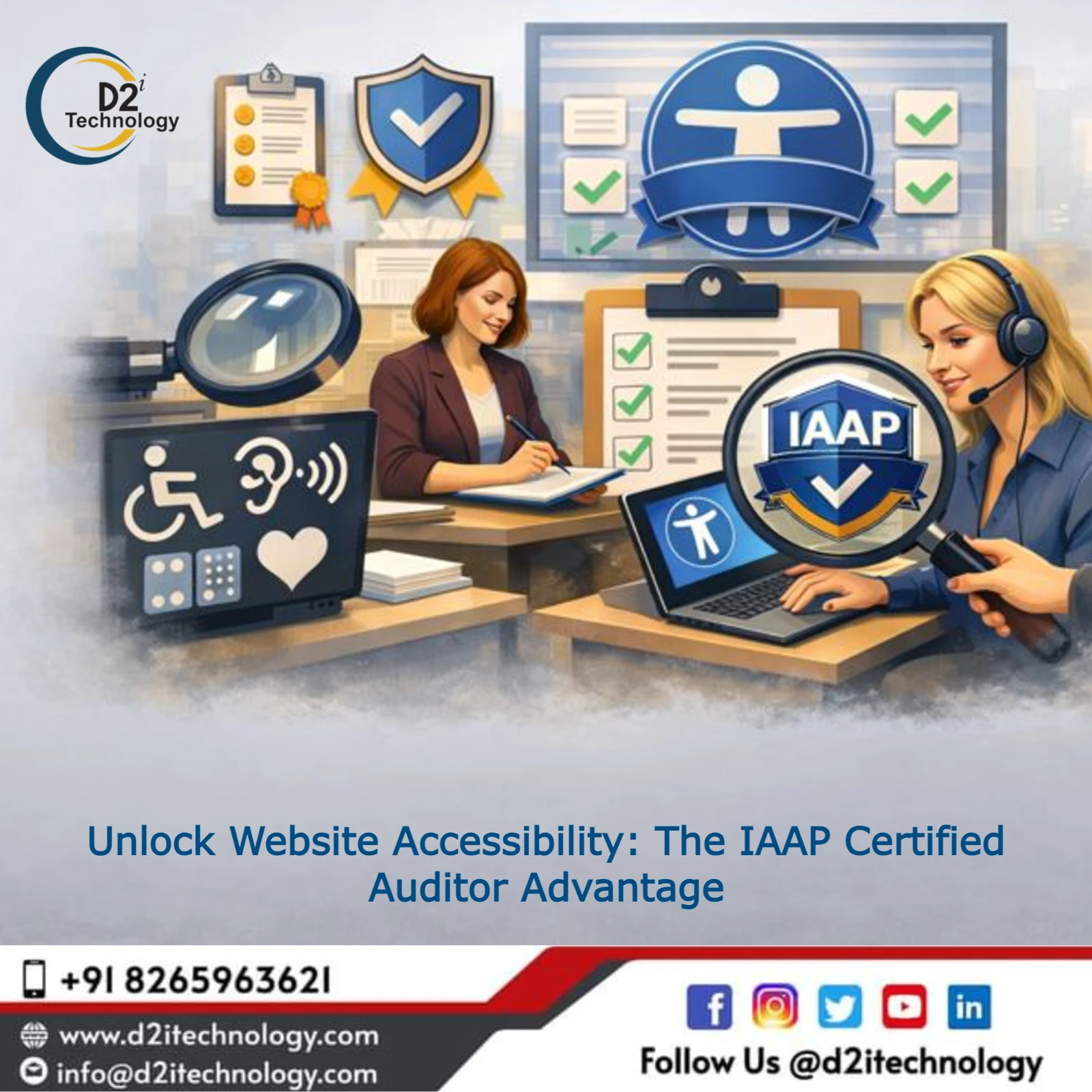
The difference between accessibility compliance and accessibility excellence often comes down to who evaluates your website. Hiring an IAAP Certified Auditor for Website Accessibility Audit ensures your digital platforms receive evaluation from professionals who have demonstrated mastery of accessibility standards through rigorous certification by the International Association of Accessibility Professionals. Unlike self-proclaimed accessibility experts or automated scanning tools, IAAP-certified auditors bring verified expertise, standardized methodologies, and deep understanding of both technical requirements and real-world user experiences that transform accessibility from checkbox compliance into genuine inclusivity.
Website accessibility isn’t just about avoiding lawsuits or meeting regulatory requirements—it’s about ensuring your digital presence serves everyone, including the 1.3 billion people worldwide living with disabilities. However, achieving meaningful accessibility requires more than running automated tools or following generic checklists. It demands professional expertise that only comes from certified specialists who understand the nuances of WCAG standards, assistive technology usage, and inclusive design principles.
What IAAP Certification Means for Accessibility Auditing
The International Association of Accessibility Professionals (IAAP) is the global credentialing organization for accessibility professionals, establishing standards for knowledge and competence in the field.
Understanding IAAP Credentials
IAAP offers three primary certifications, each demonstrating different levels and types of expertise:
- Certified Professional in Accessibility Core Competencies (CPACC): Foundation-level certification demonstrating broad understanding of accessibility concepts, disability types, assistive technologies, universal design, and relevant laws and standards. CPACC holders understand accessibility from strategic and policy perspectives.
- Web Accessibility Specialist (WAS): Technical certification focusing specifically on web accessibility implementation. WAS-certified professionals demonstrate expertise in WCAG standards, HTML/CSS/ARIA, testing methodologies, and remediation strategies. This is the most relevant credential for website accessibility audits.
- Certified Professional in Web Accessibility (CPWA): Advanced certification combining strategic knowledge with technical implementation expertise, representing the highest level of demonstrated accessibility competence.
Rigorous Certification Requirements
IAAP certifications aren’t awarded lightly:
- Comprehensive Examinations: Multi-hour, proctored exams covering hundreds of accessibility topics, ensuring candidates possess thorough knowledge rather than surface familiarity.
- Continuing Education: Certified professionals must complete ongoing education maintaining current knowledge as standards, technologies, and best practices evolve.
- Experience Requirements: Advanced certifications require documented professional experience, ensuring certified individuals have practical application knowledge beyond theoretical understanding.
- Ethical Standards: IAAP-certified professionals commit to ethical codes emphasizing client service, honest representation of capabilities, and professional conduct.
Organizations seeking IAAP certified accessibility audit services benefit from this verified expertise and professional accountability.
Why IAAP Certification Matters for Your Accessibility Audit
Choosing certified auditors over self-proclaimed accessibility experts delivers tangible advantages:
Verified Expertise You Can Trust
- Standardized Knowledge: IAAP certification confirms auditors possess comprehensive understanding of accessibility standards, not just familiarity with popular automated tools.
- Technical Proficiency: WAS certification specifically validates deep knowledge of WCAG 2.1/2.2 success criteria, HTML semantics, ARIA implementation, and assistive technology compatibility.
- Proven Competence: Certification demonstrates auditors have passed rigorous third-party evaluation, not just self-assessment or employer claims.
- Continuous Learning: Ongoing education requirements ensure certified auditors stay current with evolving standards, emerging technologies, and best practices.
Comprehensive Testing Methodologies
IAAP-certified auditors employ systematic approaches that automated tools and uncertified testers often miss:
- Manual Testing Emphasis: While automated tools catch 25-35% of accessibility issues, certified auditors conduct thorough manual testing identifying the 65-75% of barriers automation misses.
- Assistive Technology Testing: Certified auditors test with screen readers (JAWS, NVDA, VoiceOver, TalkBack), keyboard navigation, voice control, and other assistive technologies that actual users employ.
- User Journey Focus: Rather than just testing individual pages, certified auditors evaluate complete workflows—from account creation through transaction completion—ensuring accessibility throughout user experiences.
- Context-Sensitive Evaluation: Certified auditors understand that accessibility isn’t binary pass/fail but requires judgment about user impact, implementation trade-offs, and reasonable accommodations.
Regulatory and Legal Credibility
When accessibility compliance matters for legal or regulatory reasons, IAAP certification provides crucial credibility:
- Expert Testimony: Certified auditors can serve as expert witnesses if accessibility disputes reach litigation, with credentials that withstand legal scrutiny.
- Regulatory Acceptance: Government agencies and regulatory bodies increasingly recognize IAAP certification as demonstrating qualified accessibility expertise.
- Audit Documentation Quality: Certified auditors produce comprehensive reports with technical detail, remediation recommendations, and evidence that satisfy regulatory requirements.
- Standards Interpretation: When WCAG success criteria require interpretation, certified auditors provide authoritative guidance based on W3C intent and accessibility community consensus.
Understanding accessibility compliance audits helps organizations appreciate the depth that professional certification brings to the evaluation process.
The IAAP-Certified Audit Process
Professional auditors certified by IAAP follow structured methodologies ensuring comprehensive, consistent evaluations:
Discovery and Planning
- Scope Definition: Identifying which pages, workflows, and functions require testing based on business priorities, user impact, and regulatory requirements.
- User Persona Development: Understanding your actual users, their tasks, and potential disabilities to focus testing on real-world scenarios.
- Standard Selection: Confirming target compliance level (typically WCAG 2.1 or 2.2 Level AA) and any industry-specific requirements (HIPAA, Section 508, ADA).
- Success Criteria: Establishing clear metrics for audit completion and remediation validation.
Automated Scanning
While automated tools are limited, they efficiently catch common issues:
- Tool Selection: Using industry-standard tools like Axe, WAVE, and Lighthouse to scan for technical violations.
- Initial Issue Identification: Quickly identifying missing alt text, color contrast failures, form label problems, and other machine-detectable issues.
- Baseline Establishment: Creating initial defect lists that manual testing will expand and contextualize.
- Efficiency Gains: Allowing manual testing to focus on complex issues automation cannot assess.
Manual Expert Testing
This is where IAAP certification delivers maximum value:
- Screen Reader Navigation: Certified auditors navigate your entire site using JAWS, NVDA, and VoiceOver, experiencing content as blind users would.
- Keyboard-Only Testing: Verifying all interactive elements are keyboard accessible with logical tab order and visible focus indicators.
- Semantic HTML Review: Examining code for proper heading structures, landmark regions, list markup, and other semantic elements crucial for assistive technologies.
- ARIA Implementation: Evaluating custom widgets and dynamic content for proper ARIA attributes, states, and properties.
- Color and Contrast: Testing beyond automated tools to evaluate color reliance, contrast in various contexts, and accommodations for colorblindness.
- Form Accessibility: Thoroughly testing forms for labels, error identification, input assistance, and clear instructions.
- Multimedia Assessment: Reviewing videos for captions and audio descriptions, ensuring media players are accessible.
- Document Accessibility: Evaluating PDFs, Word documents, and other downloadable content for accessibility.
Real-World Scenario Testing
Certified auditors test complete user journeys:
- Critical Workflows: Account creation, purchase processes, form submissions, content consumption, and other essential tasks.
- Error Recovery: Testing how users with disabilities recover from mistakes, correct errors, or get help when stuck.
- Time-Sensitive Functions: Evaluating session timeouts, timed content, and CAPTCHA alternatives.
- Responsive Design: Testing across desktop, tablet, and mobile devices ensuring consistent accessibility.
Comprehensive accessibility testing examines your website from multiple perspectives, uncovering issues that narrow testing approaches miss.
What Certified Auditors Deliver
IAAP Certified Auditor for Website Accessibility Audit services provide comprehensive deliverables supporting both remediation and compliance:
Detailed Audit Reports
Executive Summary: High-level compliance status, critical findings, and recommended priorities for non-technical stakeholders.
Technical Findings: Each accessibility barrier documented with:
- Specific WCAG success criterion violated
- Affected pages or components
- Screenshots and annotated evidence
- Code examples showing the issue
- User impact explanation
- Severity rating (Critical, High, Medium, Low)
- Remediation recommendations with code examples
WCAG Conformance Matrix: Complete checklist showing compliance status for every applicable success criterion.
Testing Methodology: Documentation of pages tested, assistive technologies used, and testing procedures followed.
Actionable Remediation Guidance
Prioritized Roadmap: Issues organized by severity and implementation effort, enabling strategic remediation planning.
Specific Solutions: Code examples, design patterns, and implementation guidance for each finding, not just problem identification.
Effort Estimates: Approximate time and skill requirements for addressing each issue category.
Quick Wins Identification: Low-effort, high-impact fixes that can demonstrate progress quickly.
Ongoing Support
Developer Consultation: Certified auditors answer questions during remediation, review proposed fixes, and provide implementation guidance.
Re-Testing Services: Validation testing after remediation confirming issues are properly addressed.
Training Recommendations: Identifying knowledge gaps and suggesting training for development teams.
Organizations seeking comprehensive support should explore accessibility services that combine auditing with remediation partnership.
Avoiding Common Accessibility Audit Pitfalls
IAAP certification helps auditors avoid mistakes that plague less qualified evaluators:
Over-Reliance on Automated Tools
The Pitfall: Running automated scanners and treating results as comprehensive accessibility evaluation.
Certified Approach: Using automation for initial scanning while recognizing it catches only 25-35% of issues, then conducting extensive manual testing.
Missing Context and User Impact
The Pitfall: Identifying technical violations without understanding actual user impact or implementation context.
Certified Approach: Evaluating issues from disability perspectives, considering how real users with assistive technologies experience barriers.
Insufficient Assistive Technology Testing
The Pitfall: Testing with only one screen reader or not testing with assistive technologies at all.
Certified Approach: Testing across multiple screen readers, platforms, and assistive technologies to catch compatibility issues.
Inadequate Remediation Guidance
The Pitfall: Providing defect lists without specific remediation recommendations.
Certified Approach: Offering detailed solutions with code examples, design patterns, and implementation strategies.
Ignoring Edge Cases and User Workflows
The Pitfall: Testing individual pages in isolation without considering complete user journeys.
Certified Approach: Evaluating realistic workflows from start to finish, testing error handling and edge cases.
Learning about common accessibility issues helps organizations understand what thorough audits should identify.
How to Choose the Right IAAP-Certified Auditor
Not all certified auditors deliver equal value. Consider these factors:
Verify Credentials
- Confirm Certification Status: Ask for IAAP certification numbers and verify them through IAAP’s directory.
- Check Certification Type: Ensure auditors hold WAS (Web Accessibility Specialist) certification for technical web audits, not just CPACC (strategic knowledge).
- Review Continuing Education: Ask about recent training and professional development demonstrating current knowledge.
Assess Experience
- Industry Knowledge: Have they audited websites in your sector (healthcare, finance, e-commerce, government)?
- Technical Proficiency: Are they comfortable with your technology stack (React, Angular, WordPress, custom CMS)?
- Complexity Handling: Can they evaluate complex interactive applications, not just simple informational sites?
- Portfolio Review: Ask for example reports (with identifying information redacted) demonstrating audit quality.
Evaluate Methodology
- Testing Scope: How comprehensive are their audits? What assistive technologies do they test with?
- Reporting Standards: What deliverables do they provide? Are reports actionable and detailed?
- Remediation Support: Do they offer implementation guidance or just identify problems?
- Tools and Processes: What testing tools do they use? How do they ensure consistency across audits?
Consider Partnership Approach
- Communication Style: Are they educators who explain findings clearly, or just technical checkers?
- Collaboration Willingness: Will they work with your development team, or just deliver reports?
- Long-Term Support: Do they offer ongoing consultation, training, and re-testing services?
- Cultural Fit: Will their working style mesh with your organization’s culture and processes?
Exploring top accessibility testing companies provides perspective on the range of certified audit services available.
The D2i Technology IAAP-Certified Advantage
D2i Technology’s IAAP Certified Auditor for Website Accessibility Audit services combine verified expertise with practical business focus:
Proven Certification and Experience
- WAS-Certified Team: Our auditors hold IAAP Web Accessibility Specialist credentials, demonstrating mastery of WCAG standards and technical implementation.
- Continuous Training: We invest in ongoing professional development, maintaining current knowledge as standards evolve.
- 8+ Years Experience: We’ve conducted hundreds of accessibility audits across industries, understanding common patterns and unique challenges.
- Cross-Industry Expertise: Experience with financial services, healthcare, e-commerce, government, SaaS, and other sectors.
Comprehensive Methodology
- Manual Testing Focus: While we use automated tools efficiently, our value comes from extensive manual testing with assistive technologies.
- Real User Perspective: Testing from actual disability perspectives, not just technical compliance checking.
- Complete Workflow Evaluation: Testing entire user journeys, not just individual pages in isolation.
- Code-Level Analysis: Examining HTML, CSS, JavaScript, and ARIA implementation for proper accessibility support.
Business-Focused Deliverables
- Clear Communication: Reports accessible to both technical teams and executive stakeholders.
- Prioritized Remediation: Practical roadmaps balancing user impact, business priorities, and implementation effort.
- Developer Partnership: Working collaboratively with your development team, not just delivering criticism.
- ROI Demonstration: Helping you understand business value of accessibility beyond compliance.
For organizations needing both audit and implementation support, our accessibility remediation services provide end-to-end solutions.
Measuring Audit Value and ROI
Professional accessibility audits from IAAP-certified auditors deliver measurable value:
Compliance and Risk Mitigation
- Legal Protection: Documented accessibility compliance reduces ADA lawsuit risk and regulatory penalties.
- Regulatory Satisfaction: Audit reports from certified professionals satisfy government agency requirements.
- Insurance Benefits: Some cyber insurance policies offer better rates for demonstrated accessibility compliance.
Market Expansion
- Inclusive Access: Making websites accessible to 1.3 billion people with disabilities worldwide expands potential customer base.
- Aging Population: As populations age, more users benefit from accessible design features.
- Temporary Disabilities: Accessible sites serve users with broken arms, eye surgery recovery, or other temporary impairments.
SEO and Performance Benefits
- Search Engine Favor: Google rewards accessible websites with better rankings due to semantic HTML, proper headings, and alt text.
- Reduced Bounce Rates: Accessible, usable sites keep visitors engaged longer.
- Mobile Optimization: Many accessibility improvements enhance mobile experiences benefiting all users.
- Operational Efficiency
- Support Cost Reduction: Accessible interfaces require fewer support calls explaining navigation or functionality.
- Development Quality: Addressing accessibility improves overall code quality and maintainability.
- Design System Benefits: Accessibility-focused component libraries accelerate future development.
Understanding the web accessibility guide for developers helps teams appreciate how accessibility improvements benefit everyone.
Beyond Compliance: Building Accessibility Culture
IAAP-certified auditors provide value beyond one-time compliance:
Knowledge Transfer
- Developer Training: Teaching your team accessible coding practices so future work is accessible by design.
- Design Education: Helping designers understand how to create inclusive user experiences.
- Content Creator Guidance: Training writers and content teams on accessible content creation.
- Stakeholder Education: Explaining accessibility business value to executives and decision-makers.
- Sustainable Accessibility
- Process Integration: Helping embed accessibility into design, development, and QA processes.
- Governance Frameworks: Establishing accountability, standards, and policies maintaining accessibility long-term.
- Tool Selection: Recommending appropriate automated testing tools for continuous monitoring.
- Continuous Improvement: Creating feedback loops that evolve accessibility as your website grows.
Conclusion
The accessibility landscape demands more than good intentions or automated scanning tools. Organizations serious about inclusive digital experiences, regulatory compliance, and serving all users need the verified expertise that IAAP Certified Auditor for Website Accessibility Audit services provide.
IAAP certification represents rigorous, third-party validation of accessibility knowledge, testing methodologies, and professional standards. Certified auditors bring comprehensive WCAG understanding, assistive technology proficiency, and practical experience that deliver thorough, actionable, defensible accessibility evaluations.
Whether you’re facing ADA compliance requirements, seeking to serve customers with disabilities, responding to accessibility complaints, or building genuinely inclusive digital experiences, partnering with IAAP-certified professionals ensures you invest accessibility efforts wisely, addressing real barriers that affect real users.
D2i Technology’s IAAP WAS-certified team combines credential-backed expertise with business focus, technical depth, and collaborative approach. We don’t just audit websites—we partner with organizations to build accessible, sustainable, inclusive digital experiences.
Don’t settle for superficial accessibility checking or unverified expertise. Choose certified professionals who bring proven knowledge, standardized methodologies, and commitment to excellence. Your users—all of them—deserve nothing less.
About D2i Technology
D2i Technology provides professional IAAP Certified Auditor for Website Accessibility Audit services, combining verified credentials with practical business focus. Our team holds IAAP Web Accessibility Specialist (WAS) certifications, demonstrating mastery of WCAG 2.1/2.2 standards, assistive technology testing, and accessibility implementation best practices. We conduct comprehensive accessibility audits for organizations across industries including financial services, healthcare, e-commerce, government, SaaS, and enterprise sectors. Our methodology combines automated scanning efficiency with extensive manual testing using screen readers (JAWS, NVDA, VoiceOver, TalkBack), keyboard navigation, and other assistive technologies. We evaluate complete user journeys, not just isolated pages, ensuring accessibility throughout critical workflows. Our deliverables include detailed audit reports with specific remediation recommendations, WCAG conformance documentation, prioritized roadmaps, and ongoing implementation support. Beyond auditing, we provide developer training, design consultation, remediation services, and continuous accessibility partnership. Our commitment extends beyond compliance checking to building organizational accessibility capability and creating genuinely inclusive digital experiences. With 8+ years of accessibility expertise and hundreds of successful audits, we bring both credential-backed knowledge and practical experience to every engagement.
Frequently Asked Questions
Experience the IAAP-Certified Difference
Partner with D2i Technology's IAAP WAS-certified auditors for comprehensive website accessibility evaluation. Verified expertise, thorough testing, and actionable guidance for meaningful accessibility.