- DevOps
- June 5, 2026
Comparing the Top DevOps Certification Programs: AWS vs. Azure vs. Google Cloud
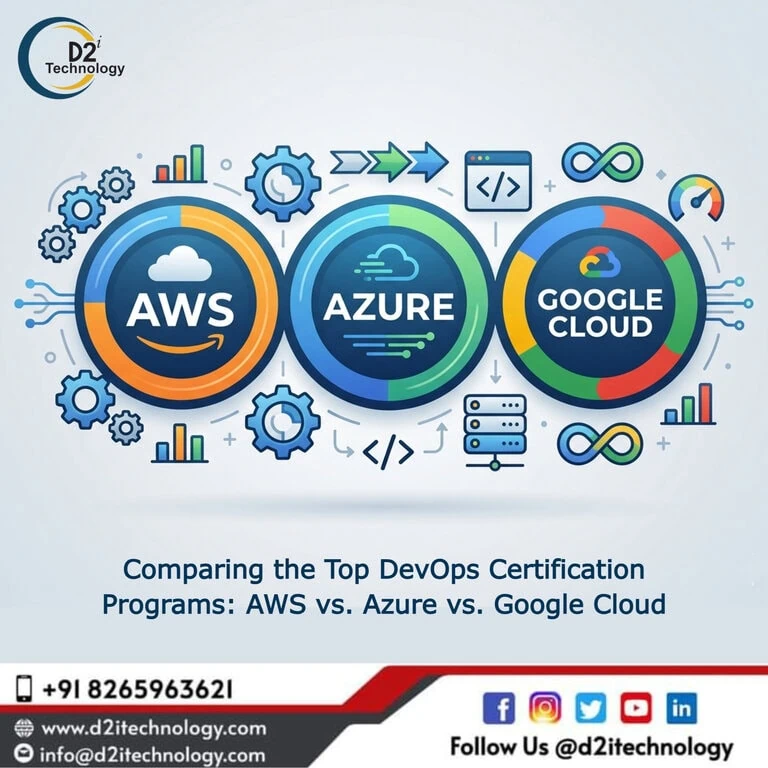
Choosing among the Top DevOps Certification programs can feel overwhelming when you’re staring at options from three cloud giants: AWS, Azure, and Google Cloud Platform. Each certification path promises to boost your career, validate your skills, and open doors to higher-paying opportunities. But which one actually delivers on those promises? Which certification aligns with your career goals, matches your current skill level, and provides the best return on your investment of time and money?
The reality is that there’s no universal “best” certification—the right choice depends on your specific circumstances, career trajectory, and the technology stack your organization uses or plans to adopt. This comprehensive comparison breaks down the Top DevOps Certification programs from AWS, Azure, and Google Cloud, examining everything from exam structure and prerequisites to real-world applicability and salary impact. Whether you’re a system administrator looking to transition into DevOps, a developer wanting to expand your skill set, or an experienced engineer seeking formal validation of your expertise, this guide will help you make an informed decision.
Why DevOps Certifications Matter in 2026
The DevOps landscape has matured significantly, and certifications have become more than just resume boosters—they’re tangible proof of your ability to implement, manage, and optimize cloud-based infrastructure and CI/CD pipelines. Organizations increasingly require certified professionals because certifications provide:
- Standardized Skill Validation: Employers can quickly assess your capabilities against industry benchmarks
- Reduced Hiring Risk: Certifications demonstrate commitment and verified knowledge
- Competitive Advantage: In competitive job markets, certifications differentiate candidates with similar experience
- Salary Impact: Certified DevOps professionals command 15-25% higher salaries on average
- Career Mobility: Certifications make transitioning between organizations and industries easier
Understanding the business benefits of DevOps helps contextualize why organizations value certified professionals who can implement these practices effectively.
AWS DevOps Certification: AWS Certified DevOps Engineer – Professional
Overview and Structure
Amazon Web Services dominates the cloud market with approximately 32% market share, making AWS certifications highly sought after. The AWS Certified DevOps Engineer – Professional sits at the professional level, requiring candidates to demonstrate comprehensive knowledge of AWS services, DevOps principles, and automation practices.
Exam Details:
- Duration: 180 minutes
- Question Format: 75 multiple-choice and multiple-response questions
- Passing Score: 750 out of 1000
- Cost: $300 USD
- Validity: 3 years
- Prerequisites: Recommended (but not required) AWS Certified Developer – Associate or AWS Certified SysOps Administrator – Associate
What the Exam Covers
The AWS DevOps certification evaluates six key domains:
- SDLC Automation (22%): Implementing CI/CD pipelines using AWS CodePipeline, CodeBuild, and CodeDeploy
- Configuration Management and Infrastructure as Code (19%): Working with CloudFormation, AWS CDK, and configuration management tools
- Monitoring and Logging (15%): Utilizing CloudWatch, X-Ray, and third-party monitoring solutions
- Policies and Standards Automation (10%): Implementing governance and compliance through automation
- Incident and Event Response (18%): Managing incidents and automating response procedures
- Security and Compliance (16%): Implementing security best practices and compliance requirements
Strengths of AWS DevOps Certification
Market Dominance: AWS’s market leadership means this certification opens the most doors across various industries and company sizes. From startups to Fortune 500 enterprises, AWS skills remain in constant demand.
Comprehensive Service Coverage: The exam forces you to learn AWS’s extensive DevOps-related services, providing practical knowledge you’ll use immediately in real-world scenarios.
Community and Resources: AWS offers extensive documentation, training materials, and a massive community. Finding study resources, practice exams, and peer support is easier for AWS than other platforms.
Career Trajectory: The professional-level certification positions you for senior DevOps roles, solutions architect positions, and consulting opportunities.
Challenges and Considerations
Complexity and Breadth: The exam covers extensive AWS services, requiring significant study time—most candidates report 100-150 hours of preparation.
Cost Factor: At $300, plus study materials and potential training courses, the total investment can reach $1,000-$2,000.
Prerequisite Knowledge: While not mandatory, practical AWS experience is virtually essential. Attempting this certification without hands-on experience rarely succeeds.
Vendor Lock-in Perception: Some professionals worry that deep AWS specialization limits portability, though these skills generally transfer well to other clouds.
Implementing successful DevOps strategies becomes more achievable with comprehensive AWS knowledge.
Azure DevOps Certification: Microsoft Certified: DevOps Engineer Expert
Overview and Structure
Microsoft Azure holds approximately 23% of the cloud market and continues growing, particularly in enterprise environments. The Azure DevOps Engineer Expert certification targets professionals implementing DevOps practices across the Microsoft ecosystem.
Exam Details:
- Exam Code: AZ-400
- Duration: 180 minutes
- Question Format: 40-60 multiple-choice, drag-and-drop, and case study questions
- Passing Score: 700 out of 1000
- Cost: $165 USD
- Validity: Annual renewal through continued learning
- Prerequisites: Required – Either Azure Administrator Associate (AZ-104) or Azure Developer Associate (AZ-204)
What the Exam Covers
The AZ-400 exam evaluates five key areas:
- Develop an Instrumentation Strategy (5-10%): Implementing logging, telemetry, and monitoring
- Develop a Site Reliability Engineering (SRE) Strategy (5-10%): Managing alerts, blameless postmortems, and reliability practices
- Develop a Security and Compliance Plan (10-15%): Implementing security in the DevOps pipeline
- Manage Source Control (10-15%): Working with Git, GitHub, and Azure Repos
- Facilitate Communication and Collaboration (10-15%): Implementing Agile practices and team collaboration
- Define and Implement Continuous Integration (20-25%): Building CI pipelines and artifact management
- Define and Implement Continuous Delivery and Release Management (10-15%): Implementing deployment strategies and release gates
Strengths of Azure DevOps Certification
Enterprise Focus: Azure dominates enterprise cloud adoption, particularly in organizations already using Microsoft technologies. This certification is invaluable for enterprise-focused career paths.
Practical Approach: The exam emphasizes real-world scenarios through case studies, ensuring candidates can apply knowledge practically rather than just memorizing facts.
Integrated Ecosystem: Azure DevOps services provide a complete DevOps platform, and the certification covers the entire toolchain comprehensively.
Cost-Effective: At $165, Azure certification is significantly more affordable than AWS, making it accessible to more professionals.
Annual Updates: The annual renewal requirement ensures certified professionals stay current with evolving practices and technologies.
Challenges and Considerations
Mandatory Prerequisites: Unlike AWS, Azure requires a prerequisite certification, extending your certification timeline and increasing total costs.
Microsoft Ecosystem Bias: The exam heavily focuses on Microsoft tools (Azure DevOps, GitHub, Azure services), which may limit applicability in multi-cloud or non-Microsoft environments.
Frequent Updates: While keeping content current, frequent exam updates mean study materials may become outdated quickly, and renewal requirements add ongoing effort.
Narrower Market (Compared to AWS): While growing, Azure’s market share means fewer job opportunities compared to AWS in some regions and industries.
Understanding when to consider DevOps services helps contextualize where Azure DevOps certifications provide maximum value.
Google Cloud DevOps Certification: Google Cloud Professional Cloud DevOps Engineer
Overview and Structure
Google Cloud Platform holds approximately 11% market share but excels in specific areas like machine learning, big data, and Kubernetes (which Google created). The Professional Cloud DevOps Engineer certification targets professionals implementing DevOps practices on GCP.
Exam Details:
- Duration: 120 minutes
- Question Format: 50-60 multiple-choice and multiple-select questions
- Passing Score: Not published (scaled scoring)
- Cost: $200 USD
- Validity: 2 years
- Prerequisites: Recommended 3+ years industry experience including 1+ years designing and managing GCP solutions
What the Exam Covers
The Google Cloud DevOps certification evaluates five key domains:
- Bootstrapping a Google Cloud Organization for DevOps (17%): Setting up organizations, projects, and teams for DevOps practices
- Building and Implementing CI/CD Pipelines (23%): Implementing automated pipelines using Cloud Build and other tools
- Applying Site Reliability Engineering Practices (23%): Managing services, implementing SLOs, SLIs, and error budgets
- Implementing Service Monitoring Strategies (21%): Using Cloud Monitoring, Cloud Logging, and observability practices
- Optimizing Service Performance (16%): Implementing strategies for scalability and efficiency
Strengths of Google Cloud DevOps Certification
SRE Focus: Google pioneered Site Reliability Engineering, and this certification provides the most comprehensive SRE training among the three platforms. If you’re interested in SRE principles, GCP certification is unmatched.
Kubernetes Excellence: Given Google’s creation of Kubernetes, GCP certification provides superior knowledge of containerized workloads and Kubernetes-based DevOps practices.
Innovation Leadership: Google Cloud often leads in cutting-edge technologies like AI/ML integration with DevOps workflows, giving certified professionals exposure to emerging practices.
Balanced Approach: The exam balances theoretical principles with practical implementation, creating well-rounded DevOps professionals.
Shorter Exam: At 120 minutes, the GCP exam is 60 minutes shorter than AWS and Azure, reducing test fatigue while still covering essential topics thoroughly.
Challenges and Considerations
Smaller Market Share: GCP’s 11% market share means fewer job opportunities specifically requiring GCP certifications compared to AWS or Azure.
Limited Study Resources: Compared to AWS and Azure, fewer third-party study materials, practice exams, and community resources exist for GCP certifications.
Experience Requirements: While not mandatory, the recommended 3+ years of experience creates a higher barrier to entry for junior professionals.
Niche Applications: GCP excels in specific use cases (data analytics, ML, containerization) but may not be the primary cloud for general enterprise applications.
Learning about DevOps tools helps understand how platform-specific and vendor-neutral tools integrate across different cloud providers.
Head-to-Head Comparison: Making Your Decision
Career Opportunities and Job Market
AWS Leads in Opportunities: Job postings requiring AWS DevOps skills outnumber Azure and GCP by roughly 2:1. If maximizing job opportunities is your priority, AWS certification provides the broadest appeal.
Azure Dominates Enterprise: For professionals targeting enterprise roles, particularly in organizations using Microsoft technologies, Azure certification provides better alignment and appeal to hiring managers.
GCP for Specialized Roles: GCP certification is valuable for roles focusing on containerization, ML/AI pipelines, or data engineering, but less advantageous for general DevOps positions.
Salary Impact
Based on 2026 salary data:
- AWS DevOps Engineer Professional: Average salary $125,000-$165,000
- Azure DevOps Engineer Expert: Average salary $115,000-$155,000
- GCP Professional Cloud DevOps Engineer: Average salary $120,000-$160,000
These ranges vary significantly by location, experience, and industry. Certification alone doesn’t guarantee top-tier salaries—practical experience remains crucial.
Learning Curve and Preparation Time
AWS: Most demanding preparation, typically 100-150 hours due to broad service coverage Azure: Moderate preparation, typically 80-120 hours, but prerequisites add additional time GCP: Moderate preparation, typically 70-100 hours, with strong SRE focus requiring conceptual understanding
Cost Comparison
Total Cost Including Prerequisites:
- AWS: $300 exam + $150-$600 study materials = $450-$900 (no prerequisites)
- Azure: $165 (AZ-400) + $165 (prerequisite) + $200-$500 study materials = $530-$830
- GCP: $200 exam + $150-$400 study materials = $350-$600
Multi-Cloud and Portability
None of these certifications directly transfer to other platforms, but the underlying principles do:
Most Portable Skills: Azure’s balanced approach to DevOps principles beyond specific tools provides reasonable portability Most Platform-Specific: AWS’s deep focus on AWS-specific services creates less portable knowledge Best Principles Foundation: GCP’s SRE focus provides conceptual knowledge applicable across platforms
Exploring the future scope of DevOps reveals how multi-cloud strategies are becoming increasingly important.
Certification Pathways and Progressions
AWS Pathway
- Start with AWS Certified Cloud Practitioner (optional foundation)
- Progress to AWS Certified Developer – Associate or SysOps Administrator – Associate
- Achieve AWS Certified DevOps Engineer – Professional
- Consider AWS Certified Solutions Architect – Professional for broader credentials
Azure Pathway
- Start with Azure Fundamentals AZ-900 (optional foundation)
- Achieve Azure Administrator Associate (AZ-104) or Azure Developer Associate (AZ-204)
- Complete Azure DevOps Engineer Expert (AZ-400)
- Consider Azure Solutions Architect Expert for advancement
Google Cloud Pathway
- Start with Cloud Digital Leader (optional foundation)
- Consider Associate Cloud Engineer
- Achieve Professional Cloud DevOps Engineer
- Explore other professional certifications (Cloud Architect, Data Engineer)
Understanding DevOps automation tools across all platforms helps you see commonalities despite certification differences.
Real-World Application: Which Certification Delivers?
The best Top DevOps Certification for you depends on several factors:
Choose AWS If:
- You want maximum job market opportunities
- You’re working with or targeting startups and mid-size tech companies
- You prefer broad, comprehensive cloud knowledge
- You’re willing to invest significant study time
Choose Azure If:
- You’re targeting enterprise organizations
- Your background includes Microsoft technologies
- You want the most cost-effective path
- You prefer structured prerequisite progression
Choose GCP If:
- You’re interested in Site Reliability Engineering principles
- You work with containerized applications and Kubernetes
- You’re involved in data engineering or ML/AI workloads
- You want cutting-edge cloud technology exposure
Consider Multiple Certifications If:
- You’re targeting consulting or contracting roles
- You work in multi-cloud environments
- You have sufficient time and budget
- You want maximum career flexibility
Learning about DevOps CI/CD benefits helps you understand the practical applications you’ll implement regardless of which certification you pursue.
Study Strategies and Preparation Tips
Universal Preparation Strategies
Hands-On Practice: All three certifications require practical experience. Create free-tier accounts and build actual pipelines, deploy applications, and implement monitoring.
Official Documentation: Vendor documentation is your most reliable study source. While dry, it’s accurate and comprehensive.
Practice Exams: Take multiple practice exams to familiarize yourself with question formats and identify knowledge gaps.
Community Engagement: Join certification-specific forums, Discord servers, and LinkedIn groups for peer support and resource sharing.
Real-World Projects: Apply concepts to actual projects rather than just memorizing facts. Employers value practical application over test-taking ability.
Platform-Specific Resources
AWS: A Cloud Guru, Adrian Cantrill’s courses, AWS Skill Builder, AWS whitepapers Azure: Microsoft Learn, John Savill’s YouTube channel, Pluralsight Azure paths GCP: Google Cloud Skills Boost, Coursera GCP courses, Linux Academy (now A Cloud Guru)
Techniques for stepping up your DevOps game provide additional perspectives on skill development beyond certification preparation.
The Certification Maintenance Reality
AWS Recertification
- Valid for 3 years
- Recertification requires passing the current exam version
- Discounted recertification pricing available
Azure Renewal
- Annual renewal required
- Complete continuing education through Microsoft Learn
- No exam required for renewal
- More flexible but requires ongoing engagement
GCP Recertification
- Valid for 2 years
- Recertification requires passing the current exam
- Shortest validity period of the three
Consider maintenance requirements when choosing your path—some professionals prefer less frequent recertification, while others appreciate Azure’s continuous learning model.
Beyond Certification: Building Complete DevOps Expertise
Certifications validate knowledge, but complete DevOps expertise requires:
Version Control Mastery: Git proficiency across all platforms Scripting Skills: Python, Bash, PowerShell depending on environment Container Technologies: Docker, Kubernetes beyond platform-specific implementations Security Practices: DevSecOps principles and secure pipeline implementation Soft Skills: Communication, collaboration, and problem-solving
Partnering with experienced DevOps services providers can complement your certification with real-world project experience.
Making Your Decision: Action Steps
- Assess Your Current Environment: What cloud platform does your organization use or plan to adopt?
- Define Your Career Goals: Target specific roles, industries, or companies and research their requirements
- Evaluate Your Experience Level: Be honest about prerequisites and required experience
- Consider Budget and Timeline: Factor in total costs and realistic preparation time
- Research Your Local Job Market: Analyze job postings in your area for certification requirements
- Start with One, Expand Later: Master one platform thoroughly before pursuing multi-cloud certifications
Conclusion
The Top DevOps Certification programs from AWS, Azure, and Google Cloud each offer distinct advantages. AWS provides the broadest job market appeal and comprehensive cloud knowledge. Azure offers enterprise-focused skills with cost-effective certification paths. Google Cloud delivers cutting-edge SRE principles and Kubernetes excellence.
Your ideal choice depends on your career goals, current skills, and target market. There’s no universally superior option—only the best choice for your specific circumstances. Regardless of which path you choose, certification represents just the beginning. Continuous learning, hands-on practice, and real-world application determine your ultimate success in the DevOps field.
D2i Technology understands the complexities of DevOps implementation across all major cloud platforms. Our team includes certified professionals across AWS, Azure, and GCP who can help your organization implement world-class DevOps practices regardless of your cloud strategy.
Frequently Asked Questions
Accelerate Your DevOps Journey with D2i Technology
Whether you're pursuing certifications or need experienced DevOps professionals to implement best practices in your organization, D2i Technology provides comprehensive DevOps solutions tailored to your technology stack and business goals.