- Manual Testing
- March 23, 2026
What Are the Best Manual Testing Services in India?
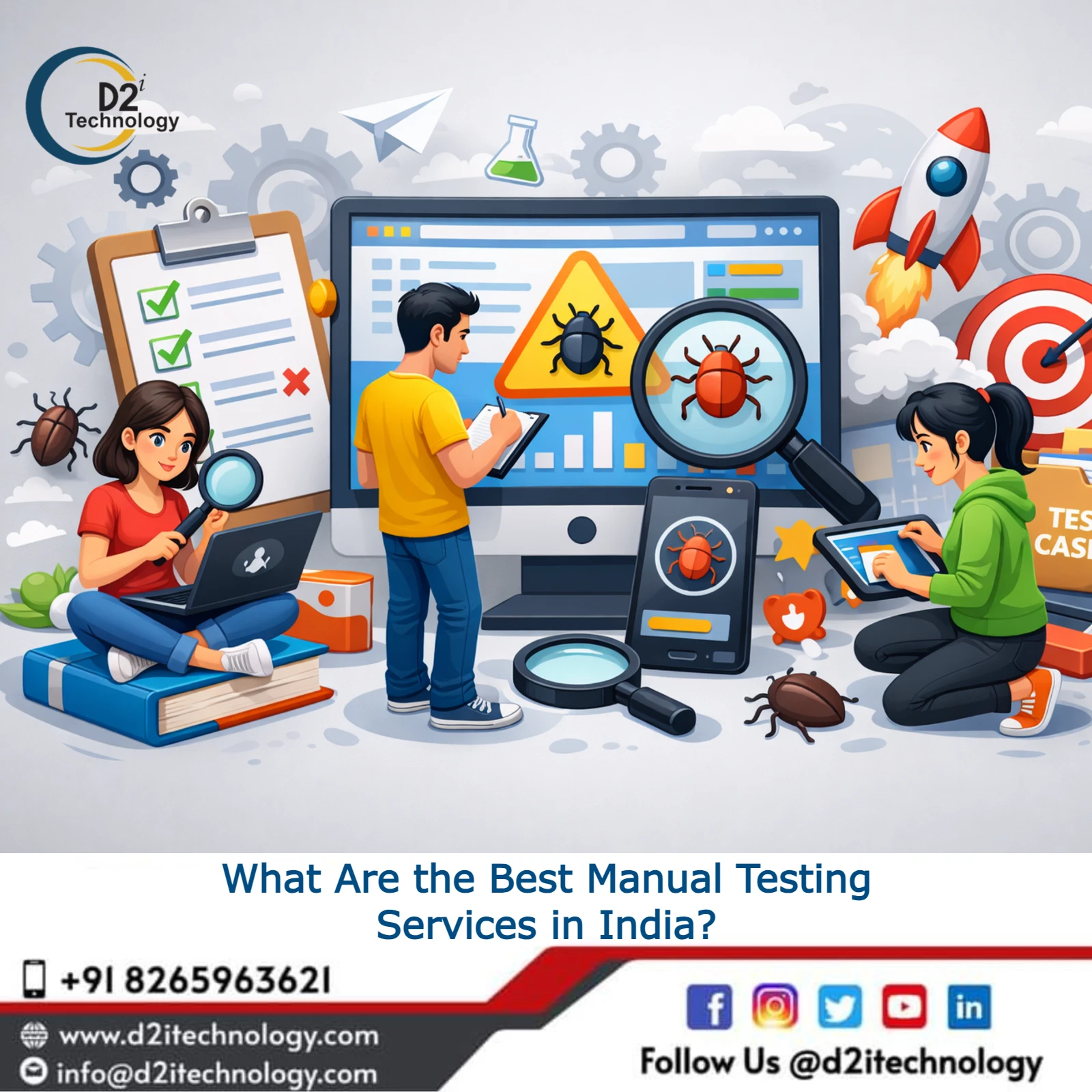
When you’re building software that people depend on, quality isn’t negotiable. Manual Testing Services In India have become a cornerstone for businesses worldwide looking to deliver flawless digital products without breaking the bank. While automation has its place, nothing replaces the human eye when it comes to evaluating user experience, edge cases, and those subtle bugs that automated scripts simply can’t catch.
India has emerged as a global hub for quality assurance, offering a unique combination of skilled testers, cost-effectiveness, and proven methodologies. But what makes manual testing services here stand out, and how do you choose the right partner for your project?
Why Manual Testing Still Matters in 2026
Despite the surge in automation tools, manual testing remains irreplaceable for several critical scenarios. Exploratory testing, usability evaluation, and ad-hoc testing require human intuition and creativity—qualities that no algorithm can replicate.
Manual Testing Services excel at:
- Understanding user perspective and behavior patterns
- Identifying visual inconsistencies and design flaws
- Testing complex user workflows that change frequently
- Evaluating accessibility for users with disabilities
- Performing initial rounds of testing on new features
Think about the last time you used an app that looked perfect on paper but felt clunky in practice. That’s exactly what manual testers prevent. They interact with your software the way real users would, catching issues that automated tests might miss entirely.
The Indian Advantage: Why Companies Choose Manual Testing Services In India
India’s software testing industry has matured significantly over the past two decades. What started as a cost-saving measure has evolved into a strategic partnership for quality assurance.
Skilled Workforce
Indian QA professionals bring technical expertise combined with domain knowledge across industries. Many hold certifications like ISTQB, CSTE, and specialized training in various testing methodologies. The education system produces thousands of engineering graduates annually, many of whom specialize in software quality assurance.
Cost-Effectiveness Without Compromise
Let’s address the elephant in the room—cost. Manual testing services in India typically cost 40-60% less than equivalent services in Western countries. But here’s the important part: lower cost doesn’t mean lower quality. The difference comes from economic factors, not capability gaps.
Time Zone Advantages
For businesses in the US and Europe, the time zone difference becomes an asset. Your team logs off, and the testing team in India starts their workday. This creates a near 24-hour development cycle, accelerating your time to market significantly.
Proven Track Record
Indian testing companies have delivered projects for Fortune 500 companies, startups, and everything in between. This experience across diverse industries—from healthcare to fintech, e-commerce to gaming—means they’ve likely handled scenarios similar to yours.
What to Look for in Manual Testing Service Providers
Not all testing companies are created equal. Here’s what separates excellent service providers from mediocre ones:
Comprehensive Testing Approach
Top-tier providers don’t just execute test cases. They understand your business objectives and tailor their testing strategy accordingly. Look for companies that offer:
- Functional testing to verify feature requirements
- Regression testing to ensure new changes don’t break existing functionality
- Integration testing to validate component interactions
- User acceptance testing (UAT) support
- Accessibility testing to ensure inclusive design
Transparent Communication
Quality testing requires constant dialogue. The best providers maintain clear communication channels, provide regular updates, and document findings comprehensively. They should be comfortable with tools like Jira, Slack, or whatever platforms your team uses.
Adaptability and Scalability
Your testing needs will fluctuate. During major releases, you might need a larger team. For maintenance periods, a smaller group suffices. Good service providers scale their resources based on your requirements without quality dips.
Understanding of Modern Development Practices
Manual testing doesn’t exist in isolation anymore. Your testing partner should understand Agile methodologies, CI/CD pipelines, and how manual testing fits into modern development workflows. They should integrate seamlessly with your existing processes, not force you to adapt to theirs.
Types of Manual Testing Services Available in India
Manual Testing Services In India encompass a wide range of testing types, each serving specific purposes:
Exploratory Testing
This is where creativity meets methodology. Testers explore your application without predetermined test scripts, simulating how curious users might interact with unfamiliar features. It’s particularly valuable for uncovering unexpected bugs and usability issues.
Usability Testing
Your software might work perfectly from a technical standpoint but frustrate users nonetheless. Usability testing evaluates the user experience, identifying friction points, confusing navigation, or accessibility barriers. Learn more about how manual testing improves software quality through these methodologies.
Localization Testing
For products targeting multiple markets, localization testing ensures cultural appropriateness, correct translations, and region-specific functionality. Indian testing teams often have multilingual capabilities, making them ideal for global products.
Security Testing (Manual Aspects)
While automated security scans are essential, manual security testing catches vulnerabilities that require human reasoning to exploit. Testers think like attackers, attempting to breach your application through unconventional methods.
Compatibility Testing
Your users access your software through countless device-browser-OS combinations. Manual compatibility testing ensures consistent performance across these variations. This is especially critical for consumer-facing applications.
How Manual and Automation Testing Work Together
The debate between manual vs automation testing misses the point entirely. Both are essential components of comprehensive quality assurance.
Automation handles repetitive tests, regression suites, and scenarios requiring exact reproducibility. Manual testing tackles everything requiring judgment, exploration, and user perspective evaluation.
Smart testing strategies use both approaches strategically:
- Automate stable, repetitive test cases
- Use manual testing for new features and exploratory work
- Combine both for comprehensive coverage
- Let automation handle the heavy lifting while testers focus on high-value activities
D2i Technology specializes in creating balanced testing strategies that leverage both automation testing and manual expertise to deliver optimal results.
The D2i Technology Difference
When searching for Manual Testing Services In India, you need a partner who understands that testing isn’t just about finding bugs—it’s about delivering quality that drives business success.
At D2i Technology, we’ve built our reputation on:
Domain Expertise Across Industries
We’ve tested healthcare applications handling sensitive patient data, fintech platforms processing millions in transactions, e-commerce sites serving global customers, and accessibility-critical government portals. This diverse experience means we understand industry-specific requirements and compliance needs.
ISTQB Certified Professionals
Our testing team holds internationally recognized certifications and undergoes continuous training on emerging technologies and methodologies. We’re not just testers; we’re quality advocates who understand your business objectives.
Customized Testing Solutions
We don’t believe in one-size-fits-all approaches. Whether you’re a startup validating your MVP or an enterprise managing complex legacy systems, we design testing strategies aligned with your specific needs, timeline, and budget.
Integration with Your Workflow
We adapt to your processes, not the other way around. Whether you’re using Agile, Scrum, or hybrid methodologies, our team integrates smoothly into your development cycle.
Comprehensive Reporting
Our detailed test reports don’t just list bugs—they provide actionable insights, severity classifications, reproduction steps, and recommendations. You get clarity, not just data.
Beyond Manual Testing
As your needs evolve, we scale with you. Need automation testing for regression suites? We’ve got you covered. Require accessibility services to comply with WCAG standards? That’s our specialty. Looking for performance testing before a major launch? We’re ready.
Best Practices for Working with Manual Testing Services
To maximize value from your testing partnership, consider these strategies:
Provide Clear Requirements
Ambiguous requirements lead to missed bugs and frustration. Share detailed specifications, user stories, and acceptance criteria. The more context your testing team has, the more effective they’ll be.
Maintain Open Communication
Establish regular sync-ups, whether daily standups or weekly reviews. Address questions promptly and create feedback loops that improve the process continuously.
Set Realistic Timelines
Quality testing takes time. Rushing through test cycles to meet arbitrary deadlines compromises quality and defeats the purpose of testing. Build adequate time into your project schedules.
Prioritize Bug Fixes
Not all bugs are equal. Work with your testing team to classify issues by severity and business impact. This helps you make informed decisions about what to fix immediately versus what can wait.
Invest in Testing Early
The cost of fixing bugs increases exponentially through the development lifecycle. A bug caught during development might take hours to fix; the same bug discovered after deployment could require days and damage your reputation.
Industry-Specific Manual Testing Considerations
Different industries have unique testing requirements:
Healthcare and Medical Devices
HIPAA compliance, patient data security, and life-critical functionality demand rigorous testing protocols. Manual testing verifies that healthcare applications handle sensitive information appropriately and function correctly in emergency scenarios.
Financial Services
Financial applications require testing for transaction accuracy, security vulnerabilities, regulatory compliance, and data integrity. Manual testers verify complex financial calculations and user workflows that automated tests might miss.
E-commerce
Shopping cart functionality, payment gateway integration, product catalogs, and user experience across devices all require thorough manual testing. Cart abandonment often stems from usability issues that only human testers catch.
Gaming
Gameplay experience, graphics quality, storyline coherence, and entertainment value are subjective qualities requiring human evaluation. While performance testing handles technical aspects, manual testing ensures the game is actually fun to play.
The Future of Manual Testing Services in India
The testing landscape continues evolving, but manual testing’s importance isn’t diminishing—it’s transforming. Modern manual testers combine traditional skills with technical knowledge of automation tools, understanding of AI-assisted testing, and expertise in specialized areas like accessibility testing and security evaluation.
Indian testing companies are investing in:
- Advanced testing tools and platforms
- Specialized training programs
- Domain-specific expertise development
- Quality certifications and standards
- Emerging technology testing (AI, ML, blockchain, IoT)
This evolution positions India to remain a premier destination for manual testing services well into the future.
Making the Decision: Choosing Your Testing Partner
When evaluating Manual Testing Services In India, ask potential partners:
- What’s your experience in my industry?
- How do you ensure tester quality and training?
- What’s your average bug detection rate?
- How do you handle communication and reporting?
- Can you provide client references?
- What’s your approach to test case design?
- How do you scale resources based on project needs?
- What tools and platforms do you use?
The answers will reveal whether they’re truly invested in your success or just executing test scripts mechanically.
Conclusion
Manual Testing Services In India offer a compelling combination of expertise, cost-effectiveness, and proven results. The right testing partner doesn’t just find bugs—they become an extension of your quality assurance strategy, helping you deliver software that users love and trust.
Whether you’re launching a new product, maintaining existing applications, or scaling your operations, investing in quality manual testing pays dividends through reduced defects, improved user satisfaction, and stronger business outcomes.
The question isn’t whether you need manual testing services—it’s which partner will help you achieve your quality objectives most effectively.
Frequently Asked Questions
Ready to Elevate Your Software Quality?
Don't let bugs damage your reputation or user experience. D2i Technology delivers comprehensive manual testing services tailored to your needs, timeline, and budget. Our ISTQB certified testers bring industry expertise and proven methodologies to every project.