- Accessibility Audits
- January 19, 2026
Why Web Accessibility Audit & Remediation Services Are Essential for Modern Enterprises in 2026
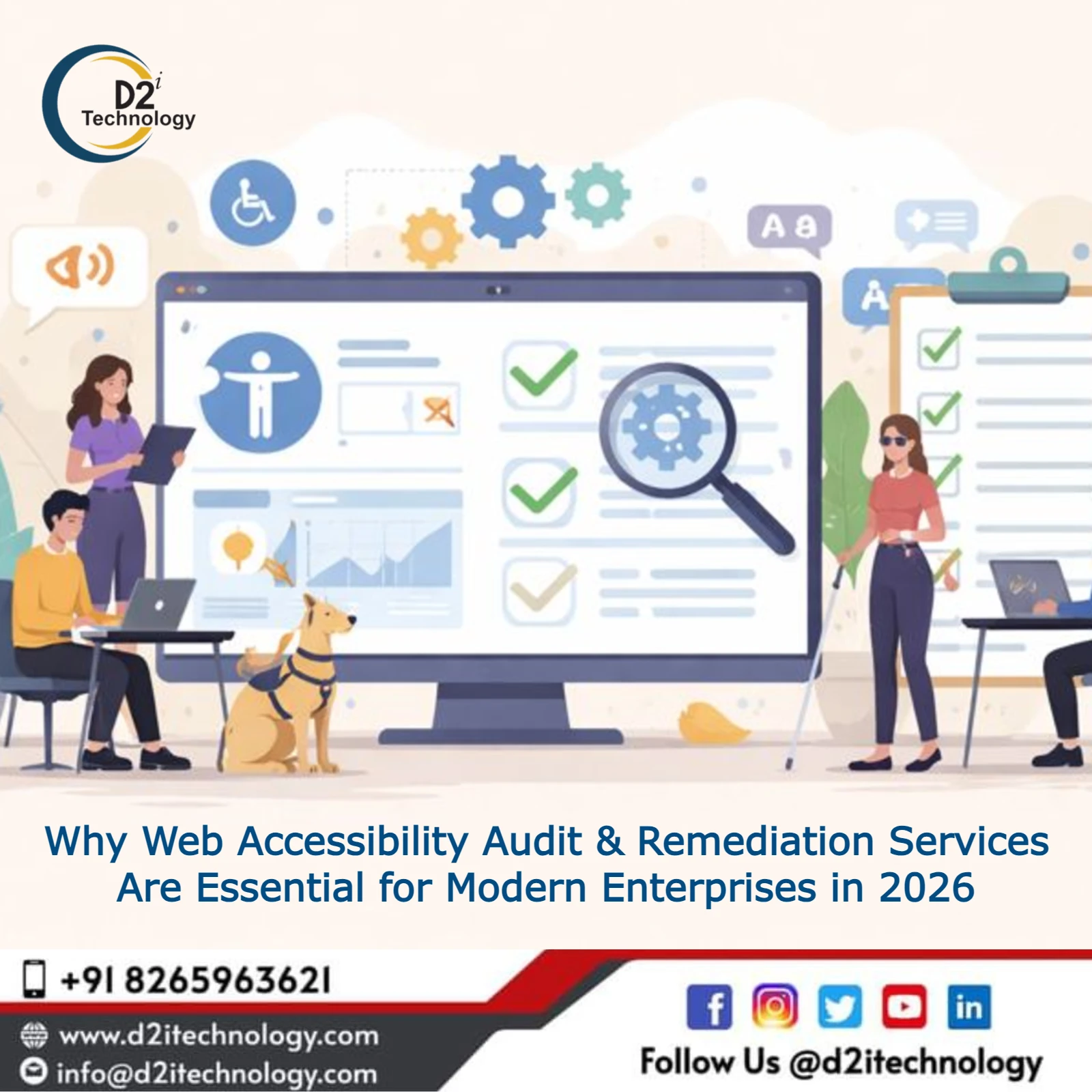
The digital landscape of 2026 demands more than functional websites and applications—it requires inclusive experiences that serve every user, regardless of ability. For modern enterprises, investing in Web Accessibility Audit and Remediation Services For Enterprises has shifted from optional enhancement to business-critical necessity. Legal pressures are mounting, customer expectations are evolving, and regulatory frameworks worldwide are tightening accessibility requirements. Organizations that treated accessibility as an afterthought are now facing lawsuits, market exclusion, and reputational damage, while forward-thinking enterprises are discovering that accessibility drives innovation, expands market reach, and strengthens brand value.
The stakes have never been higher. With over 1.3 billion people globally living with significant disabilities, representing 16% of the world’s population, inaccessible digital platforms aren’t just excluding a minority—they’re locking out a massive market segment with substantial purchasing power. Add to this the aging global population, situational disabilities, and users with temporary impairments, and the business case becomes undeniable.
The 2026 Accessibility Landscape: What’s Changed
Several converging factors make 2026 a pivotal year for enterprise accessibility:
Regulatory Evolution Worldwide
- United States: The Americans with Disabilities Act (ADA) has been consistently applied to websites through court precedents. The Department of Justice continues signaling that web accessibility is non-negotiable, with thousands of accessibility lawsuits filed annually.
- European Union: The European Accessibility Act becomes fully enforceable in June 2025, requiring accessibility for a wide range of products and services, including websites, mobile apps, e-commerce, and digital services.
- India: The Rights of Persons with Disabilities Act, 2016, combined with sector-specific mandates from regulators like SEBI, RBI, and TRAI, creates comprehensive accessibility requirements for enterprises operating in India.
- Canada: The Accessible Canada Act and provincial regulations like AODA (Accessibility for Ontarians with Disabilities Act) impose strict compliance timelines with significant penalties.
- Australia: The Disability Discrimination Act applies to digital services, with increasing enforcement and legal precedents establishing accessibility obligations.
Technology Complexity Increases
Modern enterprise applications involve:
- Single-page applications with dynamic content
- Progressive web apps blurring lines between web and native
- AI-powered interfaces and chatbots
- Complex data visualizations and dashboards
- Real-time collaboration tools
- Video conferencing and multimedia content
- Voice interfaces and gesture controls
Each technological advancement introduces new accessibility challenges that require specialized audit and remediation expertise.
Market Pressure and Customer Expectations
Today’s consumers expect inclusive experiences. Research shows:
- 71% of customers with disabilities leave websites that are difficult to use
- Accessible websites see 28% higher revenue on average
- Brand loyalty increases significantly among customers who feel included
- Social media amplifies both positive inclusion stories and accessibility failures
Insurance and Investment Requirements
Increasingly, accessibility compliance affects:
- Cyber insurance eligibility and premiums
- Investor due diligence processes
- ESG (Environmental, Social, Governance) ratings
- Partnership and vendor requirements
- Merger and acquisition valuations
Why In-House Teams Struggle with Accessibility
Most enterprises have talented development teams, yet accessibility compliance remains elusive. Here’s why:
Specialized Knowledge Gap
Web accessibility requires expertise that extends far beyond standard development skills:
- Assistive Technology Proficiency: Developers must understand how screen readers, voice control software, switch devices, and screen magnifiers interpret web content. This isn’t theoretical knowledge—it requires hands-on experience with JAWS, NVDA, VoiceOver, TalkBack, Dragon NaturallySpeaking, and other assistive technologies.
- WCAG Interpretation: The Web Content Accessibility Guidelines contain hundreds of success criteria. Knowing which apply to your specific situation, how they interact, and how to test them properly requires specialized training.
- ARIA Mastery: Accessible Rich Internet Applications (ARIA) is a powerful but complex specification. Incorrect ARIA implementation often makes accessibility worse, not better. Knowing when to use ARIA, when to rely on semantic HTML, and how to avoid common pitfalls requires deep expertise.
- Disability Perspective: Technical compliance doesn’t guarantee usability. Understanding how people with various disabilities actually use digital platforms—their workflows, frustrations, and workarounds—informs better design decisions.
Must Read: US Accessibility Auditor for Web Compliance Services: Protect Your Website from Compliance Issues
Testing Methodology Challenges
Comprehensive accessibility testing involves:
- Manual Testing Primacy: Automated tools catch only 25-35% of accessibility issues. The remaining 65-75% requires manual testing by experienced auditors who understand context, user intent, and disability-specific barriers.
- Cross-Platform Complexity: Testing must cover multiple browsers, operating systems, assistive technology combinations, and device types. This matrix explodes quickly—Windows/JAWS, macOS/VoiceOver, iOS/VoiceOver, Android/TalkBack, plus keyboard-only navigation, voice control, and more.
- User Journey Focus: Accessibility isn’t about individual page compliance—it’s about complete user journeys. Can a blind user actually complete a purchase? Can a keyboard-only user navigate your entire application? These workflow tests require careful scenario planning and execution.
Competing Priorities and Resource Constraints
Enterprise development teams juggle:
- Feature delivery deadlines
- Bug fixes and technical debt
- Performance optimization
- Security updates
- Infrastructure maintenance
Accessibility consistently gets deprioritized against these competing demands. Professional accessibility services provide dedicated focus without diverting your core development resources.
Objectivity and Credibility
Internal audits lack the independence and credibility that stakeholders expect:
- Regulators give more weight to third-party professional assessments
- Legal teams prefer external validation for compliance documentation
- Executive leadership trusts objective external expertise
- Customers perceive greater commitment when enterprises engage certified professionals
What Comprehensive Audit & Remediation Services Include
Professional Web Accessibility Audit and Remediation Services For Enterprises go far beyond automated scans and checklists. Here’s what comprehensive services provide:
Phase 1: Strategic Accessibility Assessment
- Business Context Analysis: Understanding your industry, regulatory requirements, customer demographics, and business goals to align accessibility strategy with enterprise objectives.
- Digital Property Inventory: Cataloging all customer-facing and employee-facing digital assets—websites, web applications, mobile apps, internal tools, PDFs, multimedia content—to establish audit scope.
- Risk Assessment: Identifying legal exposure, brand risk, and competitive vulnerabilities related to accessibility gaps.
- Stakeholder Interviews: Engaging with product managers, designers, developers, legal counsel, and executive leadership to understand constraints and priorities.
Phase 2: Comprehensive Technical Audit
- Automated Scanning: Using industry-standard tools (Axe, WAVE, Lighthouse) to identify common issues quickly across large digital properties.
- Manual Expert Testing: IAAP-certified auditors manually test with assistive technologies, evaluating real user experiences that automation cannot assess.
- Code-Level Review: Examining HTML, CSS, JavaScript, and ARIA implementation to identify structural and semantic issues.
- Workflow Testing: Evaluating complete user journeys for critical tasks—account creation, purchasing, form submission, content consumption, collaboration features.
- Document Accessibility: Reviewing PDFs, Word documents, PowerPoints, and other downloadable content for accessibility compliance.
- Multimedia Assessment: Evaluating videos, podcasts, and interactive media for captions, transcripts, audio descriptions, and accessible controls.
Phase 3: Detailed Reporting and Prioritization
- WCAG Conformance Report: Comprehensive documentation of compliance against WCAG 2.1 or 2.2 Level AA success criteria.
- Severity Classification: Issues categorized as Critical, High, Medium, or Low based on impact on users and regulatory risk.
- Evidence and Context: Screenshots, screen reader recordings, code snippets, and detailed explanations for each finding.
- Remediation Recommendations: Specific, actionable guidance including code examples, design patterns, and implementation strategies.
- Effort Estimation: Resource and timeline estimates for remediation to support project planning and budgeting.
- Prioritized Roadmap: Phased approach addressing highest-impact and highest-risk issues first while building toward comprehensive compliance.
Phase 4: Guided Remediation Support
- Developer Training: Workshops and hands-on sessions teaching your team accessible coding practices, ARIA patterns, and testing techniques.
- Design System Updates: Establishing accessible component libraries, design patterns, and documentation for consistent accessibility across products.
- Code Review: Reviewing proposed fixes before deployment to ensure corrections are effective and don’t introduce new issues.
- Iterative Testing: Validating remediated issues through re-testing with assistive technologies.
- Quality Assurance Integration: Embedding accessibility checks into QA processes and CI/CD pipelines.
Phase 5: Ongoing Compliance Management
- Periodic Re-audits: Regular comprehensive audits (annually or semi-annually) as your digital properties evolve.
- Feature Launch Reviews: Accessibility assessment of new features before production deployment.
- Governance Framework: Establishing accountability, processes, and policies for maintaining accessibility long-term.
- Continuous Consultation: Ongoing access to accessibility experts for questions, guidance, and support as challenges arise.
Industry-Specific Accessibility Requirements
Different sectors face unique accessibility challenges requiring specialized expertise:
Financial Services and Fintech
Requirements include accessible trading platforms, secure authentication flows, complex financial data visualization, real-time market updates, document accessibility for statements and tax forms, and regulatory compliance with sector-specific mandates. Accessible Web Compliance Audit For Regulated Entities in finance must address SEBI regulations in India, SEC requirements in the US, and banking accessibility mandates worldwide.
Healthcare and Pharmaceuticals
Challenges include patient portals with protected health information, telemedicine platforms with video and document sharing, prescription management systems, health information accessibility, HIPAA-compliant accessible communications, and medical device software interfaces.
E-Commerce and Retail
Critical areas include product search and filtering, shopping cart and checkout flows, product comparison tools, customer reviews and ratings, promotional content and imagery, and mobile commerce experiences.
Education and E-Learning
Focus areas include learning management systems, video lectures with captions and transcripts, interactive assessments and quizzes, collaboration tools for group work, administrative systems for registration and records, and compliance with Section 508 for institutions receiving federal funding.
Government and Public Sector
Requirements include Section 508 compliance for federal agencies, state and local accessibility mandates, public service delivery platforms, emergency communication systems, and transparent accessibility conformance reporting.
Technology and SaaS
Considerations include complex dashboard interfaces, API documentation accessibility, developer tools and IDEs, collaborative platforms, integration with third-party services, and accessibility for admin and end-user interfaces.
The D2i Technology Advantage
When enterprises choose D2i Technology for Web Accessibility Audit and Remediation Services For Enterprises, they partner with proven accessibility experts who deliver measurable results:
IAAP-Certified Expertise
Our team includes Web Accessibility Specialists (WAS) certified by the International Association of Accessibility Professionals (IAAP), demonstrating mastery of WCAG standards, assistive technology testing, and accessibility best practices.
8+ Years of Enterprise Experience
We’ve partnered with organizations across industries—financial services, healthcare, e-commerce, education, government, and technology—understanding sector-specific challenges and regulatory requirements.
Comprehensive Methodology
Our approach combines automated scanning efficiency with manual testing thoroughness, code-level technical review with user experience focus, and compliance documentation with practical remediation guidance.
Technology Stack Expertise
We work with modern frameworks and technologies:
- React, Angular, Vue.js, and other JavaScript frameworks
- WordPress, and content management systems
- Native mobile (iOS/Android) and hybrid applications
- Complex web applications and single-page apps
- Legacy systems requiring accessibility retrofitting
India and Global Regulatory Knowledge
We understand accessibility regulations across jurisdictions:
- India’s RPwD Act and sector-specific mandates
- US ADA, Section 508, and state accessibility laws
- European Accessibility Act and EN 301 549
- Canadian AODA and Accessible Canada Act
- International standards and best practices
Practical Business Focus
We balance regulatory compliance with business realities:
- Phased implementation approaches for budget constraints
- Quick wins alongside long-term transformation
- Developer enablement for sustainable accessibility
- Minimal disruption to ongoing operations
- Clear ROI demonstration to stakeholders
Beyond Compliance: The Business Benefits
While regulatory compliance drives initial accessibility investment, the broader benefits justify ongoing commitment:
Market Expansion
Accessible digital platforms reach:
- 1.3 billion people with disabilities globally
- Aging populations with declining abilities
- Users with temporary impairments (broken arm, eye surgery)
- Situational limitations (bright sunlight, noisy environments)
This expanded reach translates to revenue growth that far exceeds compliance costs.
Enhanced User Experience for Everyone
Accessibility improvements benefit all users:
- Clear navigation helps everyone find information faster
- Keyboard shortcuts increase power user efficiency
- Captions help in sound-sensitive environments
- High contrast supports use in varied lighting
- Simple language aids comprehension universally
SEO and Search Performance
Search engines favor accessible websites:
- Semantic HTML improves content understanding
- Descriptive alt text enhances image search
- Proper heading structure aids content indexing
- Fast loading times benefit mobile rankings
- Reduced bounce rates from improved usability
Reduced Legal and Reputational Risk
Proactive accessibility:
- Prevents costly lawsuits and settlements
- Avoids negative publicity from accessibility failures
- Demonstrates corporate social responsibility
- Builds trust with customers and stakeholders
- Satisfies investor ESG requirements
Innovation and Code Quality
Accessibility-first development:
- Encourages cleaner, more semantic code
- Promotes component reusability and consistency
- Forces thoughtful UX design decisions
- Reduces technical debt and maintenance costs
- Facilitates future technology adoption
Measuring Accessibility ROI
Enterprises need clear metrics demonstrating accessibility value:
Quantitative Metrics
- Compliance Rate: Percentage of WCAG success criteria met, tracked over time.
- Issue Resolution: Number of accessibility issues identified and remediated.
- User Reach: Increased traffic and conversions from users with disabilities.
- Legal Risk Reduction: Decrease in accessibility-related complaints or legal threats.
- Cost Avoidance: Prevented lawsuit settlements and penalty costs.
- Development Efficiency: Reduced remediation costs through prevention and early detection.
Qualitative Indicators
- Customer Satisfaction: Improved feedback from users with disabilities.
- Brand Perception: Enhanced reputation for inclusion and corporate responsibility.
- Employee Engagement: Pride in working for an inclusive organization.
- Partner Confidence: Increased trust from vendors, investors, and partners.
- Market Positioning: Differentiation from competitors on accessibility leadership.
Building Sustainable Accessibility Programs
One-time audits achieve initial compliance, but sustainable accessibility requires organizational transformation:
Governance and Accountability
- Executive Sponsorship: Leadership commitment with budget and resource allocation.
- Accessibility Champion Network: Distributed ownership across product teams.
- Policy and Standards: Clear accessibility requirements for all digital initiatives.
- Procurement Guidelines: Vendor and partner accessibility expectations.
Training and Capability Building
Role-Specific Training:
- Designers: Accessible UX patterns and design systems
- Developers: WCAG implementation and testing techniques
- Content Creators: Accessible writing and multimedia production
- QA Teams: Accessibility testing methodologies
- Product Managers: Incorporating accessibility in requirements
Ongoing Education: Regular updates on evolving standards, new techniques, and emerging technologies.
Process Integration
- Design Phase: Accessibility considerations in wireframes and mockups.
- Development Phase: Accessible coding standards and component libraries.
- Testing Phase: Accessibility checks in QA processes before deployment.
- Deployment Phase: Automated accessibility scanning in CI/CD pipelines.
- Maintenance Phase: Regular audits and continuous improvement.
Technology and Tools
- Automated Testing Tools: Integrated into development workflows for immediate feedback.
- Manual Testing Protocols: Documented procedures for assistive technology testing.
- Issue Tracking: Accessibility defects managed alongside other development tasks.
- Knowledge Management: Centralized accessibility documentation and resources.
Conclusion
In 2026, accessibility isn’t a checkbox—it’s a business imperative. Enterprises that embrace Web Accessibility Audit and Remediation Services For Enterprises position themselves for sustainable growth, regulatory compliance, and market leadership. The convergence of legal requirements, customer expectations, and business opportunities makes accessibility an essential investment, not an optional enhancement.
DIY accessibility attempts expose enterprises to regulatory risk, legal liability, wasted resources on ineffective fixes, and the reputational damage of excluding customers with disabilities. Professional accessibility services bring specialized expertise, objective assessment, comprehensive testing methodologies, and proven remediation strategies that in-house teams cannot match.
D2i Technology delivers enterprise-grade accessibility solutions combining IAAP-certified expertise, industry-specific knowledge, modern technology proficiency, and practical business focus. We don’t just identify problems—we partner with you to build accessible, compliant, inclusive digital experiences that serve all users while driving business value.
The accessibility journey begins with a single step. Take that step today, and position your enterprise for success in an increasingly inclusive digital world.
About D2i Technology
D2i Technology is a leading provider of Web Accessibility Audit and Remediation Services For Enterprises and Accessible Web Compliance Audit For Regulated Entities across industries. Our IAAP WAS-certified team brings 8+ years of experience delivering comprehensive accessibility solutions for organizations in financial services, healthcare, e-commerce, education, government, and technology sectors. We combine deep technical expertise in WCAG 2.1/2.2 standards with practical understanding of business requirements, regulatory frameworks, and modern development practices. Our services include comprehensive accessibility audits, guided remediation support, developer training programs, accessible design systems, ongoing compliance management, and strategic accessibility consulting. We partner with enterprises in India and globally to transform accessibility from compliance obligation into competitive advantage.
Frequently Asked Questions
Make Accessibility Your Competitive Advantage
Partner with D2i Technology for enterprise-grade accessibility audit and remediation services. IAAP-certified experts, comprehensive methodology, and proven results for organizations worldwide.