- Accessibility Services
- February 13, 2026
Transform Your Site with Professional Accessibility Testing
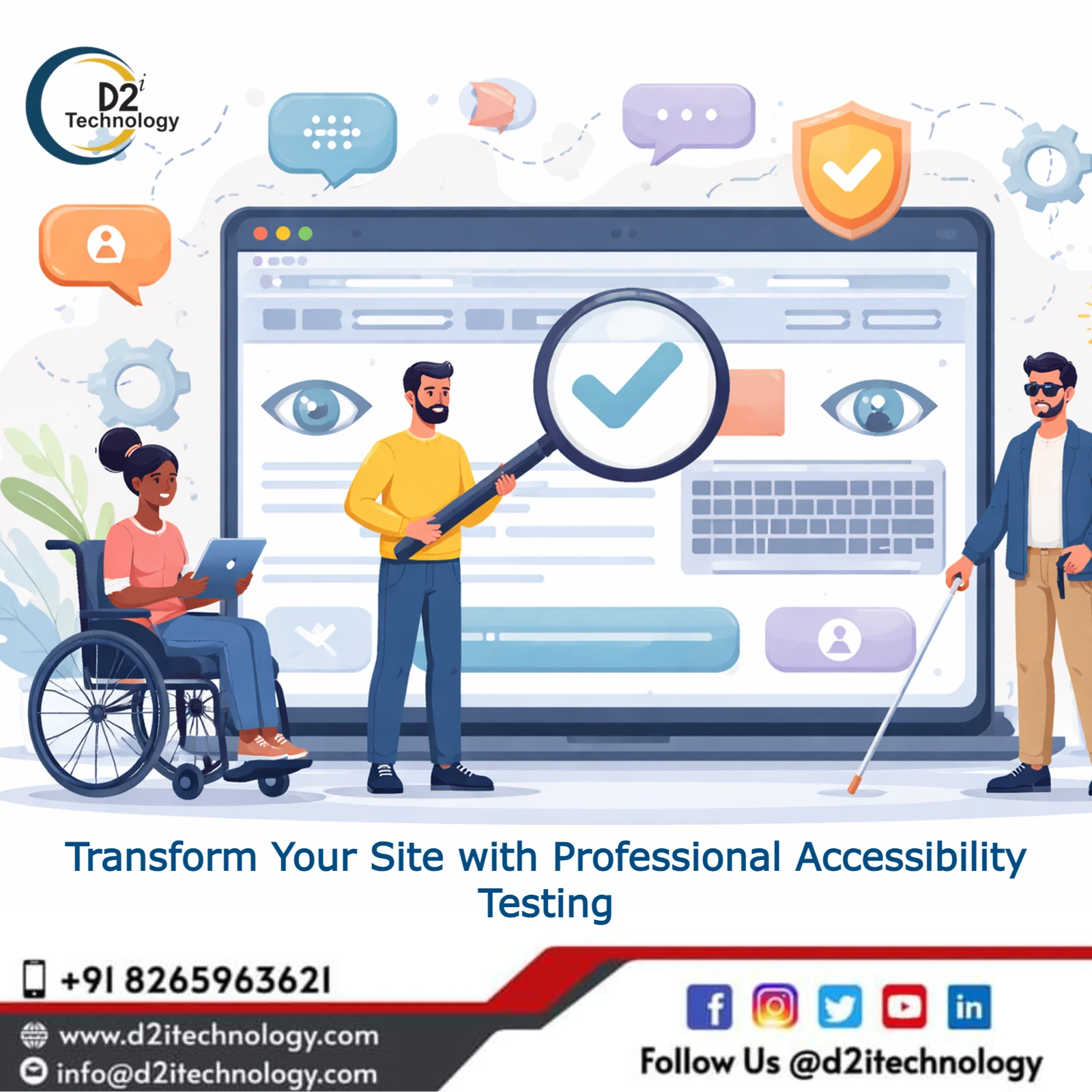
The digital landscape demands more than functional websites—it requires inclusive experiences that serve everyone, regardless of ability. Organizations seeking professional Accessibility Testing Service In USA face a transformative opportunity: converting inaccessible platforms that exclude millions of potential users into welcoming digital spaces that serve everyone effectively. Whether you’re responding to legal requirements, pursuing genuine inclusion, or expanding market reach, professional accessibility testing delivers measurable business value while protecting your organization from risk and ensuring your digital presence reflects your commitment to serving all customers with dignity and independence.
The reality is stark: 61 million Americans live with disabilities, representing 26% of the adult population. When websites lack proper accessibility, you’re not just missing compliance checkboxes—you’re excluding a quarter of your potential audience and exposing your organization to legal liability. Yet achieving meaningful accessibility requires more than good intentions or automated scanning tools. It demands expert evaluation combining technical precision, user perspective, and practical remediation guidance that only professional accessibility testing services provide.
Why Professional Accessibility Testing Matters
The difference between DIY accessibility efforts and professional testing services directly impacts outcomes:
Comprehensive Coverage Beyond Automation
- The Automation Myth: Free online scanners and browser extensions promise instant accessibility reports. However, these automated tools detect only 25-35% of accessibility barriers—the obvious, technically measurable violations like missing alt text or color contrast failures.
- Manual Testing Value: The remaining 65-75% of accessibility issues require human judgment, assistive technology expertise, and user experience evaluation. Professional testers identify barriers automation misses: illogical keyboard navigation, confusing screen reader experiences, improper ARIA implementation, and usability problems that technically compliant code can still create.
- Real User Perspective: Professional testers navigate your site with actual assistive technologies—JAWS, NVDA, VoiceOver, TalkBack—experiencing barriers exactly as users with disabilities encounter them, not just checking technical specifications.
Legal and Regulatory Protection
- ADA Compliance: The Americans with Disabilities Act applies to websites, with thousands of accessibility lawsuits filed annually. Professional testing documentation demonstrates good faith compliance efforts, potentially mitigating legal exposure.
- Industry Requirements: Healthcare (HIPAA), finance (SEBI, SEC), education (Section 508), and government sectors face specific accessibility mandates. Professional testing ensures compliance with industry-specific standards.
- Defensible Documentation: When facing legal scrutiny or regulatory inspection, audit reports from certified professionals carry weight that internal self-assessments or automated tool outputs cannot match.
Understanding top accessibility testing companies helps organizations appreciate the range of professional services available and what distinguishes quality providers.
Business Impact Beyond Compliance
- Market Expansion: Making websites accessible opens your business to 61 million Americans with disabilities, plus aging populations experiencing declining abilities, and users with temporary impairments.
- SEO Benefits: Search engines favor accessible websites—semantic HTML, proper headings, alt text, and clear structure improve rankings organically.
- User Experience Improvements: Accessibility enhancements benefit everyone: clear navigation, consistent layouts, keyboard shortcuts, and high contrast help all users regardless of disability status.
- Brand Reputation: Demonstrating commitment to inclusion strengthens brand perception, particularly among younger consumers who increasingly choose companies reflecting their values.
What Professional Accessibility Testing Includes
Comprehensive Accessibility Testing Service In USA encompasses multiple evaluation types and methodologies:
Technical Accessibility Audit
- WCAG Compliance Assessment: Evaluating your website against Web Content Accessibility Guidelines 2.1 or 2.2 Level AA—the internationally recognized standard and most common regulatory target.
- Code-Level Analysis: Examining HTML, CSS, JavaScript, and ARIA implementation for semantic correctness, proper markup, and assistive technology compatibility.
- Automated Scanning: Using industry-standard tools (Axe, WAVE, Lighthouse) to efficiently identify common technical violations across large digital properties.
- Standards Validation: Confirming HTML validity, proper document structure, and adherence to web standards ensuring cross-browser and assistive technology compatibility.
Manual Expert Testing
- Screen Reader Navigation: IAAP-certified testers navigate your entire site using multiple screen readers, evaluating whether content makes sense, navigation is logical, and functionality works properly.
- Keyboard-Only Testing: Verifying all interactive elements are accessible without mouse, tab order follows logical sequences, focus indicators are visible, and no keyboard traps exist.
- Visual Assessment: Evaluating color contrast, text sizing, responsive design, visual-only information, and accommodations for colorblindness or low vision.
- Cognitive Load Evaluation: Assessing whether interfaces are overwhelming, instructions are clear, error messages are helpful, and workflows are intuitive.
Exploring what manual, automated, and hybrid accessibility testing actually is helps organizations understand these complementary approaches.
User Workflow Testing
- Critical Journey Evaluation: Testing complete tasks from start to finish—account creation, purchase processes, form submissions, content consumption—ensuring accessibility throughout user experiences.
- Error Recovery Testing: Intentionally triggering validation errors, testing how users with disabilities identify problems, understand requirements, and successfully correct issues.
- Time-Sensitive Testing: Evaluating session timeouts, timed content, auto-advancing carousels, and CAPTCHA alternatives.
- Multi-Device Testing: Validating accessibility across desktop, tablet, mobile devices, and various browsers ensuring consistent experiences.
Assistive Technology Compatibility
- Screen Reader Testing: JAWS (most popular commercial option), NVDA (leading open-source), VoiceOver (macOS/iOS), TalkBack (Android)
- Voice Control Testing: Dragon NaturallySpeaking and platform-specific voice navigation
- Screen Magnification: ZoomText and platform magnifiers testing content usability at high zoom levels
- Alternative Input Devices: Switch access, eye tracking, and adaptive keyboards
Professional accessibility testing services combine these approaches for comprehensive evaluation that neither automated tools nor inexperienced testers can match.
The Professional Testing Process
Quality accessibility testing follows structured methodologies ensuring thorough, consistent results:
Phase 1: Discovery and Planning
Scope Definition: Collaborating with you to identify which digital properties require testing—websites, web applications, mobile apps, PDFs, multimedia content.
Priority Identification: Determining critical user workflows, high-traffic pages, essential functions, and business-critical features deserving focused attention.
Standards Selection: Confirming target compliance level (WCAG 2.1 vs 2.2, Level A vs AA vs AAA) and industry-specific requirements.
Success Criteria: Establishing clear metrics defining testing completion and remediation validation.
Phase 2: Comprehensive Testing
Automated Baseline: Running accessibility scanners across your digital properties identifying common technical violations efficiently.
Manual Evaluation: Expert testers manually evaluating pages, components, and workflows using assistive technologies and accessibility expertise.
Workflow Testing: Testing complete user journeys from initiation through completion, ensuring accessibility throughout critical paths.
Documentation: Detailed recording of findings with screenshots, code examples, screen reader recordings, and clear evidence.
Phase 3: Detailed Reporting
Executive Summary: High-level compliance status, critical findings, business impact, and recommended priorities for stakeholders.
Technical Findings: Each accessibility barrier documented with:
- Specific WCAG success criterion violated
- Affected pages or components
- Screenshots and annotated evidence
- Code examples demonstrating issues
- User impact explanation
- Severity rating (Critical, High, Medium, Low)
- Specific remediation recommendations
WCAG Conformance Matrix: Complete checklist showing compliance status for every applicable success criterion.
Prioritized Roadmap: Strategic implementation plan organizing fixes by severity, user impact, and implementation effort.
Phase 4: Remediation Support
Developer Consultation: Answering questions during implementation, reviewing proposed solutions, and providing technical guidance.
Code Review: Evaluating fixes before deployment ensuring corrections are effective and don’t introduce new barriers.
Re-Testing: Validating remediated issues through follow-up testing with assistive technologies.
Training: Teaching your team accessible coding practices preventing future violations.
Organizations seeking comprehensive support should explore accessibility remediation services that partner through implementation, not just identify problems.
Key Benefits of Professional Testing Services
Investing in professional Accessibility Testing Service In USA delivers multiple returns:
Risk Mitigation
- Legal Protection: Documented accessibility compliance efforts demonstrate good faith, potentially reducing lawsuit exposure or severity.
- Regulatory Compliance: Meeting ADA, Section 508, WCAG, and industry-specific accessibility requirements.
- Insurance Benefits: Some cyber insurance policies offer better rates for demonstrated accessibility compliance.
- Reputational Protection: Preventing high-profile accessibility failures that damage brand reputation and customer trust.
Market Expansion
- Disability Market Access: Reaching 61 million Americans with disabilities representing substantial purchasing power.
- Aging Population Service: As populations age, more users benefit from accessible design—large touch targets, high contrast, clear navigation.
- International Markets: WCAG compliance facilitates expansion into markets with accessibility regulations like the EU, Canada, Australia.
- Competitive Differentiation: Standing out from competitors who neglect accessibility or implement superficial solutions.
Operational Improvements
Understanding the user experience with web accessibility testing demonstrates how accessibility improvements benefit entire user bases.
- Support Cost Reduction: Accessible, intuitive interfaces require fewer support calls explaining navigation or functionality.
- Development Quality: Addressing accessibility improves overall code quality, maintainability, and technical standards.
- SEO Performance: Accessible websites rank better in search results through semantic HTML, proper structure, and descriptive content.
- User Satisfaction: Better experiences for all users, not just those with disabilities, through clearer navigation and more usable interfaces.
Choosing the Right Accessibility Testing Partner
Not all testing services deliver equal value. Key selection criteria include:
Professional Certifications
- IAAP Credentials: Look for International Association of Accessibility Professionals certifications—WAS (Web Accessibility Specialist), CPACC (Core Competencies), or CPWA (Professional in Web Accessibility).
- Verified Expertise: Certification demonstrates auditors passed rigorous third-party examinations, not just self-proclaimed expertise.
- Continuing Education: Certified professionals maintain current knowledge through ongoing training as standards evolve.
Proven Experience
- Industry Knowledge: Have they tested platforms in your sector—healthcare, finance, e-commerce, SaaS, government?
- Technology Proficiency: Are they comfortable with your technology stack—React, WordPress, custom platforms, mobile apps?
- Portfolio Review: Ask for example reports (with identifying information redacted) demonstrating audit quality and deliverable standards.
- Client References: What do previous clients say about their expertise, communication, and results delivery?
Comprehensive Methodology
- Balanced Approach: Do they combine automated efficiency with extensive manual testing and assistive technology evaluation?
- Real User Testing: Do they test with actual assistive technologies, not just simulate accessibility?
- Actionable Deliverables: Do reports provide specific remediation guidance with code examples, or just list violations?
- Ongoing Support: Do they offer implementation partnership, training, and re-testing services?
Reviewing top accessibility testing services provides perspective on what distinguishes quality providers in the marketplace.
Common Accessibility Barriers Professional Testing Identifies
Experienced testing services routinely discover these prevalent issues:
Navigation and Structure
- Illogical Heading Hierarchy: Headings used for visual styling rather than content structure, confusing screen reader users
- Missing Skip Links: No mechanism for keyboard users to bypass repeated navigation blocks
- Keyboard Traps: Custom widgets trapping keyboard focus, preventing users from navigating away
- Poor Focus Management: Missing or invisible focus indicators, illogical tab order
Content and Multimedia
- Missing or Poor Alt Text: Images lacking text alternatives or using generic descriptions like “image”
- Uncaptioned Videos: Multimedia content without synchronized captions or transcripts
- Inaccessible PDFs: Downloadable documents as scanned images or untagged PDFs
- Color-Only Information: Critical information conveyed solely through color (red/green indicators)
Forms and Interactions
- Unlabeled Form Fields: Input fields without proper labels or instructions
- Unclear Error Messages: Validation errors identified only through color or vague messages
- Inaccessible Custom Widgets: Dropdowns, date pickers, sliders not working with assistive technologies
- Missing ARIA: Dynamic content updates without screen reader announcements
Technical Issues
- Invalid HTML: Non-standard code breaking assistive technology compatibility
- Contrast Failures: Insufficient color contrast between text and backgrounds
- Responsive Design Problems: Content not adapting properly to mobile devices or zoom
- Third-Party Barriers: Inaccessible chat widgets, payment processors, or embedded content
Learning about common accessibility issues helps organizations understand what professional testing should identify.
The D2i Technology Testing Advantage
D2i Technology’s Accessibility Testing Service In USA combines certified expertise with practical business focus:
Verified Professional Credentials
- IAAP WAS Certification: Our team holds Web Accessibility Specialist credentials demonstrating mastery of WCAG standards through rigorous examination.
- Continuous Training: Ongoing professional development maintaining current knowledge as standards and technologies evolve.
- 8+ Years Experience: Hundreds of accessibility audits across industries, technologies, and complexity levels.
Comprehensive Testing Methodology
- Balanced Approach: Combining automated scanning efficiency with extensive manual testing and real assistive technology evaluation.
- Multiple Screen Readers: Testing with JAWS, NVDA, VoiceOver, and TalkBack across various browsers and devices.
- Complete Workflows: Evaluating entire user journeys, not just isolated pages, ensuring accessibility throughout critical business functions.
- Code-Level Analysis: Examining HTML, CSS, JavaScript, and ARIA for proper implementation beyond surface-level checking.
Actionable Deliverables
- Detailed Reports: Comprehensive documentation with specific findings, evidence, user impact assessments, and severity classifications.
- Remediation Guidance: Concrete solutions with code examples, design patterns, and implementation strategies—not just problem lists.
- Prioritized Roadmaps: Strategic implementation plans balancing user impact, business priorities, and development resources.
- Developer Partnership: Collaborative support through remediation with code review, consultation, and validation testing.
Industry Expertise
- Cross-Sector Experience: Financial services, healthcare, e-commerce, SaaS, government, education, and enterprise platforms.
- Regulatory Knowledge: Understanding ADA, Section 508, WCAG, HIPAA, and industry-specific accessibility requirements.
- Technology Proficiency: Expertise across modern frameworks (React, Angular, Vue), CMSs (WordPress, Drupal), mobile platforms, and custom applications.
Our comprehensive accessibility services provide end-to-end support from initial testing through sustained accessibility excellence.
Beyond Testing: Building Accessibility Culture
Professional testing services should enable long-term accessibility, not just one-time compliance:
Knowledge Transfer
- Developer Training: Teaching accessible coding practices, ARIA implementation, and testing techniques through hands-on workshops.
- Design Education: Helping designers create inclusive user experiences from inception rather than retrofitting accessibility.
- QA Integration: Training quality assurance teams to include accessibility in standard testing procedures.
- Content Creator Guidance: Educating writers and content managers on accessible content creation, alt text, and document structure.
Process Integration
- Design Phase: Incorporating accessibility into wireframes, mockups, and user experience design before development.
- Development Phase: Establishing accessible component libraries, coding standards, and review checklists.
- Testing Phase: Embedding accessibility testing into QA workflows with automated monitoring in CI/CD pipelines.
- Deployment Phase: Pre-launch accessibility validation becoming standard release gate.
Continuous Improvement
- Regular Audits: Annual comprehensive assessments and quarterly focused reviews as platforms evolve.
- Regression Monitoring: Automated testing catching accessibility regressions between manual audits.
- Metrics Tracking: Measuring conformance rates, defect density, user feedback, and accessibility maturity.
Exploring the web accessibility guide for developers helps teams maintain accessibility between professional audits.
Measuring Testing Success
Professional testing should deliver measurable outcomes:
Technical Metrics
- WCAG Conformance Rate: Percentage of applicable success criteria met
- Defect Reduction: Decrease in accessibility violations over time
- Automated Test Coverage: Portion of codebase monitored for accessibility regressions
- Remediation Velocity: Speed of fixing identified issues
User Impact Metrics
- Assistive Technology Usage: Analytics showing screen reader users, keyboard navigation, and zoom usage
- Task Completion Rates: Whether users with disabilities successfully complete critical workflows
- Accessibility Feedback: User testimonials, support ticket trends, satisfaction surveys
Business Outcomes
- Legal Risk Reduction: Absence of accessibility-related lawsuits or complaints
- Market Penetration: Growth in disability community market share
- SEO Performance: Search ranking improvements from accessibility enhancements
- Support Cost Reduction: Fewer support interactions from more intuitive interfaces
Conclusion
Professional Accessibility Testing Service In USA transforms websites from exclusive to inclusive, converting barriers into welcome mats that serve all users regardless of ability. The difference between automated scans and professional testing directly impacts outcomes—superficial compliance checking versus genuine accessibility, legal vulnerability versus risk protection, excluded users versus expanded markets.
Accessibility isn’t achieved through free automated tools, overlay widgets, or good intentions alone. It requires comprehensive evaluation combining automated efficiency with manual expertise, technical precision with user perspective, and compliance validation with actionable implementation guidance that only professional services provide.
D2i Technology’s accessibility testing services deliver thorough evaluation, expert guidance, and partnership through implementation. Our IAAP-certified auditors bring verified expertise, proven methodologies, and commitment to your accessibility success—protecting your organization from risk while building genuinely inclusive digital experiences.
Don’t wait for lawsuits, regulatory action, or customer complaints to address accessibility. The cost of prevention dramatically undercuts the expense of legal settlement, rushed remediation, or reputational damage. Choose professional testing services that deliver comprehensive evaluation, actionable solutions, and sustainable accessibility practices.
Your users—all of them—deserve digital experiences that welcome, serve, and respect them. Professional accessibility testing ensures you deliver on that promise.
About D2i Technology
D2i Technology provides professional Accessibility Testing Service In USA, combining IAAP-certified expertise with practical business focus. Our Web Accessibility Specialist (WAS) certified team brings comprehensive WCAG 2.1/2.2 knowledge, extensive assistive technology proficiency, and 8+ years of accessibility testing experience. We serve organizations across financial services, healthcare, e-commerce, SaaS, government, and enterprise sectors, conducting thorough accessibility evaluations that identify barriers, provide actionable solutions, and establish sustainable practices. Our testing methodology balances automated scanning efficiency with extensive manual evaluation using screen readers (JAWS, NVDA, VoiceOver, TalkBack), keyboard navigation, voice control, and other assistive technologies. We evaluate complete user workflows, not just isolated pages, ensuring accessibility throughout critical business functions. Our deliverables include detailed audit reports with specific remediation recommendations, WCAG conformance documentation, prioritized implementation roadmaps with effort estimates, code examples and design patterns, and ongoing implementation support. Beyond testing, we provide developer training, design consultation, remediation partnership, automated testing integration, and continuous accessibility monitoring. Our commitment extends beyond one-time compliance checking to building organizational accessibility capability and creating genuinely inclusive digital experiences. With hundreds of successful testing engagements and deep expertise across industries, technologies, and platforms, we bring both credential-backed knowledge and practical implementation experience to every project. Our manual testing services ensure thorough evaluation combining automated tools with human expertise and real-world user perspective.
Frequently Asked Questions
Transform Your Website with Professional Accessibility Testing
Partner with D2i Technology's expert Accessibility Testing Service In USA. IAAP-certified auditors, comprehensive methodology, and actionable guidance for genuine accessibility.