- Accessibility Audits
- February 23, 2026
How to Ensure Digital Accessibility for Sebi Compliance
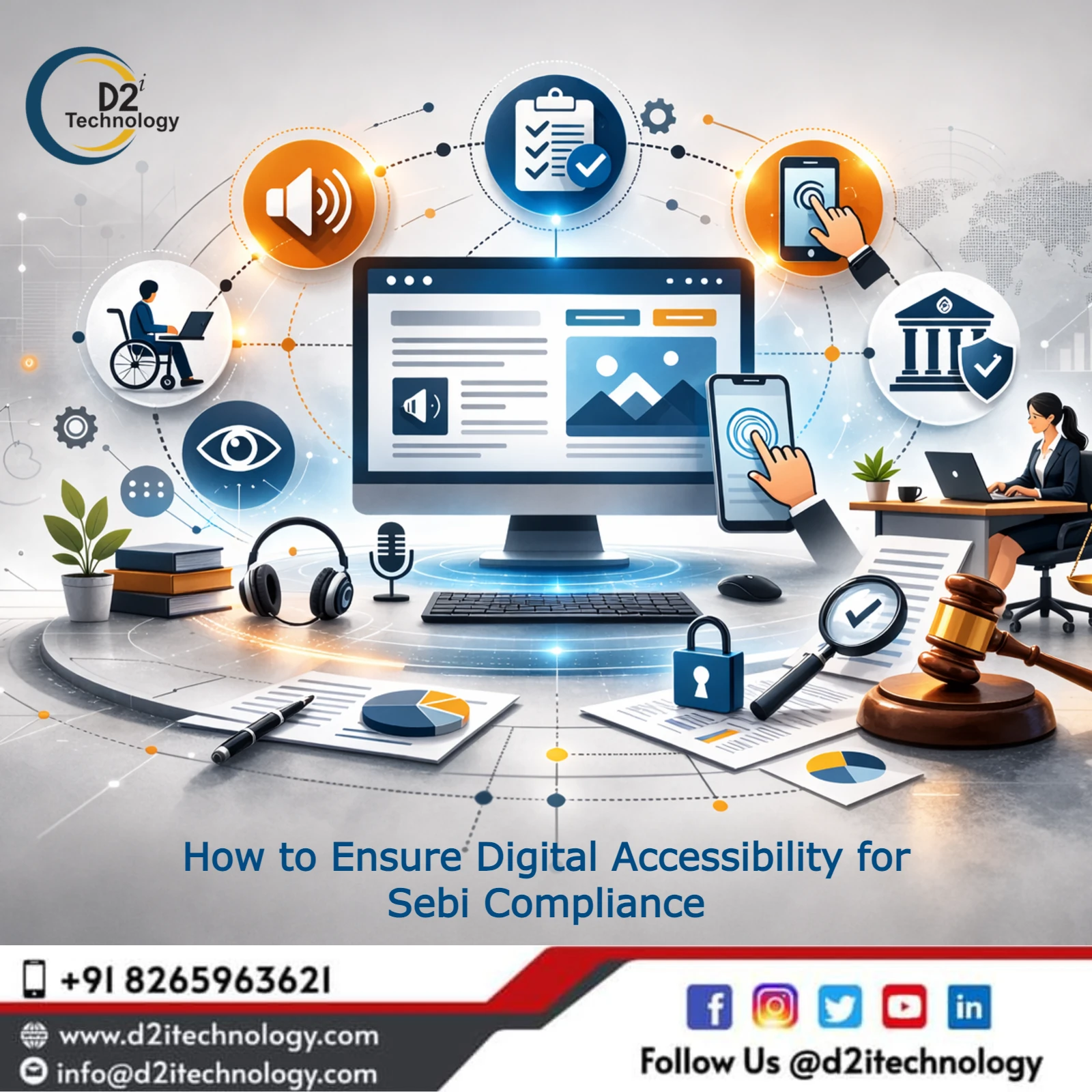
SEBI’s accessibility mandate has transformed digital compliance from optional consideration to regulatory imperative for India’s financial sector. Organizations seeking expert Digital Accessibility and Sebi Compliance Consultancy face a critical challenge: translating complex WCAG technical standards into practical implementation strategies that satisfy regulators while serving customers effectively. Whether you’re a stock broker, mutual fund, depository participant, or investment advisor, achieving and maintaining accessibility compliance requires systematic approaches, specialized expertise, and ongoing commitment that extends far beyond one-time audits or superficial fixes.
The regulatory landscape for digital accessibility in India’s financial markets has evolved dramatically. SEBI’s clear expectations, combined with the Rights of Persons with Disabilities (RPwD) Act, 2016, create comprehensive accessibility requirements that affect every customer-facing digital touchpoint—websites, trading platforms, mobile apps, investor portals, and online documentation. Yet many regulated entities struggle with where to begin, which standards apply, what constitutes compliance, and how to implement accessibility without disrupting operations or exhausting budgets.
Understanding SEBI’s Digital Accessibility Requirements
Before implementing solutions, organizations must thoroughly understand regulatory expectations:
Legal and Regulatory Framework
- RPwD Act, 2016: India’s disability rights legislation establishes the fundamental right to accessibility, making discrimination based on disability unlawful and requiring organizations to provide reasonable accommodations.
- SEBI Circulars and Guidelines: SEBI has issued specific guidance requiring market intermediaries and regulated entities to ensure their digital platforms comply with accessibility standards, particularly WCAG 2.1 Level AA.
- WCAG 2.1 Level AA: The Web Content Accessibility Guidelines published by the World Wide Web Consortium (W3C) provide the technical standards SEBI expects entities to meet.
- Enforcement Timeline: While accessibility has been expected, SEBI’s enforcement is strengthening, with the 2026 deadline marking increased regulatory scrutiny and potential penalties for non-compliance.
Who Must Comply
SEBI’s accessibility mandate applies broadly:
- Stock brokers and trading members
- Depository participants
- Mutual fund houses and asset management companies
- Portfolio management services
- Investment advisors and research analysts
- Credit rating agencies
- Stock exchanges and clearing corporations
- KYC Registration Agencies
If your organization operates under SEBI registration and provides digital services, compliance is mandatory. Understanding SEBI’s accessibility mandate helps clarify these requirements and their business implications.
What Platforms Require Accessibility
Compliance extends across all customer-facing digital properties:
- Public websites and informational pages
- Trading platforms and market data displays
- Mobile applications (iOS and Android)
- Investor portals and account management systems
- Online forms and document submission interfaces
- Research reports and downloadable content
- Customer support and communication tools
Step-by-Step Guide to SEBI Accessibility Compliance
Achieving compliance requires systematic approaches rather than ad-hoc efforts:
Step 1: Comprehensive Accessibility Audit
- Initial Assessment: Begin with professional accessibility audits evaluating current compliance status, identifying gaps, and establishing baseline metrics.
- Scope Definition: Determine which digital properties require assessment—prioritize customer-facing platforms with highest traffic and critical functions.
- Expert Evaluation: Engage IAAP-certified auditors who understand both WCAG standards and financial platform requirements for thorough, defensible assessments.
- Tool and Manual Testing: Combine automated scanning for common issues with extensive manual testing using assistive technologies like screen readers.
- Documentation: Obtain detailed audit reports documenting specific violations, severity ratings, user impact assessments, and remediation recommendations.
Professional accessibility testing services provide the comprehensive evaluation needed for regulatory compliance and meaningful accessibility improvement.
Step 2: Prioritized Remediation Planning
- Severity Classification: Organize accessibility barriers by criticality—violations blocking essential functions warrant immediate attention, while minor issues can follow in phased approaches.
- Risk Assessment: Evaluate legal exposure, regulatory scrutiny likelihood, and business impact for each violation category.
- Resource Allocation: Determine available development resources, budget constraints, and realistic timelines for remediation.
- Quick Wins Identification: Find low-effort, high-impact fixes demonstrating early progress—missing alt text, color contrast failures, form labels often fall into this category.
- Phased Roadmap: Create multi-phase implementation plans spreading work across manageable sprints or quarters rather than overwhelming development teams.
Step 3: Technical Implementation
- Developer Training: Ensure development teams understand accessible coding practices, ARIA implementation, and WCAG success criteria relevant to their work.
- Design System Updates: Establish accessible component libraries with documented patterns for buttons, forms, navigation, modals, and other common elements.
- Code Remediation: Systematically address identified violations following prioritized roadmaps with regular testing validating fixes.
- Quality Assurance Integration: Embed accessibility testing into QA processes catching regressions before production deployment.
- Third-Party Evaluation: For platforms using vendor solutions, assess vendor accessibility commitments and implement accessibility requirements in procurement.
Organizations seeking implementation support should explore accessibility remediation services that partner through the technical correction process.
Step 4: Validation and Documentation
- Re-Testing: After remediation, conduct comprehensive re-testing with assistive technologies confirming issues are properly resolved.
- WCAG Conformance Statement: Document compliance status, testing methodology, and any known exceptions or limitations.
- Accessibility Statement: Publish public accessibility statements explaining commitment, conformance level, feedback mechanisms, and contact information.
- Internal Documentation: Maintain detailed records of audits, remediation efforts, testing results, and ongoing maintenance for regulatory inspections.
Step 5: Ongoing Compliance Maintenance
- Regular Audits: Schedule periodic accessibility reviews—annually for comprehensive audits, quarterly for high-change platforms.
- Continuous Monitoring: Implement automated accessibility scanning in CI/CD pipelines catching regressions as code changes.
- Feature Launch Reviews: Test new features and major updates for accessibility before production deployment.
- Training Programs: Provide ongoing education for developers, designers, content creators, and product managers.
- Governance Framework: Establish clear accountability, processes, and standards maintaining accessibility long-term.
Understanding how SEBI-regulated entities achieve WCAG compliance provides additional context on successful compliance approaches.
Critical WCAG Success Criteria for Financial Platforms
While WCAG 2.1 Level AA includes dozens of success criteria, certain requirements are particularly relevant for SEBI-regulated entities:
Perceivable Content
- Alternative Text (1.1.1): All charts, graphs, market data visualizations, and images must have descriptive text alternatives conveying equivalent information to screen reader users.
- Captions and Transcripts (1.2.1-1.2.5): Investment webinars, product videos, and multimedia content require synchronized captions and transcripts.
- Color Independence (1.4.1): Don’t rely solely on color to convey information—red/green stock price changes need text indicators (+/-) or icons.
- Color Contrast (1.4.3): Text must have sufficient contrast ratios—4.5:1 for normal text, 3:1 for large text—ensuring readability for visually impaired users.
- Responsive Design (1.4.10): Content must reflow to 320px width without horizontal scrolling, supporting mobile users and zoom requirements.
Operable Interfaces
- Keyboard Accessibility (2.1.1): Every interactive element—trading buttons, form fields, dropdowns, modal dialogs—must be keyboard accessible without mouse dependency.
- Focus Indicators (2.4.7): Visible focus indicators show keyboard users which element currently has focus, essential for navigation.
- Logical Tab Order (2.4.3): Keyboard navigation must follow logical, predictable sequences matching visual layout.
- Skip Links (2.4.1): Bypass blocks of repeated content allowing keyboard users to jump directly to main content.
- Clear Navigation (2.4.4-2.4.5): Consistent navigation patterns, clear link purposes, and multiple ways to locate content.
Understandable Information
- Form Labels (3.3.2): Every form input needs clear, associated labels—critical for account opening, KYC, transaction forms.
- Error Identification (3.3.1): When form validation fails, clearly identify errors in text, not just color highlighting.
- Error Suggestions (3.3.3): Provide helpful guidance for correcting errors—”Password must contain at least 8 characters including one number.”
- Consistent Identification (3.2.4): Icons, buttons, and functions with same purposes should behave consistently across pages.
- Language Declaration (3.1.1-3.1.2): Declare page language and any language changes within content for proper screen reader pronunciation.
Robust Technical Implementation
- Valid HTML (4.1.1): Clean, standards-compliant code ensures assistive technology compatibility.
- Name, Role, Value (4.1.2): Custom widgets must expose proper accessibility information through ARIA attributes.
- Status Messages (4.1.3): Dynamic content updates—real-time stock prices, order confirmations—must announce changes to screen reader users.
Common Accessibility Barriers in Financial Platforms
Professional Digital Accessibility and Sebi Compliance Consultancy frequently encounters these issues:
Trading Platform Issues
- Real-Time Data Updates: Market data streaming without screen reader announcements leaves blind users unaware of price changes.
- Complex Order Entry: Multi-field order forms with interdependent validations often lack clear instructions and error handling.
- Data Visualizations: Charts showing portfolio performance, market trends, or technical indicators are often pure images without text alternatives.
- Keyboard Traps: Custom trading widgets sometimes trap keyboard focus, preventing users from navigating away.
Authentication Challenges
- CAPTCHA Barriers: Visual-only CAPTCHA without audio alternatives or other methods blocks blind users completely.
- Biometric Authentication: Fingerprint or facial recognition without alternative authentication methods excludes users with relevant disabilities.
- Multi-Factor Authentication: SMS or authenticator app requirements without alternatives create barriers for some users.
Document Accessibility
- Inaccessible PDFs: Account statements, prospectuses, research reports often delivered as scanned images or untagged PDFs.
- Form Complexity: Investment application forms, KYC documents requiring complex navigation screen readers cannot process.
- Download-Only Content: Important information available only through PDF downloads without accessible HTML alternatives.
Mobile App Barriers
- Touch Target Size: Buttons and interactive elements too small for accurate selection, particularly problematic for users with motor disabilities.
- Gesture-Only Interactions: Swipe-only navigation without alternative methods excludes assistive technology users.
- Screen Reader Support: Poor labeling of elements, illogical reading order, missing ARIA attributes in mobile apps.
Exploring common accessibility issues helps organizations proactively identify potential problems before they affect users or trigger compliance concerns.
The Role of Professional Consultancy
Navigating SEBI accessibility compliance benefits significantly from expert guidance:
Strategic Planning
- Compliance Roadmap Development: Consultants help create realistic timelines, phased approaches, and resource allocation strategies achieving compliance without operational disruption.
- Risk Prioritization: Identifying highest-risk areas deserving immediate attention versus lower-priority items that can follow systematically.
- Budget Optimization: Balancing thorough compliance with resource constraints, finding cost-effective approaches to complex requirements.
- Stakeholder Communication: Translating technical accessibility requirements into business language for executive decision-making.
Technical Implementation Support
- Architecture Review: Evaluating platform architectures identifying systemic accessibility barriers requiring fundamental changes versus surface-level fixes.
- Developer Training: Building internal capability through hands-on training on accessible coding practices, ARIA implementation, and assistive technology testing.
- Code Review: Validating proposed accessibility fixes before deployment, preventing ineffective corrections or new barriers.
- Third-Party Integration: Assessing accessibility of vendor platforms, payment gateways, chat widgets, and other third-party components.
Ongoing Partnership
- Regular Audits: Periodic accessibility assessments as platforms evolve, catching regressions and validating new features.
- Compliance Documentation: Maintaining audit records, conformance statements, and evidence for regulatory inspections.
- Regulatory Updates: Monitoring WCAG standard evolution, SEBI guidance changes, and legal developments affecting accessibility requirements.
- Continuous Improvement: Moving beyond minimum compliance toward best-in-class accessibility delivering competitive advantage.
Understanding the importance of SEBI compliance consulting demonstrates how professional partnership accelerates compliance while building sustainable accessibility practices.
Building Accessibility into Organizational Culture
Sustainable compliance requires cultural transformation beyond technical fixes:
Executive Commitment
- Leadership Buy-In: Accessibility succeeds when executives understand business value, allocate resources, and hold teams accountable.
- Budget Allocation: Dedicated funding for accessibility audits, remediation, training, and ongoing maintenance.
- Governance Structure: Clear ownership, cross-functional accessibility committees, and integration into product development processes.
Team Capability Development
Role-Specific Training:
- Developers: Accessible HTML/CSS/ARIA coding practices
- Designers: Inclusive UX patterns, color contrast, keyboard navigation considerations
- Content Creators: Writing accessible copy, creating meaningful alt text, structuring content
- QA Teams: Manual accessibility testing methodologies, assistive technology usage
Certification Programs: Encouraging team members to pursue IAAP certifications demonstrating professional accessibility competence.
Process Integration
- Design Phase: Accessibility considerations in wireframes, mockups, and user experience design.
- Development Phase: Accessible component libraries, code review checklists, automated testing in CI/CD pipelines.
- Testing Phase: Accessibility testing as standard QA requirement, not optional add-on.
- Deployment Phase: Pre-launch accessibility validation, accessibility statements published with new features.
Measuring Compliance Success
Effective accessibility programs track measurable outcomes:
Technical Metrics
- WCAG Conformance Rate: Percentage of applicable success criteria met across digital properties.
- Defect Density: Number of accessibility violations per page or component, tracking improvement over time.
- Automated Test Coverage: Portion of codebase covered by automated accessibility scans.
- Remediation Velocity: Speed of fixing identified issues from discovery to deployment.
User Impact Metrics
- Assistive Technology Usage: Analytics showing screen reader users, keyboard-only navigation, browser zoom usage.
- Task Completion Rates: Whether users with disabilities successfully complete critical workflows—account opening, trading, form submissions.
- User Feedback: Accessibility-related support tickets, customer complaints, or positive testimonials.
- Digital Inclusion: Market penetration among disability community, demonstrating genuine accessibility rather than just technical compliance.
Business Outcomes
- Regulatory Status: Clean SEBI inspections, no accessibility-related regulatory actions or warnings.
- Legal Risk: Absence of accessibility-related legal complaints or litigation.
- Competitive Position: Industry accessibility leadership providing differentiation and reputational advantage.
- Cost Efficiency: Reduced support costs from accessible self-service capabilities.
Conclusion
SEBI’s accessibility mandate represents both regulatory obligation and business opportunity for India’s financial sector. Organizations partnering with professional Digital Accessibility and Sebi Compliance Consultancy transform complex technical requirements into systematic implementation strategies that satisfy regulators while genuinely serving customers with disabilities.
Accessibility compliance isn’t achieved through quick fixes, overlay tools, or superficial remediation. It requires comprehensive audits identifying all barriers, prioritized remediation addressing issues systematically, developer training building sustainable capability, ongoing monitoring preventing regressions, and cultural transformation making accessibility a core organizational value.
The pathway to SEBI compliance is clear: professional audits establishing baselines, expert guidance navigating technical implementation, validation testing confirming effective remediation, thorough documentation satisfying regulatory requirements, and continuous maintenance sustaining compliance as platforms evolve.
D2i Technology’s Digital Accessibility and Sebi Compliance Consultancy combines IAAP-certified expertise with deep understanding of financial platforms and Indian regulatory requirements. We partner with SEBI-regulated entities through entire compliance journeys—from initial assessment through sustained accessibility excellence—building capability, providing technical guidance, and ensuring genuine accessibility that serves all customers.
Don’t wait for regulatory enforcement or customer complaints to address accessibility. The 2026 compliance deadline approaches rapidly. Organizations starting their accessibility journeys now can achieve thorough, quality compliance without rushed implementation stress. Choose partners who bring proven expertise, regulatory knowledge, and commitment to your long-term success.
About D2i Technology
D2i Technology provides specialized Digital Accessibility and Sebi Compliance Consultancy for India’s financial sector, helping SEBI-regulated entities achieve and maintain WCAG 2.1 Level AA compliance. Our IAAP WAS-certified team combines accessibility expertise with deep understanding of financial platforms, regulatory requirements, and practical implementation challenges. We serve stock brokers, mutual funds, depositories, investment advisors, and other market intermediaries navigating SEBI’s accessibility mandate. Our consultancy services include comprehensive WCAG accessibility audits, prioritized remediation roadmaps and technical guidance, developer training on accessible coding practices, design system development with accessible components, third-party platform evaluation and vendor management, compliance documentation and regulatory preparation, ongoing monitoring and periodic re-audits, and strategic accessibility partnership throughout your compliance journey. Beyond technical compliance, we help organizations build accessibility into development culture, creating sustainable practices that maintain compliance while delivering genuinely inclusive digital experiences. With 8+ years of accessibility expertise and successful SEBI compliance projects across India’s financial sector, we bring both technical depth and regulatory knowledge to every engagement. Our services extend beyond one-time audits to long-term partnership supporting continuous accessibility improvement, keeping your platforms compliant as they evolve and standards advance.
Frequently Asked Questions
Achieve SEBI Accessibility Compliance with Confidence
Partner with D2i Technology's expert Digital Accessibility and Sebi Compliance Consultancy. Comprehensive audits, strategic guidance, and ongoing support for SEBI-regulated entities.