- Application Development
- April 10, 2026
What Is Enterprise App Development and Why Does It Matter?
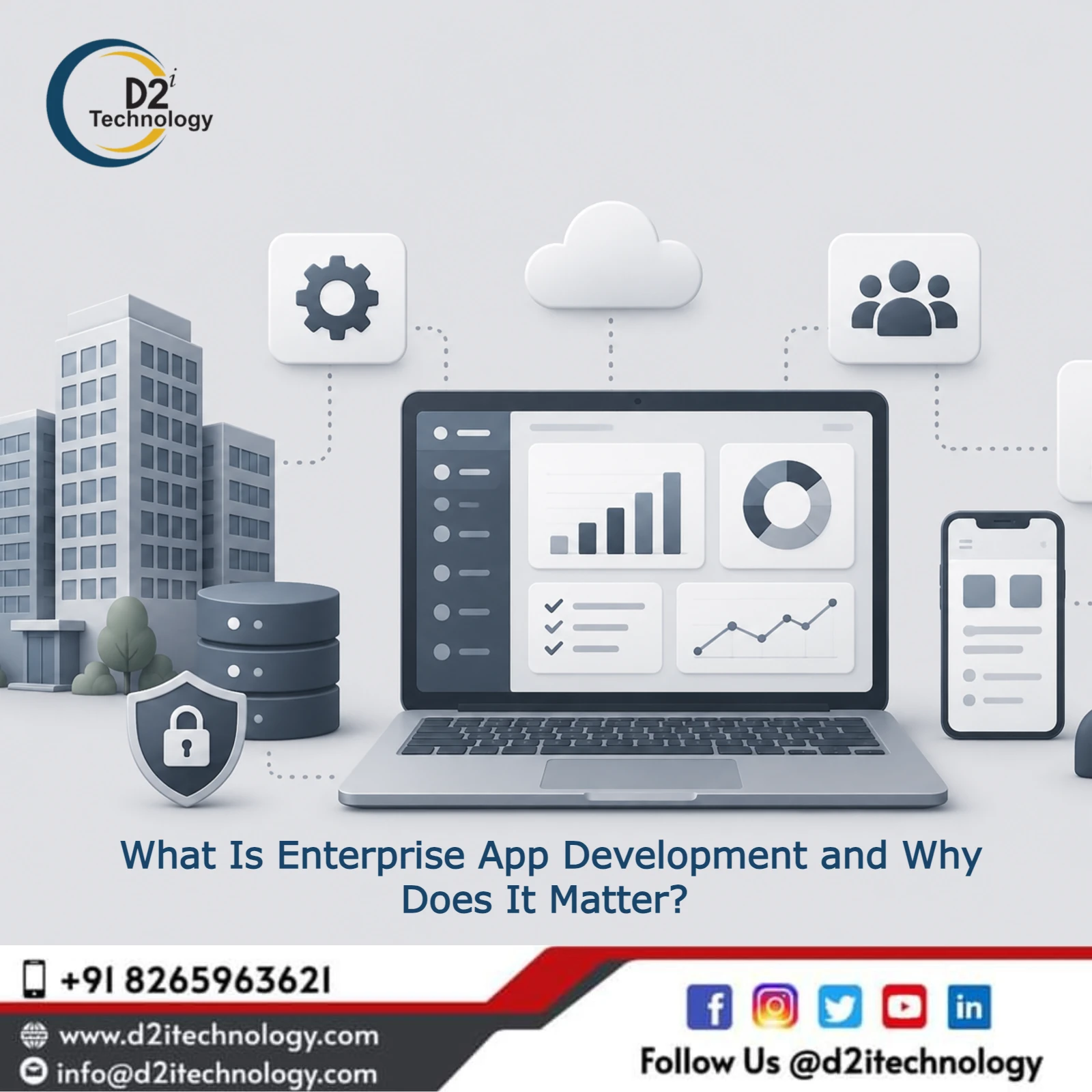
Enterprise application development refers to the process of designing and building software apps. These apps mainly support large organizations in managing their operations and overall workflows. Unlike standard consumer apps, enterprise apps are created to handle complex processes, integrate with multiple systems, and serve large numbers of users across departments.
Why does enterprise application development matter? As organizations tend to grow, their operations become way more complex. Managing data, communication, and workflows manually or through disconnected systems can lead to problems. This creates inefficiencies and delays. Enterprise app development company also help centralize operations, automate repetitive tasks, and improve overall productivity.
Why Do Businesses Use Enterprise Apps?
Businesses use enterprise apps to solve operational challenges and improve efficiency. These apps provide a structured way to manage processes such as finance, human resources, supply chains, and even customer relationships.
One key reason is automation. Many business processes involve repetitive tasks that consume time and resources. And it is one of the most draining things for employees and leads. This is why enterprise apps exist. They automate these tasks. It allows employees to focus on much more strategic activities.
Another reason is data accessibility. Enterprise apps provide real-time access to information, enabling faster and more informed decision-making. Instead of relying on scattered data sources, organizations can work with centralized and accurate data.
Scalability is also important. As businesses expand and grow, their systems must handle increased workloads. Enterprise apps are designed to scale. This helps ensure that performance remains stable even as demand grows.
What Types of Enterprise Apps Exist?
Enterprise apps come in various forms, each serving a specific purpose within an organization.
- Custom enterprise apps are built to meet unique business needs. These apps are made according to specific workflows and processes. This makes them more flexible than off-the-shelf solutions.
- Enterprise mobility solutions focus on enabling employees to work from mobile devices. These applications ensure that teams can access data, collaborate, and complete tasks from anywhere.
- Integrated systems connect different business tools, such as ERP/CRM/HRM platforms. Integration ensures smooth data flow between systems.
- Blockchain-based apps are used in cases where transparency and data security are critical. These apps provide secure and verifiable transaction records.
- Legacy modernization solutions involve updating older systems to improve performance and compatibility with modern technologies.
How Does Enterprise Development Work?
Enterprise app development typically follows a structured process to ensure that the final product meets organizational needs.
1. What Happens During Requirement Analysis?
The first step involves understanding the organization’s goals, challenges, and workflows. Stakeholders identify what problems need to be solved and what features the application should include.
This phase is important because it sets the direction for the entire project. Clear requirements reduce the risk of misunderstandings and ensure that the application aligns with business objectives.
2. How Is the System Designed?
Once requirements are defined, the system architecture is planned. This includes deciding how different components of the application will interact, what technologies will be used, and how data will be stored.
A well-designed architecture ensures that the application is scalable, secure, and efficient. It also makes future updates and integrations easier.
3. Why Is UI/UX Design Important?
User interface, or UI, and the user experience, or UX design, focus on how users interact with an app. Enterprise apps often involve complex workflows, so a clear and intuitive design is essential.
Good design reduces the learning curve for employees, improves productivity, and minimizes errors. It also ensures consistency across devices such as desktops, tablets, and smartphones.
4. How Is the Application Developed?
During the development phase, actual coding occurs. Developers build the backend systems, APIs, and user interfaces based on the design specifications.
Modern enterprise applications often use cloud infrastructure to ensure flexibility and availability. Development may also include integrating third-party tools and services.
5. What Role Does System Integration Play?
Integration is a critical part of enterprise application development. Most organizations already use multiple systems. So, the new app must work seamlessly with them.
By integrating systems, organizations can eliminate data silos and ensure consistent information across platforms. This reduces any potential chances of errors caused by duplicate or outdated data.
6. How Are Apps Tested and Maintained?
Before the app’s deployment, it undergoes strict testing. This helps ensure that it meets performance and usability standards. Testing an app helps identify and fix issues before users have a chance to interact with the system.
After deployment, ongoing maintenance is necessary to keep the application running smoothly. This includes updates and performance optimization.
What Technologies Are Used in Enterprise Application Development?
Enterprise application development relies on a wide range of technologies. The best companies tend to use modern and reliable technologies and frameworks to reduce vendor dependency. This way, each technology is able to serve a specific purpose.
- Cloud platforms like AWS/Azure and Google Cloud provide powerful infrastructure that is needed to host and scale apps. These platforms support high availability and data storage.
- Programming languages like JavaScript, Python, Java, and Go are commonly used to build application logic and backend systems. Each language has strengths depending on the use case.
- Mobile development tools such as Swift/Kotlin and React Native are used to create native and cross-platform apps for smartphones and tablets.
- Databases like PostgreSQL, MySQL, and MongoDB store and manage data. The choice of database depends on the type and volume of data being handled.
- Blockchain technologies such as Solidity and Truffle are used for applications requiring enhanced security and transparency.
Conclusion
Understanding enterprise development is essential for organizations. Especially the one looking to improve overall workflows and adapt to digital transformation. These apps provide the tools needed to manage complex operations. They can even integrate systems and support business growth.
By focusing on these apparent requirements and user needs with carefully thought-out design, organizations can build excellent enterprise apps. They tend to deliver long-term value. The plus point is that they also remain adaptable in the rapidly changing technological landscape of today’s world.
This is where D2i Technology makes a real difference. As a trusted enterprise app development company, d2i Technology helps organizations turn complex business challenges into smart, scalable software solutions. From requirement analysis to deployment and beyond, their team works closely with clients to build custom enterprise applications that fit specific workflows and long-term goals. Whether it is integrating existing systems, modernizing legacy platforms, or building mobile-first enterprise solutions, D2i Technology brings the technical expertise and strategic thinking needed to deliver results that matter.
Frequently Asked Questions
Ready to Build Your Enterprise Application?
Whether you are looking to automate workflows, integrate your systems, or modernize legacy platforms — d2i Technology is here to help. Our team of experts works with you from day one to deliver scalable, secure, and high-performing enterprise apps tailored to your business needs.