- DevOps Services
- March 2, 2026
Next-Gen DevOps Services in USA for Cloud, Kubernetes & Automation
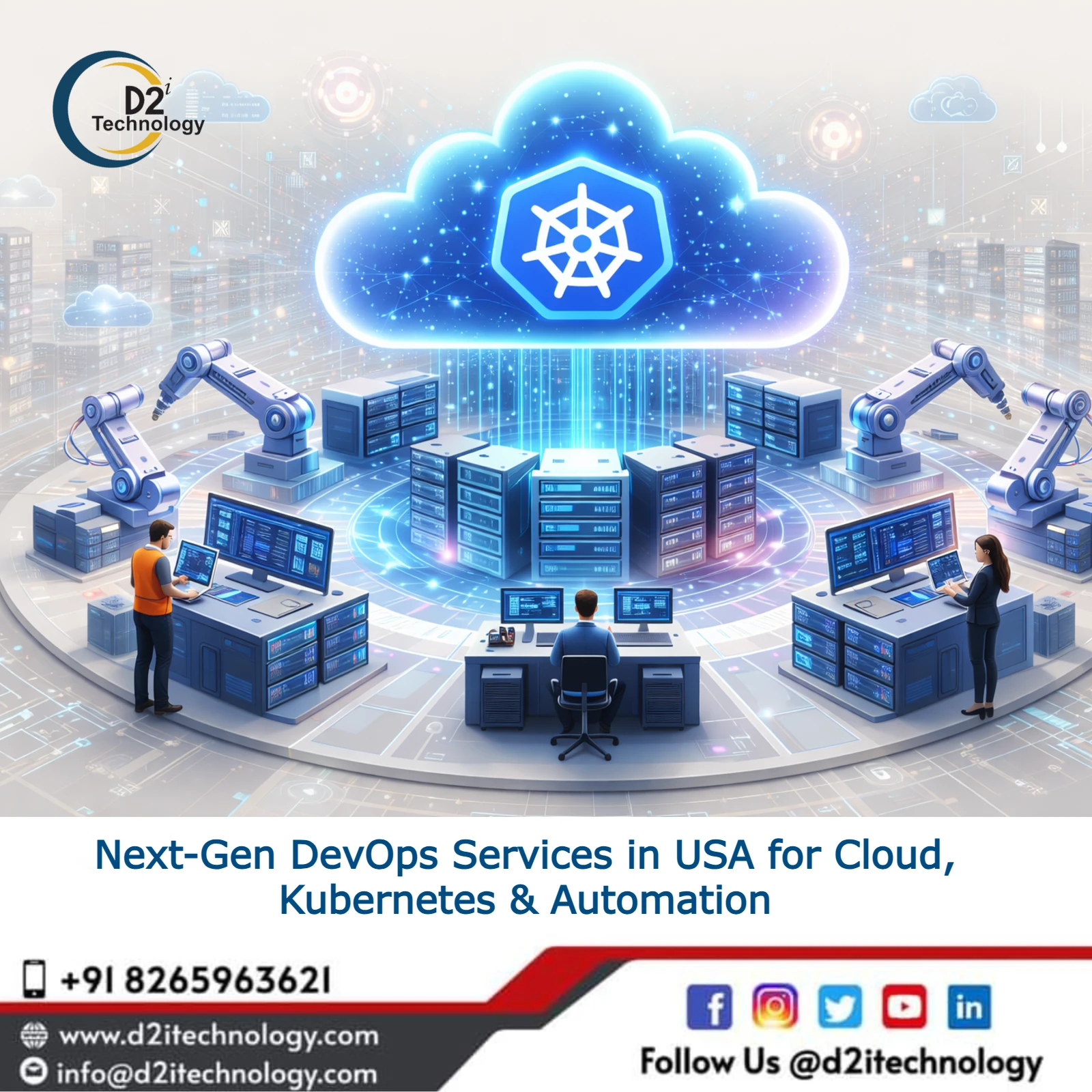
The American business landscape demands infrastructure that scales rapidly, deploys reliably, and adapts seamlessly to changing market conditions. Organizations seeking competitive advantage are turning to DevOps Services In USA that go beyond traditional IT operations, embracing cloud-native architectures, container orchestration, and intelligent automation. Whether you’re a startup building your first product or an enterprise modernizing legacy systems, the right DevOps partnership transforms how you develop, deploy, and deliver software—reducing time-to-market while improving reliability, security, and cost efficiency.
The evolution from monolithic applications to microservices, from physical servers to cloud infrastructure, and from manual deployments to automated pipelines has fundamentally changed software delivery. Organizations that once measured deployment cycles in months now ship updates multiple times daily. This transformation isn’t magic—it’s the result of strategic DevOps implementation that aligns development and operations teams around common goals, automates repetitive tasks, and creates feedback loops that continuously improve software quality and delivery speed.
Understanding Modern DevOps: Beyond the Buzzwords
DevOps represents a cultural shift as much as a technical methodology. At its core, DevOps breaks down silos between development teams writing code and operations teams managing infrastructure, creating collaborative environments where both groups share responsibility for software delivery and system reliability.
The DevOps Philosophy
- Collaboration Over Isolation: Developers and operations engineers work together from project inception through production deployment and beyond, sharing knowledge, tools, and accountability.
- Automation Over Manual Processes: Repetitive tasks—testing, deployment, infrastructure provisioning, monitoring—are automated, freeing teams to focus on innovation rather than maintenance.
- Continuous Improvement Over Perfection: DevOps embraces iterative development with frequent releases, using feedback and monitoring to continuously refine applications and infrastructure.
- Infrastructure as Code: Treating infrastructure configuration as version-controlled code enables consistency, repeatability, and automation across environments.
- Measurement and Monitoring: Data-driven decision-making based on comprehensive metrics, logs, and application performance monitoring guides optimization and troubleshooting.
Why Organizations Choose Professional DevOps Services
While DevOps principles seem straightforward, implementation requires specialized expertise:
- Technology Complexity: Modern DevOps ecosystems involve dozens of tools—Kubernetes, Docker, Terraform, Ansible, Jenkins, GitLab CI/CD, Prometheus, Grafana, and countless others. Knowing which tools fit which scenarios and how to integrate them effectively requires experience.
- Cloud Platform Expertise: AWS, Azure, and Google Cloud each have unique services, pricing models, and best practices. Professional DevOps teams bring multi-cloud expertise, helping you choose the right platform and avoid costly mistakes.
- Security and Compliance: DevSecOps integrates security throughout the development lifecycle. Professional services ensure compliance with SOC 2, HIPAA, PCI-DSS, and other regulatory frameworks relevant to your industry.
- Skill Shortage: Finding and retaining DevOps talent is challenging. Partnering with experienced DevOps service providers gives you access to senior-level expertise without the recruitment and retention challenges.
- Faster Time-to-Value: Building internal DevOps capability takes time. Professional services accelerate your DevOps journey, implementing proven practices while training your team.
Core Components of Next-Gen DevOps Services
When evaluating Top DevOps Services In USA, look for comprehensive capabilities across these critical areas:
Cloud Infrastructure and Migration
- Multi-Cloud Strategy: Expertise across AWS, Azure, and Google Cloud Platform, helping you leverage the best services from each provider while avoiding vendor lock-in.
- Cloud Migration Planning: Assessing existing applications, designing cloud-optimized architectures, and executing migrations that minimize risk and downtime.
- Infrastructure as Code (IaC): Using Terraform, CloudFormation, or ARM templates to provision and manage infrastructure through version-controlled code, ensuring consistency and enabling disaster recovery.
- Cost Optimization: Implementing right-sizing, reserved instances, spot instances, and auto-scaling to maximize cloud ROI while maintaining performance.
- Cloud Security: Implementing identity and access management, network security, encryption, compliance frameworks, and continuous security monitoring.
Container Orchestration with Kubernetes
Kubernetes has become the de facto standard for container orchestration, but its complexity requires specialized expertise:
- Cluster Design and Setup: Architecting production-ready Kubernetes clusters with high availability, security, and scalability built in from day one.
- Container Strategy: Containerizing applications using Docker, creating optimized images, and implementing best practices for container security and efficiency.
- Service Mesh Implementation: Deploying Istio, Linkerd, or similar service meshes for advanced traffic management, security, and observability in microservices environments.
- Helm Chart Development: Creating reusable Kubernetes deployment packages that simplify application deployment and configuration management.
- Kubernetes Security: Implementing RBAC, pod security policies, network policies, secrets management, and container scanning to secure containerized workloads.
CI/CD Pipeline Implementation
Continuous Integration and Continuous Deployment pipelines automate the journey from code commit to production deployment:
- Pipeline Design: Creating efficient workflows that build, test, and deploy code automatically, with appropriate gates and approvals.
- Tool Selection and Integration: Implementing Jenkins, GitLab CI/CD, CircleCI, GitHub Actions, or other tools that fit your technology stack and team workflows.
- Automated Testing: Integrating unit tests, integration tests, security scans, and performance tests into pipelines to catch issues early.
- Deployment Strategies: Implementing blue-green deployments, canary releases, or rolling updates that minimize risk and enable rapid rollback if issues arise.
- Artifact Management: Setting up container registries, package repositories, and artifact stores for efficient software distribution.
Automation and Configuration Management
- Infrastructure Automation: Using Ansible, Chef, Puppet, or Salt to automate server configuration, application deployment, and system maintenance.
- Policy as Code: Implementing Open Policy Agent or similar tools to enforce organizational policies automatically across infrastructure and applications.
- GitOps Workflows: Using Git as the single source of truth for infrastructure and application configuration, with automated synchronization to production environments.
- Scripting and Custom Tools: Developing Python, Go, or Bash scripts to automate unique organizational processes and integrate disparate systems.
Monitoring, Logging, and Observability
- Application Performance Monitoring (APM): Implementing New Relic, Datadog, Dynatrace, or open-source alternatives to understand application behavior and user experience.
- Infrastructure Monitoring: Deploying Prometheus, Grafana, or cloud-native monitoring to track resource utilization, system health, and capacity planning.
- Centralized Logging: Aggregating logs from all applications and infrastructure using ELK Stack (Elasticsearch, Logstash, Kibana), Splunk, or cloud-native logging services.
- Distributed Tracing: Implementing Jaeger, Zipkin, or vendor solutions to understand request flows through complex microservices architectures.
- Alerting and Incident Response: Creating intelligent alerting systems that notify teams of issues without overwhelming them with false positives.
Industry-Specific DevOps Applications
Different sectors have unique DevOps requirements and challenges:
Financial Services and Fintech
- Regulatory Compliance: Implementing DevOps workflows that satisfy SOC 2, PCI-DSS, and financial industry regulations while maintaining agility.
- Security-First Approach: Integrating security scanning, vulnerability management, and compliance checks throughout the CI/CD pipeline.
- High Availability: Designing multi-region, fault-tolerant architectures that ensure 99.99%+ uptime for critical financial applications.
- Data Protection: Implementing encryption, secure key management, and audit logging that meet financial data protection requirements.
Healthcare and Life Sciences
- HIPAA Compliance: DevOps implementations that satisfy healthcare privacy and security regulations for protected health information.
- Electronic Health Records: Modernizing EHR systems with cloud-native architectures and microservices while ensuring data integrity and availability.
- Research Computing: Provisioning scalable computational resources for genomics, drug discovery, and medical imaging analysis.
- Telemedicine Infrastructure: Building reliable, secure platforms for virtual care delivery with real-time video and data synchronization.
E-Commerce and Retail
- Scalability for Peak Traffic: Auto-scaling infrastructure that handles Black Friday, holiday sales, and flash sales without performance degradation.
- Rapid Feature Delivery: CI/CD pipelines enabling multiple daily deployments to quickly respond to market trends and customer feedback.
- Global Distribution: Multi-region deployments with CDN integration for fast page loads and low-latency checkout experiences worldwide.
- Inventory and Order Management: Microservices architectures that integrate with existing systems while enabling independent scaling and updates.
SaaS and Technology Companies
- Multi-Tenancy: Architecting secure, isolated environments for different customers while sharing underlying infrastructure efficiently.
- Feature Flagging and A/B Testing: Infrastructure supporting gradual rollouts, experimentation, and personalized experiences.
- API Management: Implementing API gateways, rate limiting, authentication, and monitoring for internal and external APIs.
- Development Environment Provisioning: Automated creation of development and staging environments that mirror production configurations.
The D2i Technology DevOps Advantage
D2i Technology delivers DevOps Services that combine technical excellence with practical business focus, helping American organizations achieve digital transformation goals:
Proven Expertise Across Technologies
- Cloud Platforms: Deep experience with AWS, Microsoft Azure, and Google Cloud Platform, including advanced services like Lambda, Azure Functions, Cloud Run, and managed Kubernetes offerings.
- Containerization: Expertise in Docker, Kubernetes, OpenShift, and container security best practices for production deployments.
- Automation Tools: Proficiency with Terraform, Ansible, Jenkins, GitLab, GitHub Actions, and modern DevOps toolchains.
- Programming and Scripting: Strong capabilities in Python, Go, Bash, and PowerShell for custom automation and integration.
Comprehensive Service Approach
- Assessment and Strategy: Evaluating current infrastructure, identifying improvement opportunities, and creating roadmaps aligned with business objectives.
- Implementation and Migration: Executing cloud migrations, containerization projects, and CI/CD pipeline implementations with minimal disruption.
- Training and Knowledge Transfer: Empowering your team through hands-on training, documentation, and mentorship so DevOps capabilities remain in-house.
- Managed Services: Providing ongoing infrastructure management, monitoring, and optimization for organizations preferring to focus on core business rather than operations.
Security-First DevOps (DevSecOps)
We integrate security throughout the DevOps lifecycle:
- Automated security scanning in CI/CD pipelines
- Container image vulnerability assessment
- Infrastructure compliance checking
- Secrets management and rotation
- Security incident response planning
Cost Optimization Focus
DevOps shouldn’t just improve speed and reliability—it should reduce costs:
- Right-sizing cloud resources based on actual usage
- Implementing auto-scaling to match capacity with demand
- Spot instance utilization for non-critical workloads
- Reserved instance planning for predictable workloads
- Continuous cost monitoring and optimization recommendations
Measuring DevOps Success: Key Metrics
Professional DevOps Services In USA should deliver measurable improvements across critical metrics:
Deployment Frequency
What It Measures: How often you deploy code to production.
Industry Benchmarks: Elite performers deploy multiple times per day; high performers deploy weekly to monthly; low performers deploy monthly to semi-annually.
Why It Matters: Frequent deployments enable faster feature delivery, quicker bug fixes, and more responsive development cycles.
Lead Time for Changes
What It Measures: Time from code commit to production deployment.
Industry Benchmarks: Elite performers measure lead time in hours; high performers in days to weeks; low performers in months.
Why It Matters: Shorter lead times mean faster time-to-market and quicker response to customer needs or market changes.
Mean Time to Recovery (MTTR)
What It Measures: How quickly you restore service after incidents.
Industry Benchmarks: Elite performers recover in under an hour; high performers in under a day; low performers take weeks.
Why It Matters: Fast recovery minimizes business impact and customer disruption from outages or bugs.
Change Failure Rate
What It Measures: Percentage of deployments causing production incidents requiring remediation.
Industry Benchmarks: Elite performers have 0-15% failure rates; high performers 16-30%; low performers exceed 30%.
Why It Matters: Lower failure rates indicate higher quality releases and more effective testing and deployment processes.
Infrastructure as Code Coverage
What It Measures: Percentage of infrastructure managed through code rather than manual configuration.
Target: 80-100% coverage for production infrastructure.
Why It Matters: IaC enables consistency, disaster recovery, and audit trails while reducing configuration drift.
Automation Rate
What It Measures: Percentage of deployments, tests, and infrastructure changes executed automatically.
Target: 90%+ automation for repetitive processes.
Why It Matters: Automation reduces human error, accelerates processes, and frees teams for higher-value work.
Building DevOps Culture: Beyond Tools
Successful DevOps requires cultural transformation alongside technical implementation:
Breaking Down Silos
Traditional organizations separate development, operations, QA, and security into distinct teams with different goals and incentives. DevOps creates shared ownership where cross-functional teams collaborate from design through deployment and maintenance.
Embracing Failure as Learning
DevOps culture treats failures as learning opportunities rather than occasions for blame. Blameless post-mortems analyze incidents to prevent recurrence without punishing individuals, creating psychological safety that encourages innovation and honest communication.
Continuous Learning and Improvement
Technology evolves rapidly. DevOps teams commit to continuous learning—experimenting with new tools, attending conferences, pursuing certifications, and sharing knowledge across the organization.
Measuring and Improving
Data-driven decision-making replaces opinions and politics. Teams measure everything relevant, analyze metrics to identify improvement opportunities, implement changes, and measure results in continuous cycles.
Common DevOps Challenges and Solutions
Organizations implementing DevOps encounter predictable obstacles:
Legacy System Integration
Challenge: Modernizing infrastructure while maintaining existing applications that can’t easily be containerized or cloud-migrated.
Solution: Hybrid approaches that containerize new services while creating APIs and integration layers for legacy systems, enabling gradual modernization without disruptive big-bang migrations.
Security and Compliance Concerns
Challenge: Maintaining security and regulatory compliance while accelerating deployment frequency.
Solution: DevSecOps practices that automate security scanning, compliance checking, and vulnerability management, shifting security left into development and CI/CD pipelines.
Tool Sprawl and Complexity
Challenge: DevOps ecosystems can become overwhelmingly complex with dozens of tools requiring integration and maintenance.
Solution: Thoughtful tool selection focusing on open standards and interoperability, standardizing on platforms that consolidate capabilities, and periodic tool audits to eliminate redundancy.
Skill Gaps and Training
Challenge: Existing teams lack DevOps expertise and learning curves are steep.
Solution: Partnering with experienced DevOps providers who implement solutions while training internal teams, creating documentation and runbooks, and establishing centers of excellence that spread knowledge.
Resistance to Change
Challenge: Teams comfortable with existing processes resist DevOps transformation.
Solution: Executive sponsorship, clear communication of benefits, quick wins that demonstrate value, and involving resistant team members in planning and implementation.
The Future of DevOps: Emerging Trends
The DevOps landscape continues evolving with emerging technologies and practices:
AI and Machine Learning in DevOps (AIOps)
Artificial intelligence is increasingly applied to DevOps challenges:
- Predictive analytics for capacity planning
- Anomaly detection in monitoring data
- Intelligent alerting that reduces false positives
- Automated root cause analysis
- Self-healing infrastructure that responds to incidents autonomously
Platform Engineering
Organizations are creating internal developer platforms that abstract infrastructure complexity, enabling developers to self-service provision environments, deploy applications, and access observability tools without deep infrastructure knowledge.
GitOps and Declarative Infrastructure
GitOps practices treat Git as the single source of truth for both infrastructure and applications, with automated agents ensuring production environments match desired state defined in repositories.
Edge Computing and IoT DevOps
As computing moves toward the edge, DevOps practices must adapt to manage distributed fleets of edge devices, handling intermittent connectivity, local processing, and centralized management.
Serverless and Function-as-a-Service
Serverless computing abstracts infrastructure further, with DevOps practices evolving to manage function deployments, event triggers, and distributed serverless architectures.
Conclusion
The digital economy rewards organizations that deliver software faster, more reliably, and more securely than competitors. DevOps Services In USA from experienced partners like D2i Technology provide the expertise, tools, and practices that transform software delivery from bottleneck to competitive advantage.
Whether you’re embarking on cloud migration, modernizing legacy systems, implementing Kubernetes, or building CI/CD pipelines from scratch, the right DevOps partnership accelerates your journey while avoiding costly mistakes. Professional DevOps services deliver not just technical implementations but cultural transformation, team enablement, and sustainable practices that continue delivering value long after initial projects complete.
The question isn’t whether to invest in DevOps—it’s whether to build that capability internally through years of trial and error or accelerate transformation through partnership with proven experts. For most organizations, partnering with experienced DevOps providers delivers faster time-to-value, lower total cost, and superior outcomes.
D2i Technology brings deep technical expertise, proven methodologies, and commitment to your success. We don’t just implement tools—we transform how you build, deploy, and operate software, positioning your organization for sustained competitive advantage in an increasingly digital world.
About D2i Technology
D2i Technology is a leading provider of DevOps Services In USA, delivering comprehensive cloud, automation, and infrastructure solutions to organizations across industries. Our experienced team specializes in AWS, Azure, and Google Cloud Platform implementations, Kubernetes orchestration, CI/CD pipeline development, infrastructure as code, and DevSecOps practices. We serve clients in financial services, healthcare, e-commerce, SaaS, and technology sectors, combining technical excellence with practical business focus. Our services include cloud strategy and migration, container orchestration and microservices architecture, automated CI/CD pipeline implementation, infrastructure automation and configuration management, monitoring and observability solutions, DevSecOps and compliance implementation, and managed DevOps services. We partner with American businesses to modernize infrastructure, accelerate software delivery, improve reliability, and reduce operational costs through proven DevOps practices and cutting-edge technologies.
Frequently Asked Questions
Get SEBI-Ready with Expert Accessibility Audits
Partner with D2i Technology's IAAP-certified auditors for comprehensive WCAG compliance. Professional assessment, actionable remediation, and ongoing support for India's financial platforms.