- Data Privacy & Compliance
- July 17, 2026
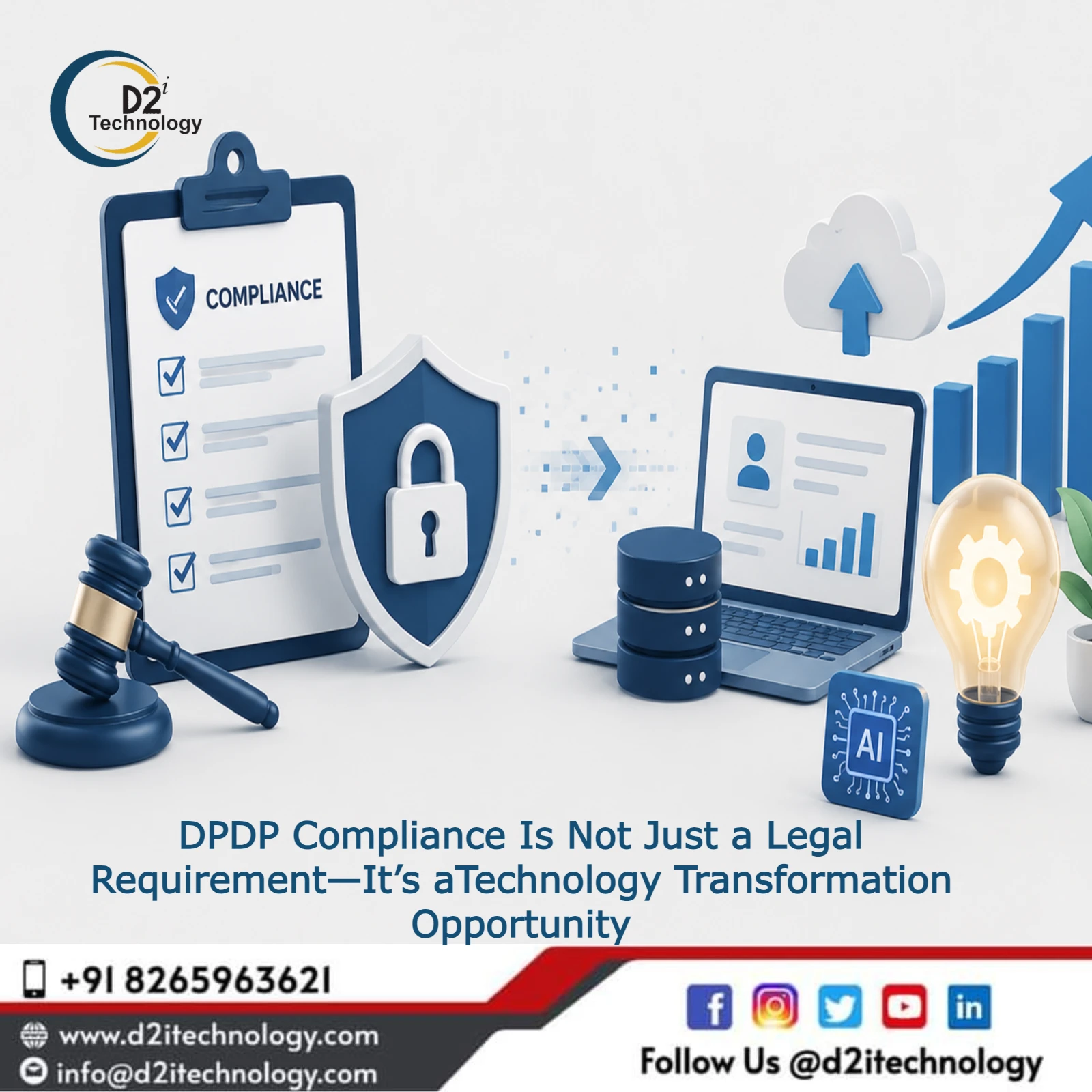
DPDP Compliance Is Not Just a Legal Requirement—It’s a Technology Transformation Opportunity
Introduction
Artificial Intelligence has moved from experimentation to becoming a core part of business operations. Organizations are rapidly adopting AI-powered chatbots, AI agents, document processing, predictive analytics, recommendation engines, fraud detection systems, and generative AI to improve productivity and customer experience.
However, with rapid AI adoption comes increased responsibility. To ensure AI is developed and deployed safely, ethically, and transparently, the European Union introduced the European AI Act, the world’s first comprehensive regulation governing Artificial Intelligence.
Whether your company is based in Europe, provides services to European customers, or develops AI-powered products used within the EU, understanding the European AI Act is essential.
This guide explains what the AI Act means for businesses, who must comply, key obligations, implementation strategies, and how organizations can prepare for long-term AI governance.
What is the European AI Act?
The European AI Act (EU AI Act) is a comprehensive regulatory framework that establishes rules for developing, deploying, importing, distributing, and using Artificial Intelligence systems within the European Union.
Rather than regulating AI technology itself, the Act regulates how AI systems are designed, developed, deployed, and managed based on their level of risk.
The objective is to encourage innovation while protecting individuals’ fundamental rights, safety, privacy, and security.
Read More: DPDP Act 2023 Explained: A Complete Guide for Businesses in India
Why the European AI Act Matters
Many organizations assume the AI Act only applies to companies located in Europe.
This is incorrect.
The legislation applies to organizations that:
- Develop AI systems used within the EU
- Sell AI-powered software to European customers
- Deploy AI systems affecting EU residents
- Import or distribute AI solutions within Europe
- Integrate third-party AI services into their products
If your software serves European clients, AI Act compliance should become part of your product development lifecycle.
Understanding the Risk-Based Approach
One of the defining features of the European AI Act is its risk-based classification.
Instead of applying identical rules to every AI system, the Act categorizes AI into different levels of risk.
Read More: European AI Act Explained: A Complete Guide for Businesses Building and Using AI Systems (2026)
1. Unacceptable Risk AI
These systems are considered harmful and are generally prohibited.
Examples include:
- Social scoring systems
- Manipulative AI
- Certain biometric surveillance applications
- AI exploiting vulnerable individuals
2. High-Risk AI Systems
High-risk AI requires strict compliance.
Examples include:
- Healthcare diagnosis
- Recruitment platforms
- Credit scoring
- Insurance underwriting
- Education systems
- Critical infrastructure
- Law enforcement support
- Border control systems
Organizations developing these applications must implement extensive governance and documentation.
3. Limited Risk AI
These systems mainly require transparency.
Examples include:
- AI chatbots
- Virtual assistants
- AI-generated content
- Recommendation engines
Users should understand when they are interacting with AI.
4. Minimal Risk AI
Examples include:
- Spam filters
- AI-enabled games
- Basic automation tools
These systems generally face minimal regulatory obligations.
Key Compliance Requirements
Organizations implementing AI should establish governance across multiple domains.
AI Risk Assessment
Before deploying AI, organizations should evaluate:
- Intended purpose
- Potential misuse
- Safety concerns
- Privacy implications
- Ethical considerations
- Security risks
A formal AI Risk Assessment becomes a foundational compliance activity.
AI Governance Framework
Successful AI compliance requires governance beyond technical implementation.
Organizations should establish:
- AI Governance Policy
- Responsible AI Guidelines
- AI Ethics Committee
- Model Approval Process
- AI Documentation Standards
- Vendor Assessment Process
Governance should involve business leaders, legal teams, engineering, cybersecurity, and compliance professionals.
Human Oversight
One of the central principles of the AI Act is ensuring humans remain accountable.
Organizations should define:
- Human approval workflows
- Escalation procedures
- Override mechanisms
- Review processes
AI should assist decision-making, not replace responsible human judgment in high-risk scenarios.
Technical Documentation
Organizations should maintain comprehensive documentation including:
- Model purpose
- Training methodology
- Data sources
- Testing procedures
- Validation reports
- Risk assessments
- Version history
- Deployment records
Well-maintained documentation simplifies audits and demonstrates compliance.
Data Governance
Poor data quality leads to poor AI outcomes.
Organizations should establish robust AI Data Governance covering:
- Data quality
- Bias detection
- Data lineage
- Data retention
- Data classification
- Access controls
- Data validation
High-quality data directly improves AI reliability and compliance.
AI Security Is Compliance
Cybersecurity plays a critical role in AI governance.
Recommended practices include:
- Secure APIs
- Model access controls
- Encryption
- Secrets management
- Prompt injection protection
- Adversarial testing
- Vulnerability assessments
- Infrastructure monitoring
As AI systems become business-critical, securing them becomes equally important.
AI Lifecycle Management
Compliance does not end after deployment.
Organizations should manage AI throughout its lifecycle.
Planning
- Define objectives
- Assess risks
- Determine legal requirements
Design
- Privacy by Design
- Security by Design
- Accessibility considerations
Development
- Secure coding
- Model validation
- Bias testing
Testing
- Functional testing
- Performance testing
- Security testing
- Accessibility testing
Deployment
- Monitoring
- Logging
- Incident management
Continuous Improvement
- Retraining
- Governance reviews
- Performance monitoring
- Compliance assessments
Common AI Compliance Challenges
Many organizations face similar issues:
- Lack of AI governance
- No inventory of AI systems
- Poor documentation
- Third-party AI dependency
- Limited model explainability
- Weak security controls
- Insufficient employee awareness
- No AI risk assessment process
Addressing these challenges early reduces long-term compliance costs.
AI and Privacy
The European AI Act works alongside privacy regulations such as the GDPR.
Organizations should ensure AI systems:
- Respect user consent
- Minimize personal data
- Protect confidential information
- Support transparency
- Enable accountability
Privacy and AI governance should be treated as complementary disciplines.
Building an AI Compliance Roadmap
A practical implementation strategy includes:
Phase 1 – AI Inventory
Identify every AI system used across the organization.
Phase 2 – AI Classification
Determine whether each system falls into unacceptable, high, limited, or minimal risk categories.
Phase 3 – Gap Assessment
Evaluate governance, documentation, security, and operational maturity.
Phase 4 – Implementation
Develop policies, controls, and technical safeguards.
Phase 5 – Validation
Conduct AI compliance assessments and security reviews.
Phase 6 – Continuous Monitoring
Monitor model performance, regulatory updates, and operational risks.
How D2i Technology Can Help
Organizations often struggle to balance innovation with compliance.
D2i Technology provides comprehensive services to help businesses build trustworthy and compliant AI solutions.
Our expertise includes:
- European AI Act Compliance Consulting
- AI Readiness Assessment
- AI Gap Assessment
- Responsible AI Framework Development
- AI Governance Consulting
- AI Risk Assessment
- AI Security Assessment
- Custom AI Agent Development
- Generative AI Solutions
- LLM Integration
- AI Application Development
- Cloud Infrastructure
- DevOps
- Enterprise Software Development
- Quality Engineering
- Accessibility Compliance
- Cybersecurity Testing
We help organizations embed compliance into every stage of AI development, from strategy and architecture to deployment and continuous governance.
Why Early Compliance Creates Competitive Advantage
Organizations that prepare early will benefit from:
- Faster enterprise sales
- Increased customer trust
- Reduced regulatory risk
- Better governance
- Improved software quality
- More reliable AI systems
- Stronger cybersecurity
- Easier procurement with European clients
Rather than slowing innovation, the European AI Act encourages organizations to build AI systems that are transparent, secure, and trustworthy.
Conclusion
Artificial Intelligence is transforming every industry, but sustainable innovation requires responsible governance. The European AI Act establishes a framework that enables organizations to innovate while protecting individuals, reducing risks, and promoting accountability.
Businesses that proactively implement AI governance, AI risk management, AI compliance, AI security, and Responsible AI practices will be better positioned to win customer confidence, meet regulatory expectations, and compete in the global AI economy.
If your organization is developing AI-powered applications, integrating Large Language Models (LLMs), deploying AI agents, or providing AI services to customers in Europe, now is the time to begin your European AI Act compliance journey.
Frequently Asked Questions
Ready to Turn DPDP Compliance Into a Business Advantage?
D2i Technology helps you assess your current environment, implement privacy controls, modernize your applications, and strengthen your security posture. Let's build your DPDP compliance roadmap together.