- Accessibility Compliance
- November 26, 2025
Beyond Compliance: How SEBI’s Accessibility Mandate is Reshaping India’s Financial Technology Landscape
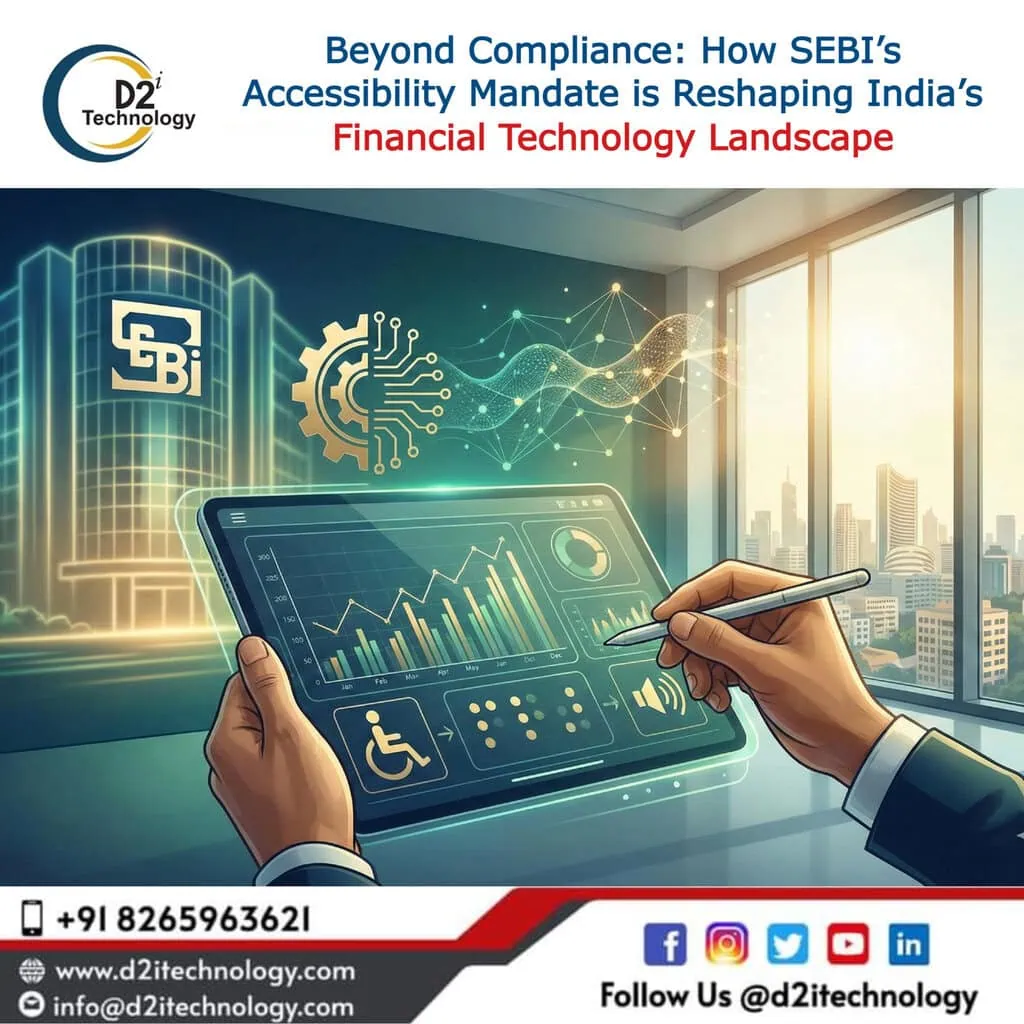
Beyond Compliance: How SEBI’s Accessibility Mandate is Reshaping India’s Financial Technology Landscape.
SEBI’s July 2025 circular did something remarkable—it transformed digital accessibility from a “nice-to-have” feature into a legal requirement for every organization operating in India’s securities market. Stock exchanges, brokerages, mutual funds, depositories, and financial intermediaries now face a clear mandate: make your digital platforms work for everyone, including people with disabilities. But here’s what many organizations are missing: this isn’t just about checking regulatory boxes. SEBI’s framework demands a fundamental shift in how you build, test, and maintain your digital products. If you’re approaching this as a one-time compliance project, you’re already behind.
Understanding What SEBI Actually Expects From You
The circular is clear about requirements, but let’s translate the regulatory language into practical terms. You need to document every digital touchpoint your investors use—websites, mobile apps, customer portals, even the PDFs you send out. Then you need to bring in professionals certified by the International Association of Accessibility Professionals (IAAP) to audit everything. Not just run automated scanners, but actually test with assistive technologies and real users who have disabilities. After the audit, you fix what’s broken. Then you document everything—what you found, what you fixed, how you tested—and your CEO and CTO sign off on it. Every year. This is where most organizations stumble. They think hiring an auditor is enough. It’s not.
Why Your Current Testing Approach Won’t Pass SEBI’s Requirements
Many development teams rely heavily on automated accessibility scanners—tools like axe, Lighthouse, or WAVE. These tools are valuable. They’ll catch obvious issues like missing alt text, color contrast problems, or incorrect ARIA labels quickly. But automated tools have a fundamental limitation: they can’t evaluate context, usability, or user experience. They can’t tell you if your alt text is actually meaningful, whether your navigation makes sense to someone using a screen reader, or if your multi-step transaction flow is logically structured for keyboard-only users. SEBI understands this. That’s why the mandate specifically requires certified accessibility professionals and usability testing with people who have disabilities. You need human experts who understand both technical standards and real-world disability experiences. Think about it: an automated tool might confirm that your “Submit” button is keyboard-accessible. But only a human tester will discover that pressing that button without filling required fields triggers an error message that screen readers can’t announce, leaving blind users completely stuck.
Building a Compliance System That Actually Works
If you want to meet SEBI’s requirements without losing your mind or your budget, you need a structured approach. Here’s what that looks like in practice.
Phase 1: Know What You Have
Start with a complete inventory of your digital assets. Every website, microsite, mobile app, investor portal, and document template needs to be cataloged. Classify them by how critical they are to investor operations and how much traffic they handle. This inventory isn’t just for SEBI—it’s for you. You can’t fix what you don’t know about, and you need to prioritize remediation based on business impact.
Phase 2: Baseline Assessment
Once you know what you have, get it audited properly. This means engaging IAAP-certified accessibility testing experts who will:
- Run comprehensive automated scans across all platforms
- Manually review complex interactions and user flows
- Test with actual assistive technologies (screen readers, keyboard navigation, voice control)
- Conduct usability sessions with people who have various disabilities
The output should be a detailed report that prioritizes issues by severity, impact, and compliance risk. Not just a list of problems, but a roadmap for fixing them.
Phase 3: Structured Remediation
Convert audit findings into actionable development work. Break them into manageable sprints and integrate them into your normal development cycle. Focus on semantic HTML, proper ARIA implementation, progressive enhancement, and accessible component patterns. If you’re using third-party libraries or frameworks, verify they support accessibility out of the box. Document everything. SEBI will want to see evidence of what you fixed, how you tested it, and who verified it works.
Phase 4: Governance and Continuous Monitoring
This is where most organizations fail. They treat accessibility as a project with an end date. It’s not. It’s an ongoing practice. Appoint someone to own accessibility compliance across your organization. Build accessibility checks into your development pipeline—automated tests in your CI/CD, manual review as part of QA, and accessibility acceptance criteria in your definition of done. Update your vendor contracts to require accessibility compliance. If you’re buying software or hiring agencies, make accessibility a deliverable with measurable criteria. Train your teams. Developers need to understand accessible coding patterns. Designers need to think about accessibility from the wireframe stage. QA engineers need to test with assistive technologies. Content creators need to write accessible copy and create accessible documents.
Selecting the Right Accessibility Partners
SEBI requires certified auditors for a reason. When you’re evaluating potential partners, here’s what to look for: Verified Credentials: Confirm IAAP certification or equivalent professional qualifications. This matters because accessibility requires specialized knowledge that goes beyond general web development. Domain Experience: Financial platforms have unique accessibility challenges—complex transactions, authentication flows, real-time data displays, regulatory disclosures. Generic website auditors won’t understand these nuances. Find partners who have worked with financial institutions before. Comprehensive Services: You don’t just need someone to identify problems. You need partners who can guide remediation, train your teams, and help you build sustainable accessibility practices. At D2i Technology, we specialize in exactly this. We’re IAAP-certified professionals with deep experience in financial sector accessibility. We don’t just hand you an audit report and disappear—we work with you to build accessibility into your development DNA.
The Business Case Beyond Compliance
Let’s talk about why accessibility matters beyond avoiding SEBI penalties. First, you’re reducing risk. Non-compliant platforms expose you to legal liability under the Rights of Persons with Disabilities Act. They damage your reputation when customers complain publicly. They hurt your ESG ratings, which matters to investors. But there’s a positive side too. Accessible platforms typically generate fewer support calls because they’re clearer and easier to use for everyone, not just people with disabilities. They convert better because they remove barriers that prevent people from completing transactions. They expand your market because millions of Indians with disabilities represent significant purchasing power. Think of accessibility as quality. Well-structured semantic HTML makes your site faster and easier to maintain. Keyboard accessibility improves mobile usability. Clear language and logical flow help all users, especially those with limited digital literacy.
What You Should Be Doing Right Now
If you’re responsible for compliance, product development, or technology leadership at a SEBI-regulated entity, here’s your 90-day action plan:
Week 1-2: Complete your digital asset inventory. Get executive buy-in and assign clear ownership.
Week 3-4: Engage certified accessibility auditors and schedule a baseline audit of your critical platforms.
Week 5-8: Review audit findings, prioritize by business impact and compliance risk, and create a remediation roadmap.
Week 9-12: Launch your first remediation sprints, focusing on high-impact, high-visibility issues.
Start training your teams on accessibility fundamentals. Don’t try to fix everything at once. Focus on investor-critical journeys first—account opening, trading, portfolio management, customer service. Get those right, then expand to secondary platforms.
Making Accessibility Part of Your Product Culture
SEBI’s mandate changes the rules, but the real opportunity is bigger than compliance. The organizations that will thrive in this new environment are those that embed accessibility into their product culture. Not as a separate initiative, but as a fundamental quality standard that’s part of every design review, every code commit, every product launch. This requires investment—in tools, training, and expertise. But it also delivers returns: better user experience, lower support costs, expanded market reach, reduced legal risk, and stronger brand reputation. India’s capital markets are modernizing rapidly. SEBI’s accessibility mandate ensures that this digital transformation includes everyone. The question isn’t whether to comply—that’s settled. The question is whether you’ll approach this as a box-checking exercise or as an opportunity to build better products.
Ready to Get Started?
At D2i Technology, we’ve helped financial institutions navigate complex accessibility challenges for years. We understand the technical requirements, the regulatory landscape, and the practical realities of implementing accessibility standards at scale. Whether you need a comprehensive audit, structured remediation support, team training, or ongoing accessibility governance, we can help you build a sustainable compliance program that delivers business value beyond regulatory check boxes. Let’s talk about your specific situation and how we can help you meet SEBI’s requirements while creating better experiences for all your investors. Contact Us Today —
Related Reading:
SEBI Just Made Digital Accessibility Mandatory for Financial Institutions: Complete Timeline Guide
— About D2i Technology: We’re IAAP-certified accessibility professionals specializing in helping financial institutions achieve and maintain SEBI digital accessibility compliance. Our comprehensive services include accessibility audits, remediation, training, and governance framework implementation.