- Manual Testing
- January 27, 2026
Professional Manual Testing Services in USA to Ensure Software Accuracy
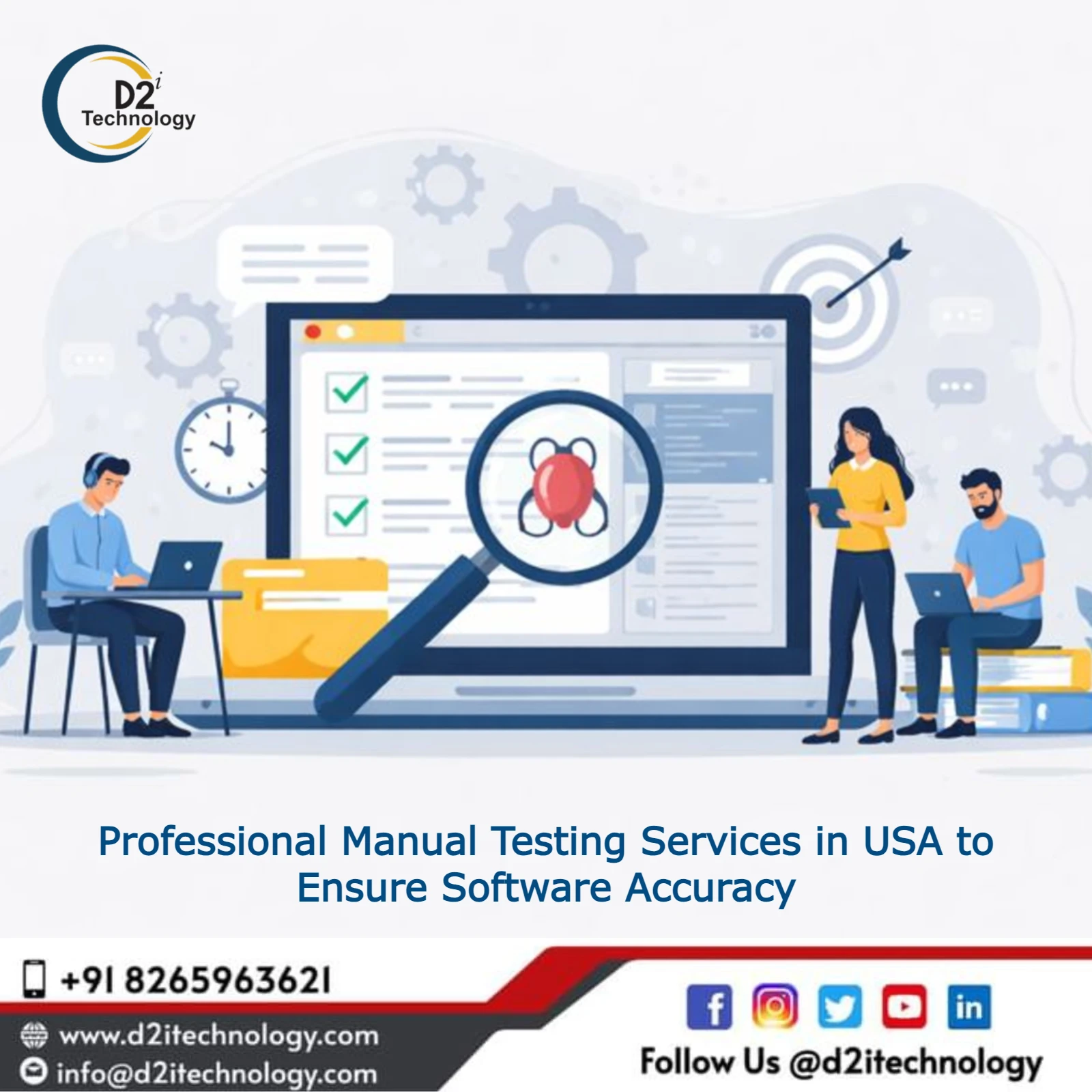
In an era dominated by automation, the value of human insight in software quality assurance remains irreplaceable. Organizations seeking thorough, user-focused testing rely on professional Manual Testing Services in USA to catch bugs that automated tools miss, evaluate user experience from real perspectives, and ensure applications work as intended across diverse scenarios. While automated testing handles repetitive checks efficiently, manual testing brings critical thinking, exploratory investigation, and human judgment that machines cannot replicate. From complex user workflows to subtle usability issues, experienced manual testers identify problems that could frustrate users, damage reputation, or disrupt business operations.
The reality of software development is simple: bugs are inevitable, but releasing buggy software is not. The difference between applications that delight users and those that drive them away often comes down to the thoroughness of testing. Manual testing provides the depth, flexibility, and human perspective necessary to deliver software that works reliably under real-world conditions.
Why Manual Testing Remains Essential in Modern Software Development
Despite advances in test automation, manual testing continues playing a critical role in comprehensive quality assurance:
Human Intuition and Critical Thinking
Automated tests follow predetermined scripts, checking exactly what they’re programmed to check. Manual testers bring:
- Exploratory Testing: Investigating applications without scripts, following hunches, trying unexpected inputs, and exploring edge cases that developers might not anticipate.
- Usability Evaluation: Assessing whether applications are intuitive, whether workflows make sense, whether error messages are helpful—aspects requiring human judgment rather than binary pass/fail checks.
- Visual Inspection: Catching layout issues, inconsistent styling, misaligned elements, and visual bugs that automated tools often miss or misinterpret.
- Context Understanding: Grasping business requirements and user needs to evaluate whether software meets actual objectives rather than just technical specifications.
Complex Scenario Testing
Real-world usage involves complexity that’s difficult to automate:
- Multi-Step Workflows: Testing complete user journeys—account creation through purchase completion, application submission through approval—where human testers can evaluate the entire experience holistically.
- Interrupt Handling: Testing how applications behave when users receive phone calls mid-transaction, switch apps, lose connectivity, or face other real-world interruptions.
- Ad-Hoc Testing: Responding to reported issues, investigating specific scenarios, or validating fixes without time-consuming test script development.
- Integration Points: Evaluating how systems work together, particularly when involving third-party services with varying behaviors and responses.
Accessibility and Inclusive Design
Ensuring applications work for all users requires human evaluation:
- Screen Reader Testing: Manually navigating applications with NVDA, JAWS, VoiceOver, or TalkBack to understand actual user experience rather than just technical compliance.
- Keyboard Navigation: Testing whether applications work without a mouse, evaluating tab order logic, and identifying keyboard traps.
- Cognitive Load Assessment: Determining whether interfaces are overwhelming, whether instructions are clear, whether forms are logical—judgments requiring human perspective.
- Real User Simulation: Testing from perspectives of users with various disabilities, different technical proficiencies, and diverse backgrounds.
New Feature Validation
When launching new functionality:
- Requirements Verification: Confirming features match specifications, meet business objectives, and deliver intended value.
- Regression Impact: Identifying unintended consequences where new features break existing functionality in unexpected ways.
- Edge Case Discovery: Finding scenarios developers didn’t anticipate—unusual data combinations, unexpected user actions, or rare conditions.
- Performance Perception: Evaluating whether applications feel responsive, whether loading times are acceptable, whether feedback is adequate—subjective qualities requiring human judgment.
Comprehensive Manual Testing Services
Professional Manual Testing Services in USA encompass multiple specialized testing types:
Functional Testing
Verifying that features work as intended:
- Feature Validation: Testing each function—buttons perform expected actions, forms submit correctly, calculations produce accurate results, searches return relevant information.
- Business Logic Verification: Ensuring complex rules, workflows, and processes execute properly under various conditions and data combinations.
- Data Integrity Testing: Confirming data is stored, retrieved, and displayed correctly, relationships are maintained, and operations don’t corrupt information.
- Error Handling: Testing how applications respond to invalid inputs, boundary conditions, missing data, and exceptional circumstances.
User Interface and User Experience Testing
Evaluating whether applications are usable and intuitive:
- Navigation Assessment: Determining whether users can find features easily, whether menu structures make sense, whether breadcrumbs and back buttons work properly.
- Consistency Evaluation: Checking that similar functions behave similarly, terminology is consistent, visual design is uniform, and user expectations are met.
- Form Usability: Testing whether forms provide helpful labels, appropriate input types, clear error messages, and logical field order.
- Responsive Design: Validating layouts across different screen sizes, orientations, and devices to ensure consistent experiences.
Compatibility Testing
Ensuring applications work across diverse environments:
- Browser Testing: Manually testing across Chrome, Firefox, Safari, Edge, and other browsers including different versions to catch browser-specific issues.
- Device Testing: Validating functionality on various smartphones, tablets, and computers with different screen sizes, capabilities, and input methods.
- Operating System Verification: Testing across Windows, macOS, Linux, iOS, Android, and different OS versions to identify platform-specific problems.
- Network Condition Testing: Evaluating performance on 3G, 4G, 5G, WiFi, and varying bandwidth to understand real-world user experiences.
Exploratory Testing
Unscripted investigation discovering unexpected issues:
- Free-Form Exploration: Testers use applications without predetermined scripts, following intuition and curiosity to uncover hidden bugs.
- Scenario-Based Testing: Creating realistic user stories and testing whether applications support actual use cases smoothly.
- Boundary and Edge Case Testing: Pushing applications to limits—maximum data volumes, unusual input combinations, extreme conditions.
- Negative Testing: Intentionally trying to break applications through invalid operations, unexpected actions, and misuse scenarios.
Regression Testing
Validating that updates don’t break existing functionality:
- Core Function Verification: Testing critical workflows after changes to ensure essential features still work properly.
- Integration Point Checks: Validating that connections with databases, APIs, third-party services, and other systems remain functional.
- Visual Regression: Identifying unintended layout changes, broken designs, or display issues introduced by updates.
- Data Migration Validation: When systems are updated, ensuring existing data remains accessible, accurate, and properly formatted.
Localization and Internationalization Testing
For applications serving global audiences:
- Translation Verification: Checking that text is properly translated, culturally appropriate, and displays correctly across languages.
- Date and Number Formatting: Validating regional formats for dates, times, numbers, currency, and measurements.
- Cultural Appropriateness: Ensuring images, colors, and content respect cultural sensitivities and expectations.
- Right-to-Left Support: For languages like Arabic and Hebrew, testing that layouts and navigation adapt properly.
The D2i Technology Manual Testing Approach
D2i Technology delivers Manual Testing Services in USA through a structured yet flexible methodology:
Test Planning and Strategy
- Requirements Analysis: Thoroughly understanding functionality, user workflows, business rules, and acceptance criteria before testing begins.
- Test Case Design: Creating comprehensive test cases covering positive scenarios, negative scenarios, edge cases, and integration points.
- Test Environment Setup: Configuring realistic testing environments matching production conditions as closely as possible.
- Risk Assessment: Identifying high-risk areas deserving extra attention based on business impact, complexity, and change frequency.
Systematic Test Execution
- Structured Testing: Following test cases methodically to ensure comprehensive coverage of planned scenarios.
- Exploratory Sessions: Allocating time for unscripted exploration where testers investigate based on experience and intuition.
- Bug Documentation: Recording issues with clear descriptions, steps to reproduce, expected vs. actual behavior, screenshots, and severity ratings.
- Verification and Validation: Confirming bug fixes address root causes without introducing new issues.
Specialized Testing Expertise
- Domain Knowledge: Our testers understand industry-specific requirements for financial services, healthcare, e-commerce, SaaS, and other sectors.
- Technical Proficiency: Experience with web technologies, mobile platforms, APIs, databases, and modern application architectures.
- Accessibility Expertise: IAAP WAS-certified testers who understand WCAG standards and assistive technology usage.
- Security Awareness: Training in common vulnerabilities, secure coding practices, and security testing techniques.
Detailed Reporting and Communication
- Test Progress Reports: Regular updates on testing coverage, issues discovered, and areas requiring attention.
- Defect Tracking: Using Jira, Azure DevOps, or other tools to manage bugs with clear priorities and statuses.
- Metrics and Analytics: Providing data on defect density, severity distribution, test coverage, and quality trends.
- Executive Summaries: High-level overviews of quality status, risks, and recommendations for stakeholders.
Continuous Improvement
- Process Refinement: Learning from each project to improve testing efficiency, coverage, and defect detection rates.
- Knowledge Sharing: Documenting lessons learned, common issues, and best practices for organizational benefit.
- Tool Evaluation: Continuously assessing new testing tools and techniques that might enhance manual testing effectiveness.
- Tester Training: Ongoing professional development ensuring our team stays current with testing methodologies and technologies.
Manual vs. Automated Testing: The Right Balance
Professional quality assurance requires both manual and automated testing, each serving specific purposes:
When Manual Testing Excels
- Usability and User Experience: Human judgment is essential for evaluating intuitiveness, aesthetics, and user satisfaction.
- Exploratory Scenarios: Unscripted investigation discovers issues that predetermined tests miss.
- Visual Validation: Detecting subtle layout problems, design inconsistencies, and display issues.
- New Feature Validation: Initial testing of novel functionality before automation investment makes sense.
- Complex User Workflows: Testing realistic end-to-end scenarios involving judgment and variability.
- Accessibility Evaluation: Real assistive technology usage provides insights automation cannot replicate.
When Automated Testing Excels
- Regression Testing: Repeatedly executing the same tests after each code change.
- Performance Testing: Simulating hundreds or thousands of concurrent users.
- Data-Driven Testing: Testing same functionality with large datasets or many input combinations.
- API Testing: Validating backend services, data transformations, and integration points.
- Continuous Integration: Running tests automatically with every code commit.
The Optimal Strategy
Most organizations benefit from hybrid approaches:
- Automated tests handle repetitive checks, regression testing, and high-volume scenarios
- Manual tests focus on user experience, exploratory investigation, and areas requiring judgment
- Automation frees manual testers to spend more time on complex, high-value testing activities
- Manual testing informs what should be automated based on risk, frequency, and ROI
D2i Technology helps clients develop balanced testing strategies that leverage both manual and automated approaches appropriately.
Industry-Specific Manual Testing Requirements
Different sectors have unique testing considerations:
Financial Services and Fintech
- Calculation Accuracy: Verifying interest calculations, portfolio valuations, currency conversions, and other financial computations produce correct results.
- Transaction Integrity: Testing that money transfers, trades, and payments execute accurately without errors, duplicates, or losses.
- Security and Privacy: Evaluating authentication strength, data encryption, access controls, and protection of sensitive financial information.
- Regulatory Compliance: Validating applications meet SOC 2, PCI-DSS, KYC/AML, and other regulatory requirements.
Healthcare and Medical Software
- Patient Data Accuracy: Ensuring medical information is recorded, stored, and displayed correctly across systems.
- HIPAA Compliance: Verifying proper access controls, audit logging, encryption, and privacy protections.
- Clinical Workflow Testing: Validating that applications support actual healthcare provider workflows without introducing inefficiencies or safety risks.
- Integration Testing: Confirming proper communication with EHR systems, medical devices, lab systems, and pharmacy systems.
E-Commerce and Retail
- Checkout Process: Testing the complete purchase journey from product selection through payment processing and order confirmation.
- Inventory Synchronization: Verifying accurate stock levels across web, mobile, and physical channels.
- Payment Gateway Integration: Validating various payment methods, refund processing, and transaction security.
- Promotional Logic: Testing discounts, coupons, sales, and pricing rules under different scenarios.
SaaS and Enterprise Software
- Multi-Tenancy Isolation: Ensuring data separation between customers, access controls, and tenant-specific configurations.
- Role-Based Access: Validating permissions, user roles, and access restrictions work as designed.
- Data Import/Export: Testing bulk operations, file formats, error handling, and data integrity during transfers.
- Subscription Management: Validating billing, plan changes, usage tracking, and account lifecycle operations.
Measuring Manual Testing Effectiveness
Professional testing delivers measurable value through specific metrics:
Defect Detection
- Total Bugs Found: Overall count of issues identified during testing phases.
- Defect Severity Distribution: Breakdown of critical, major, moderate, and minor issues.
- Defect Density: Bugs per thousand lines of code or per function point, indicating code quality.
- Production Defect Leakage: Issues discovered after release despite testing, measuring testing effectiveness.
Test Coverage
- Requirement Coverage: Percentage of requirements validated through testing.
- Code Coverage: Portion of codebase exercised by tests (when combined with automated testing).
- Scenario Coverage: Extent to which realistic user workflows have been tested.
- Device/Browser Coverage: Range of environments validated through testing.
Efficiency Metrics
- Test Execution Rate: Test cases completed per day or sprint.
- Average Time to Test: Duration from receiving builds to completing test cycles.
- Retest Effectiveness: Percentage of bug fixes verified correctly on first attempt.
- Test Case Effectiveness: Defects found per test case, identifying high-value tests.
Business Impact
- Customer Satisfaction: User feedback and ratings after release.
- Production Incident Rate: Support tickets, outages, and user-reported issues.
- Cost Avoidance: Estimated cost of bugs found in testing versus cost if discovered in production.
- Release Confidence: Stakeholder trust in software quality before deployment.
Common Manual Testing Challenges and Solutions
Manual testing faces specific challenges that experienced providers address proactively:
Test Coverage Gaps
Challenge: Ensuring comprehensive testing without missing critical scenarios.
Solution: Structured test planning, risk-based prioritization, and exploratory testing sessions that investigate beyond scripted scenarios.
Time Constraints
Challenge: Thorough testing requires time that project schedules often don’t accommodate.
Solution: Risk-based testing focusing on high-impact areas, parallel testing with multiple testers, and clear communication about coverage trade-offs when timelines compress.
Environment Issues
Challenge: Test environments that don’t accurately reflect production, causing issues to slip through.
Solution: Infrastructure as code for consistent environments, production-like data sets, and periodic validation that test environments match production configurations.
Regression Testing Scope
Challenge: Repeatedly testing large applications manually becomes impractical.
Solution: Hybrid approaches where critical workflows are tested manually while repetitive checks are automated, with manual testing focused on changed and high-risk areas.
Tester Availability and Expertise
Challenge: Finding and retaining skilled manual testers with domain knowledge.
Solution: Partnering with specialized testing service providers like D2i Technology who maintain experienced testing teams across industries and technologies.
Building Quality into Development: Shift-Left Testing
Modern software development integrates testing earlier:
- Requirements Review: Testers participate in requirement discussions, identifying testability issues and clarifying acceptance criteria before development begins.
- Design Validation: Reviewing mockups and design documents to catch usability problems before implementation.
- Unit Testing Support: Helping developers write better unit tests that catch issues at the earliest, cheapest stage.
- Continuous Testing: Integrating with CI/CD pipelines to test frequently as code changes rather than waiting for completed features.
- Test-Driven Development: Writing test cases before implementation, driving development toward testable, reliable code.
Early testing involvement prevents defects rather than just finding them, reducing costs and accelerating delivery.
Conclusion
In the rush to automate everything, organizations sometimes forget that software serves human users whose experiences can’t be fully captured by automated scripts. Professional Manual Testing Services in USA from D2i Technology ensure your applications work reliably, feel intuitive, and deliver value to actual users under real-world conditions.
Manual testing isn’t about resistance to automation—it’s about recognizing that certain aspects of quality require human judgment, exploration, and empathy. The most effective testing strategies leverage both manual and automated approaches, applying each where it delivers maximum value.
Software quality isn’t just about code correctness—it’s about user satisfaction, business value, and building products people want to use. Manual testing brings the human perspective necessary to evaluate these subjective qualities that determine whether applications succeed or fail in the market.
Don’t compromise on quality. Partner with experienced testing professionals who bring technical expertise, domain knowledge, and commitment to thorough validation. Your users deserve software that works properly, feels intuitive, and meets their needs—manual testing ensures you deliver on that promise.
About D2i Technology
D2i Technology delivers professional Manual Testing Services in USA for organizations across industries seeking comprehensive quality assurance. Our experienced QA team combines technical expertise with business understanding, thoroughly testing web applications, mobile apps, and enterprise software to ensure reliability, usability, and accuracy. We provide functional testing, usability evaluation, compatibility testing across devices and browsers, accessibility testing with WCAG expertise, exploratory testing discovering unexpected issues, regression testing validating updates, and localization testing for global applications. Our testers bring industry-specific knowledge in financial services, healthcare, e-commerce, SaaS, and enterprise sectors, understanding domain-specific requirements and workflows. We use structured testing methodologies with detailed documentation, clear defect reporting, and transparent communication keeping stakeholders informed. Our services integrate seamlessly with agile development processes, DevOps pipelines, and various project management tools. Beyond testing execution, we provide test strategy consulting, process improvement recommendations, and QA team training. We partner with organizations from startups to enterprises, delivering flexible testing resources that scale with project needs while maintaining consistent quality standards.
Frequently Asked Questions
Deliver Flawless Software Experiences
Partner with D2i Technology for comprehensive manual testing services. Experienced QA professionals, thorough testing processes, and commitment to software quality.