- Accessibility Services
- September 1, 2025
A11y Awareness: Building Inclusive Digital Experiences for Everyone

The digital landscape continues to evolve, yet millions of users still face barriers when accessing websites and applications. Web accessibility, often abbreviated as “a11y” (where 11 represents the number of letters between ‘a’ and ‘y’), ensures that digital products are usable by people with disabilities. This isn’t just about compliance—it’s about creating an equitable online experience that welcomes everyone.
Understanding Digital Accessibility: More Than Just Compliance
Digital accessibility encompasses designing and developing websites, applications, and digital tools that can be used by people with various disabilities, including visual, auditory, cognitive, and motor impairments. When businesses prioritize accessibility, they’re not only following legal requirements but also opening their doors to a broader audience.
The Web Content Accessibility Guidelines (WCAG) provide a comprehensive framework for creating accessible digital experiences. These guidelines help developers and designers understand how to make content perceivable, operable, understandable, and robust for all users.
Why Choose a Professional Accessibility Development Company In USA?
Working with an experienced accessibility development company in USA brings numerous advantages to your digital strategy. Professional accessibility partners understand the nuances of implementing inclusive design from the ground up, rather than retrofitting solutions after development is complete.
Key benefits include:
- Expertise in WCAG Standards: Professional teams stay current with evolving accessibility standards and best practices
- Cost-Effective Implementation: Early accessibility integration reduces expensive remediation costs later
- Legal Compliance: Proper implementation helps avoid costly litigation and regulatory issues
- Expanded Market Reach: Accessible websites welcome users with disabilities, expanding your potential customer base
- Enhanced User Experience: Accessibility improvements often benefit all users, not just those with disabilities
The Critical Role of Accessibility Testing Services
Comprehensive accessibility testing services form the backbone of any successful inclusive design strategy. Testing goes beyond automated scanning tools to include manual evaluation, user testing with assistive technologies, and real-world validation with users who have disabilities.
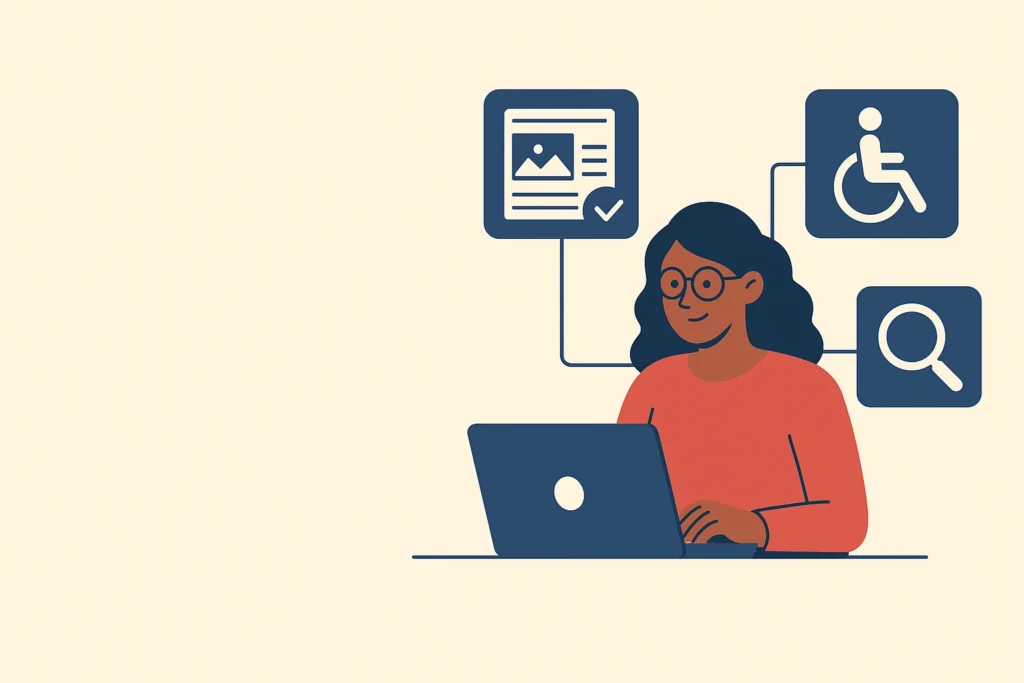
Professional accessibility testing typically involves:
Automated Testing
Automated tools can quickly identify common accessibility issues like missing alt text, color contrast problems, and keyboard navigation barriers. However, these tools only catch about 30% of accessibility issues.
Manual Testing
Expert testers navigate websites using screen readers, keyboard-only navigation, and other assistive technologies to identify issues that automated tools miss.
User Testing
The gold standard involves testing with actual users who rely on assistive technologies daily. Their insights reveal real-world usage patterns and pain points that technical testing might overlook.
SEBI Guidelines and Financial Sector Accessibility
The Securities and Exchange Board of India (SEBI) has been increasingly focused on digital accessibility, particularly for financial platforms and investor portals. Recent SEBI guidelines emphasize the importance of making financial information and trading platforms accessible to all investors, including those with disabilities.
Financial institutions must ensure their digital platforms comply with accessibility standards to:
- Provide equal access to financial services
- Meet regulatory compliance requirements
- Avoid discrimination in service delivery
- Enhance investor confidence and participation
This regulatory focus makes partnering with specialized accessibility professionals even more crucial for financial sector organizations.
Building Accessibility Into Your Development Process
Successful accessibility implementation requires integration throughout the development lifecycle:
Design Phase: Incorporate accessibility considerations into wireframes, color schemes, and user interface designs. Consider how screen readers will interpret content and ensure sufficient color contrast.
Development Phase: Write semantic HTML, implement proper ARIA labels, and ensure keyboard navigation works seamlessly. Focus on creating clean, logical code structure that assistive technologies can easily parse.
Testing Phase: Conduct thorough accessibility audits using both automated tools and manual testing with assistive technologies.
Maintenance Phase: Regular accessibility audits ensure that new features and updates maintain compliance standards.
The D2i Technology Advantage: IAAP Certified Excellence
At D2i Technology, we understand that true accessibility requires more than surface-level compliance. Our team includes IAAP certified testers and developers who bring deep expertise in accessibility standards and implementation.
The International Association of Accessibility Professionals (IAAP) certification represents the gold standard in accessibility expertise. Our certified professionals have demonstrated comprehensive knowledge of:
- WCAG guidelines and implementation
- Assistive technology compatibility
- Legal compliance requirements
- User experience optimization for accessibility
This certification ensures that your accessibility initiatives are handled by professionals who understand both the technical requirements and the human impact of inclusive design.
Real-World Impact: Beyond Compliance
Accessibility improvements create ripple effects that benefit entire user communities. When websites work well with screen readers, the content structure typically becomes clearer for all users. When color contrast meets accessibility standards, text becomes easier to read in bright sunlight or on older devices.
Consider the business impact: the disability community represents over $13 trillion in annual disposable income globally. Companies that prioritize accessibility tap into this significant market segment while building brand loyalty through inclusive practices.
Moving Forward: Your Accessibility Action Plan
Starting your accessibility journey doesn’t require a complete website overhaul. Begin with these practical steps:
- Audit Current State: Conduct a baseline accessibility assessment to understand existing barriers
- Prioritize Improvements: Focus on high-impact changes that improve user experience for the largest number of people
- Train Your Team: Ensure developers, designers, and content creators understand accessibility principles
- Partner with Experts: Work with certified accessibility professionals for complex implementations
- Monitor Progress: Regular testing ensures accessibility standards are maintained as your site evolves
Conclusion
A11y awareness represents more than technical compliance—it’s about creating digital experiences that welcome everyone. By working with qualified accessibility development companies in the USA and investing in comprehensive accessibility testing services, organizations build sustainable, inclusive digital strategies.
The path to digital inclusion requires expertise, commitment, and ongoing attention. With proper guidance from certified professionals and a genuine commitment to inclusive design, every organization can create digital experiences that truly serve all users.
Ready to make your digital presence accessible to everyone? Partner with D2i Technology’s IAAP certified accessibility experts for comprehensive solutions that combine technical excellence with human-centered design.